
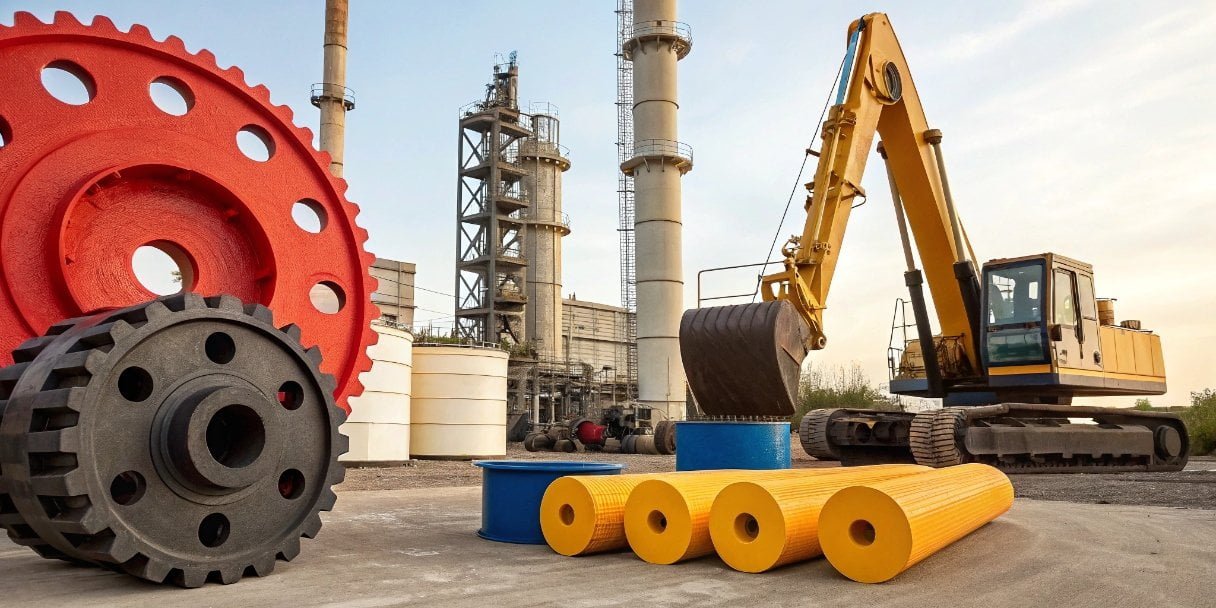
Tired of rubber parts failing? The constant replacements and downtime are costly. Urethane offers a more durable, reliable, and versatile solution for your industrial needs.
Urethane is often best for industrial use because it outperforms rubber in durability, load-bearing capacity, and resistance to abrasion, oils, and chemicals. Its properties can be precisely engineered for specific applications, offering a longer service life and better value than traditional rubber components.
Now that you know the key benefits, let’s look closer at how urethane compares to rubber in specific ways. You might be wondering about its potential downsides, and we believe in being upfront about them. Let’s dive into the details so you can make an informed decision for your production line.
What are the disadvantages of urethane?
Considering urethane but worried about its limits? High initial costs or performance in extreme heat can be a concern. Let’s address these potential drawbacks honestly.
The main disadvantages of urethane include a higher initial material cost compared to some rubbers and lower heat resistance, as it can soften at very high temperatures. It also requires specialized processing equipment, like the machines we build at Foamor, for manufacturing.
While urethane has some limitations, they are often misunderstood or can be managed with the right approach. Let’s break them down.
Cost vs. Lifetime Value
The initial purchase price for polyurethane can be higher than for some common types of rubber. This might make you hesitate if you are focused on upfront costs. But it’s important to look at the total cost of ownership. Because urethane parts last so much longer and resist wear and tear better, you replace them less often. This means less money spent on replacement parts, less labor for maintenance, and most importantly, less downtime for your production line.[^1] As I often tell my clients, a part that costs 20% more but lasts three times as long is a huge win for your bottom line.
Temperature Limitations
Polyurethane does have a lower ceiling for heat resistance compared to high-temperature rubbers like silicone. Standard polyurethanes can start to soften or degrade at temperatures above 100°C (212°F). However, for a huge number of industrial applications—like furniture foam, automotive seating, insulation panels, and most rollers and wheels—the operating temperatures never come close to this limit. For those special high-temperature jobs, other materials are better, but for the vast majority of uses, urethane’s thermal stability is more than enough.
Specialized Manufacturing
You can’t just mix polyurethane chemicals in a bucket and expect a good result. It requires precise machinery to control ratios, mixing, and temperature.[^2] This is where we at Foamor come in. Our high-pressure and low-pressure foaming machines are designed to handle these exact requirements. While this means an investment in proper equipment, it also guarantees consistent, high-quality output every time. We provide the turnkey solution, so this "disadvantage" becomes a controlled, reliable process for our customers.
Is urethane harder than rubber?
Confused about material hardness? Choosing the wrong one means poor performance. Urethane’s adjustable hardness gives you the precise properties you need, from soft to rock-solid.
Yes, urethane can be much harder than rubber. Its hardness is highly versatile and can be engineered across a vast range on the Shore durometer scale, from as soft as a pencil eraser (Shore A) to harder than a golf ball (Shore D).
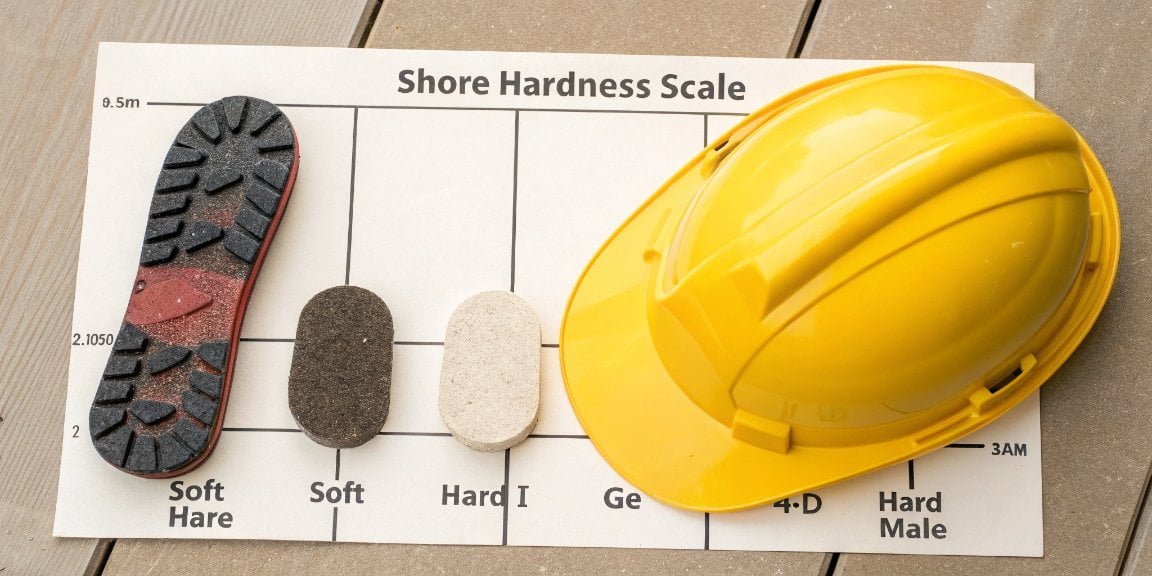
The ability to customize hardness is one of polyurethane’s biggest strengths. It’s not just one material; it’s a whole family of materials.
Understanding the Shore Hardness Scale
Hardness for these materials is measured using the Shore durometer scale. There are two common scales: Shore A and Shore D.
- Shore A is used for softer, flexible materials. Think of a rubber band (around 25A) or a car tire tread (around 70A).
- Shore D is for harder, more rigid plastics. A golf ball is about 50D, and a hard hat is around 75D.
The scales overlap, where the highest Shore A value is close to the lowest Shore D value.[^3] Urethane is unique because its hardness can span the entire range, from a very soft 10A to a rock-hard 85D.[^4]
A Spectrum of Possibilities
This incredible range means we can create a polyurethane product for almost any need. Do you need a soft, flexible foam for a comfortable sofa cushion? We can formulate a low-density foam using our high-pressure machines. Do you need a tough, rigid roller for a conveyor system that won’t deform under heavy loads? We can create a high-durometer cast elastomer.
Here’s a simple comparison:
| Material | Typical Hardness Range (Shore A) |
|---|---|
| Natural Rubber | 30A – 90A |
| Silicone Rubber | 20A – 80A |
| Polyurethane | 10A – 95A (and up to 85D) |
How Hardness Affects Performance
This versatility is what allows polyurethane to replace rubber in so many areas. With rubber, you often have to choose a different type of rubber (like SBR, neoprene, or EPDM) to get different properties. With polyurethane, we can often achieve the desired outcome simply by adjusting the chemical formulation. This simplifies the material selection process and gives engineers incredible design freedom. It’s how our customers can produce everything from memory foam pillows to structural automotive parts with our equipment.
What is urethane good for?
Looking for one material that does it all? It’s frustrating finding a different material for every need. Urethane’s versatility makes it the perfect solution for countless applications.
Urethane is excellent for applications requiring high durability, abrasion resistance, and load-bearing capacity. It’s used in industrial wheels, rollers, seals, and foams for furniture, insulation, and automotive parts. Its adaptability is its greatest strength.
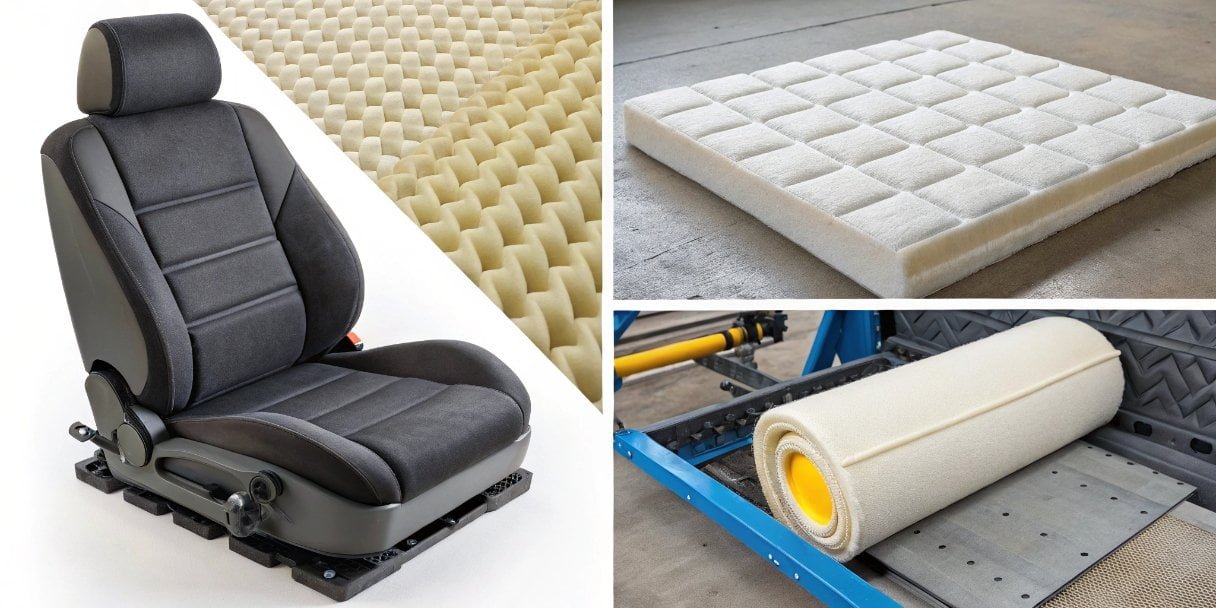
Based on my nearly 20 years in this industry, I’ve seen polyurethane solve problems in almost every sector. Its usefulness comes from its chameleon-like ability to take on different forms and properties.
Flexible and Rigid Foams
This is our core business at Foamor. We help clients make two main types of foam.
- Flexible Foam: This is used for comfort and cushioning. Think of mattresses, sofa cushions, and car seats. Our high-pressure foaming machines are perfect for producing high-resilience (HR) foam that is both comfortable and incredibly durable.
- Rigid Foam: This is used for insulation and structural support. It’s a key material in refrigerators, building insulation panels, and decorative moldings. Our low-pressure machines are cost-effective solutions for these applications.
High-Performance Elastomers
This is where urethane truly outshines rubber. An elastomer is a polymer with elastic properties, like rubber. Urethane elastomers are used for parts that need to be tough and durable.
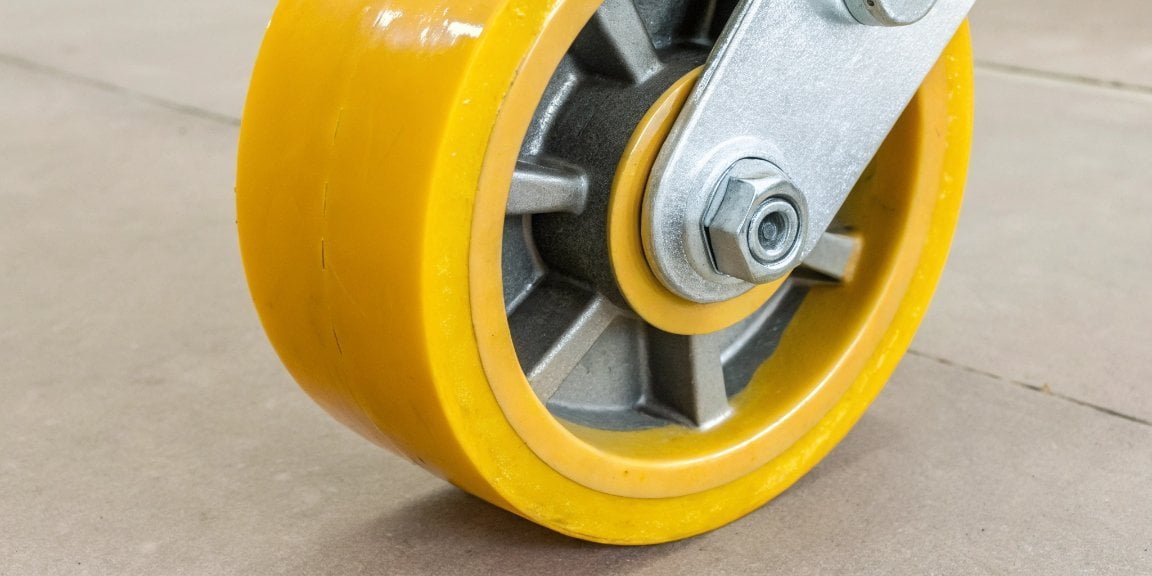
- Industrial Wheels and Rollers: Forklift wheels made from urethane can carry heavier loads and last much longer than rubber ones.[^5]
- Seals and Gaskets: Its resistance to oil and chemicals makes it ideal for sealing applications, like the electrical cabinet seals made with our elastomer casting machines.
- Mining and Agriculture: Parts like scraper blades and chute liners benefit from urethane’s amazing abrasion resistance.
Here’s how different types match to applications:
| Urethane Type | Key Property | Common Applications |
|---|---|---|
| Flexible Foam | Cushioning, Comfort | Furniture, Bedding, Automotive Seats |
| Rigid Foam | Insulation, Structure | Construction Panels, Refrigerators |
| Cast Elastomer | Durability, Abrasion Resistance | Wheels, Rollers, Seals, Bushings |
This incredible range is why so many of our customers, from furniture makers in Vietnam to automotive suppliers in Mexico, are switching to polyurethane production. They can serve multiple needs with one core technology.
What lasts longer, rubber or polyurethane?
Tired of parts wearing out too fast? Constant replacement costs add up. Polyurethane offers a clear advantage in longevity, saving you money and maintenance headaches.
Polyurethane almost always lasts longer than rubber in demanding industrial applications. It has superior resistance to abrasion, cutting, tearing, oils, and ozone. This exceptional durability means a longer service life and less frequent replacement for components.
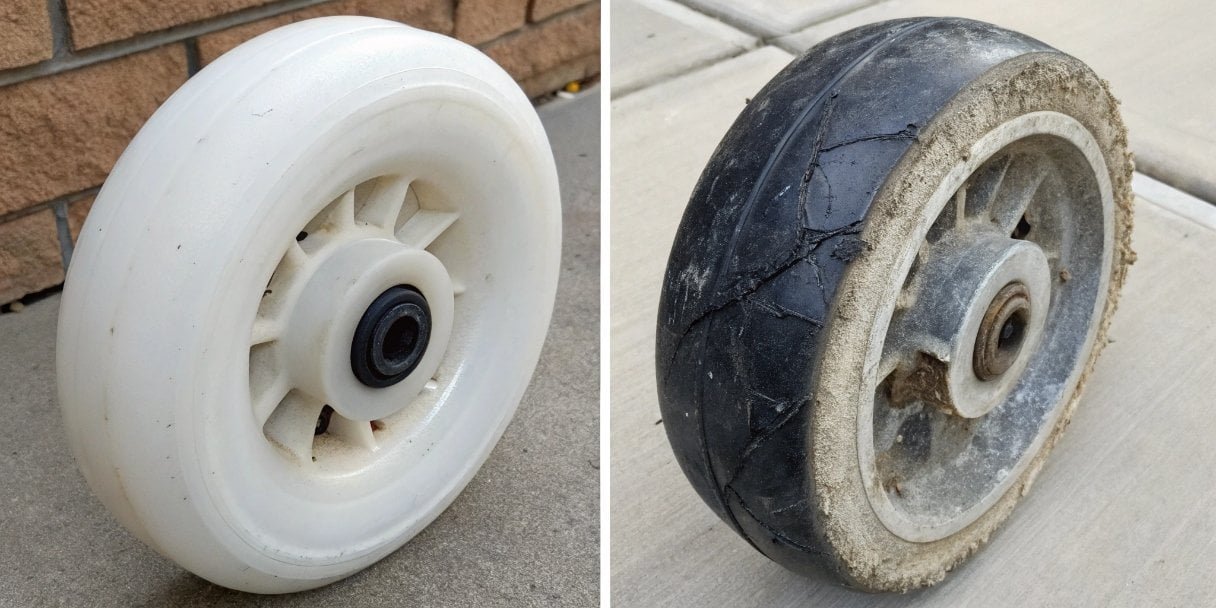
The single biggest reason our clients invest in polyurethane equipment is durability. When a production line stops because a simple rubber part failed, it costs a lot of money. Polyurethane minimizes that risk.
Superior Abrasion and Tear Resistance
Think about a part that is constantly rubbing against another surface, like a conveyor belt roller or a scraper blade. Rubber will wear down, crack, and shed material over time. Polyurethane, however, is extremely resistant to abrasion—in some tests, it can be up to 10 times more resistant than rubber.[^6] It also has higher tear strength. This means it can withstand sharp edges and high stress without failing. A client of mine who makes industrial casters found that his urethane wheels lasted four times longer than the rubber wheels he used to sell.
Resistance to Environmental Factors
Rubber is vulnerable to many things in an industrial environment.
- Oils and Solvents: Many types of rubber will swell, soften, and break down when exposed to oils and chemicals. Polyurethane holds up much better.[^7]
- Ozone and UV Light: Ozone (created by electric motors) and sunlight can make rubber brittle and crack. Polyurethane is far more resistant to this kind of environmental aging.
This chart shows a clear winner:
| Property | Natural Rubber | Polyurethane |
|---|---|---|
| Abrasion Resistance | Fair to Good | Excellent |
| Tear Strength | Good | Excellent |
| Oil Resistance | Poor | Excellent |
| Ozone Resistance | Poor | Excellent |
| Load Bearing | Good | Excellent |
The Impact on Total Cost of Ownership
This superior durability has a direct impact on your wallet. Yes, a polyurethane part might cost more upfront. But if it lasts 3, 4, or 5 times longer, you save money in the long run. You buy fewer parts, spend less time on maintenance, and avoid costly production shutdowns. This is the core reason why polyurethane is steadily replacing rubber in so many traditional applications. It simply performs better and provides better value over time.
Conclusion
Urethane offers superior durability, versatility, and long-term value over rubber. It’s the modern choice for demanding industrial applications, and we can help you make the switch.
[^1]: "Life Cycle Cost Manual for the Federal Energy …", https://nvlpubs.nist.gov/nistpubs/hb/2020/NIST.HB.135-2020.pdf. Life-cycle costing methods account for purchase, replacement, maintenance, and operating costs over a common analysis period, explaining how longer component life can offset a higher initial price. Evidence role: mechanism; source type: government. Supports: Longer-lasting polyurethane parts reduce replacement, maintenance, and downtime costs relative to rubber parts.. Scope note: The cost framework does not demonstrate polyurethane-specific savings without measured service lives and application-specific cost inputs.
[^2]: "Numerical Studies of the Viscosity of Reacting Polyurethane …", https://pmc.ncbi.nlm.nih.gov/articles/PMC7022815/. Polyurethane processing research relates reactant stoichiometry, mixing, and temperature control to reaction kinetics and final material properties, supporting the importance of controlled production conditions. Evidence role: mechanism; source type: paper. Supports: Polyurethane manufacturing requires precise control of reactant ratios, mixing, and temperature using machinery.. Scope note: The need for process control does not establish that every polyurethane process requires specialized machinery or guarantees defect-free output.
[^3]: "ClearCorrect Exhibit 1058, Page 1 of 17", https://ptacts.uspto.gov/ptacts/public-informations/petitions/1557674/download-documents?artifactId=Lywfurz5-Yn_wOmjW7fX81duVLKgW532Hr4iTJXWQHTmlQrHzLeSMBQ. Durometer test standards define Shore A and Shore D as distinct indentation measurements with different indenter geometries and forces; cross-scale comparisons are empirical rather than a universal endpoint equivalence. Evidence role: definition; source type: institution. Supports: The Shore A and Shore D hardness scales overlap at the highest A and lowest D values.. Scope note: A citation to the test method alone does not validate the stated highest-A to lowest-D correspondence.
[^4]: "Durometer Shore Hardness Scale", https://www.smooth-on.com/page/durometer-shore-hardness-scale/. Polyurethane materials research describes broad hardness tunability through changes in segment chemistry, composition, and network structure. Evidence role: general_support; source type: paper. Supports: Polyurethane uniquely spans hardness values from Shore A 10 to Shore D 85.. Scope note: Broad tunability does not by itself verify the 10A and 85D endpoints or establish that polyurethane is unique among polymer families.
[^5]: "Rubber vs. Polyurethane Forklift Tires", https://www.topowerwheel.com/news/industry-news/rubber-vs-polyurethane-forklift-tires-what-s-the-difference-and.html. Comparative wheel testing can relate elastomer stiffness, deformation, heat buildup, and fatigue to load capacity and wear under defined rolling conditions. Evidence role: mechanism; source type: paper. Supports: Polyurethane forklift wheels have higher load capacity and longer service life than rubber forklift wheels.. Scope note: General elastomer properties do not establish longer forklift-wheel life or greater rated capacity without matched wheel-level tests.
[^6]: "Polyurethane Abrasion Resistance: What the Data Shows", https://www.safic-alcan.com/en-fr/industry-articles/abrasion-resistance-polyurethane-elastomers/. Controlled abrasion studies compare material loss for specified polyurethane and rubber specimens under a common test protocol, providing a basis for test-specific wear-resistance ratios. Evidence role: statistic; source type: paper. Supports: Polyurethane can have ten times the abrasion resistance of rubber in some tests.. Scope note: The tenfold figure requires directly reported measurements and a defined ratio; it cannot be inferred from a qualitative rating or translated directly into service life.
[^7]: "Study on Mechanical Properties of Polyurethane Cross-Linked …", https://pmc.ncbi.nlm.nih.gov/articles/PMC9785859/. Elastomer compatibility studies assess swelling and property retention in specified fluids, showing that chemical resistance depends on polymer chemistry and exposure conditions. Evidence role: mechanism; source type: paper. Supports: Polyurethane resists oils and chemicals substantially better than many rubbers.. Scope note: Resistance to selected oils does not imply resistance to all solvents or chemicals, or superiority to oil-resistant rubbers such as suitable nitrile grades.

Leave a Reply