

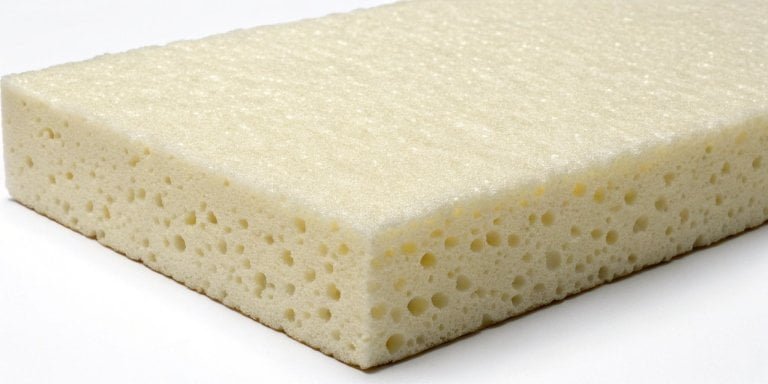
Are you concerned about the fire safety of polyurethane foam? Using the wrong material can create risks and fail regulations. Understanding the foam’s properties is the key to using it safely.
Standard polyurethane (PU) foam is combustible, but it can be manufactured to be flame-retardant. By adding special chemicals, PU foam can meet strict fire safety standards, like the B1 rating, where it self-extinguishes once the heat source is removed. It’s all about the formulation.
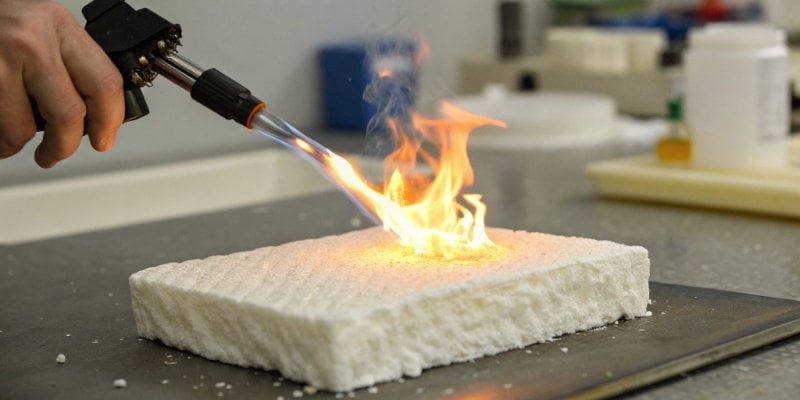
Many of our clients, especially in the furniture and construction industries, ask us about fire safety. It’s one of the most important topics we discuss. The simple answer is that not all PU foam is the same. The risk depends entirely on how it’s made and what it’s made for. Let’s look closer at the specific questions you might have, so you can make an informed decision for your production line.
Is polyurethane foam flammable after it dries?
Does cured foam still pose a fire risk in your final product? This uncertainty can be worrying. We can clear up the real danger for you.
Yes, dried or "cured" polyurethane foam is still flammable if it’s a standard formulation. However, its actual fire behavior depends on added flame retardants. Many modern foams are designed to char and self-extinguish when a flame is removed, greatly reducing the fire risk.
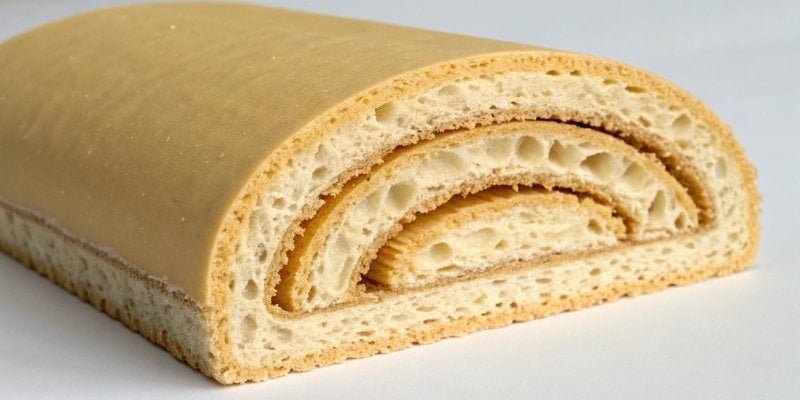
When we talk about "dried" foam, we mean it has fully cured. The chemical reaction between the two main liquid components (isocyanate and polyol) is complete. This creates a stable, solid material. But being stable doesn’t mean it can’t burn. Think of wood—it’s a solid, stable material, but it’s flammable. The same logic applies to standard PU foam.
This is where formulation becomes critical. At our company, we work with clients to add flame retardants directly into the chemical mix. This doesn’t make the foam fireproof, but it changes how it reacts to fire. Instead of catching fire and spreading flames quickly, a flame-retardant foam will typically:
- Ignite more slowly.
- Burn at a lower rate.
- Self-extinguish when the flame source is taken away.
As my insight shows, even general-purpose PU insulation foam can be made to self-extinguish. Achieving a higher fire rating, like B1, is very common for building materials and furniture. This is the level of safety most regulations require.[^1]
Is polyurethane foam toxic after it dries?
We all hear stories about chemicals in everyday products. This might make you worry about the safety of your own products. Let’s look at the facts for fully cured foam.
No, once polyurethane foam is fully cured, it is chemically stable and considered non-toxic under normal use. The reactive chemicals are gone, leaving behind a safe, inert polymer used in mattresses, furniture, and car seats worldwide.
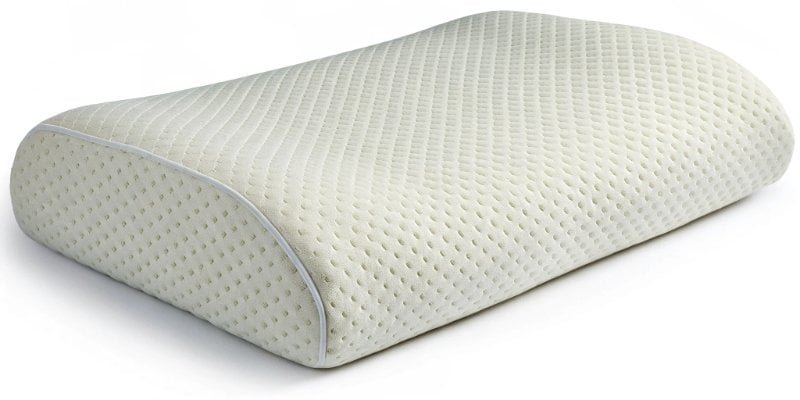
The toxicity concern comes from the liquid components before they are mixed and cured. Isocyanates, in their liquid state, are sensitizers and require proper handling with protective equipment.[^2] That’s why we provide full training on running our foaming machines safely.
However, once the isocyanate and polyol react completely, they form a new, solid substance: polyurethane. This new substance is a polymer, which is a large, stable molecule. It is inert, meaning it doesn’t react with its environment. This is why it’s safe enough to be used in products that have close contact with people, like:
- Bedding: Mattresses and pillows.
- Furniture: Sofa cushions and padding.
- Automotive: Car seat cushions and headliners.
The key to safety is ensuring the foam is fully cured. Our high-pressure and low-pressure foaming machines are designed for precise mixing ratios (±0.5% for high-pressure) and consistent processing. This ensures the chemical reaction is complete, so there are no unreacted chemicals left in the final product.[^3] A properly made PU foam product is perfectly safe for the end-user.
What gas does polyurethane foam give off when burned?
A fire is dangerous, but the smoke can be even deadlier. If PU foam does burn, what exactly are you dealing with? We will break it down for you.
When polyurethane foam burns, it releases a thick smoke containing highly toxic gases. The primary components are carbon monoxide (CO), hydrogen cyanide (HCN), and various nitrogen oxides, alongside carbon dioxide and soot. This smoke is extremely hazardous and a major risk in a fire.
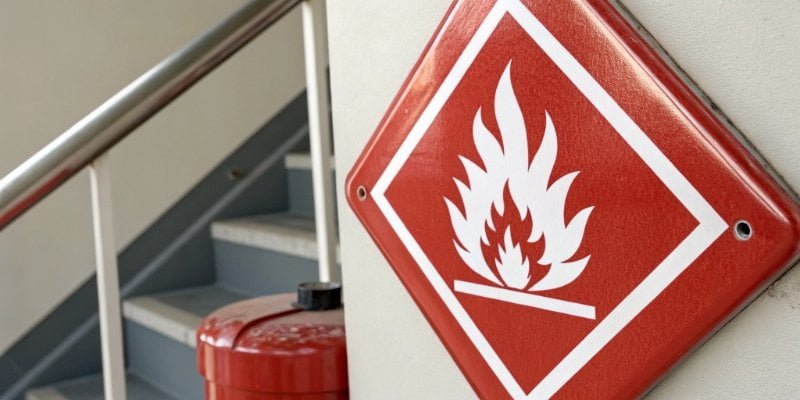
Let’s be very clear: the smoke from burning PU foam is dangerous. This is true for almost all synthetic polymers and many natural materials as well. The main danger comes from incomplete combustion, which produces toxic byproducts.
| Here’s a breakdown of the main gases produced: | Gas | Source & Danger |
|---|---|---|
| Carbon Monoxide (CO) | Produced from incomplete combustion of any carbon-based material. It is a leading cause of fire-related deaths. | |
| Hydrogen Cyanide (HCN) | A very toxic gas released when materials containing nitrogen burn. Polyurethane is a nitrogen-containing polymer. | |
| Nitrogen Oxides (NOx) | A group of irritating and toxic gases also formed from the nitrogen in the polyurethane. | |
| Carbon Dioxide (CO2) | A product of complete combustion. While less toxic, high concentrations can cause asphyxiation. |
This is why the goal of fire safety is not just about making things "fireproof." The most important strategy is to delay ignition and slow the spread of fire. By using flame-retardant foam, you give people more time to escape before a fire grows and produces large amounts of these toxic gases.[^4] Fire safety is about managing risk and saving lives.
Is polyurethane foam a fire hazard?
You need to follow safety codes and ensure your products are safe. Labeling all PU foam as a "fire hazard" can be misleading. Let’s define the actual risk.
Untreated, standard polyurethane foam can be a significant fire hazard. However, when it is properly manufactured with flame retardants to meet industry standards (like B1-rated foam for construction), the risk is managed and significantly reduced, making it safe for its intended use.
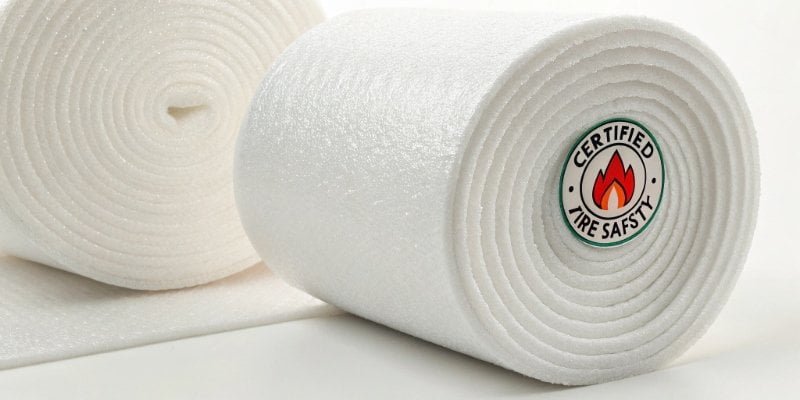
So, is it a hazard? The answer is: it depends on the context. A block of raw, untreated foam is indeed a hazard. But a finished product made with correctly specified, flame-retardant foam is not. It’s our job as a solution provider to help you bridge that gap.
For nearly 20 years, we have helped clients produce foam that meets specific safety requirements. The key is to match the foam’s properties to its application. Reaching the highest fireproof rating (Class A) is very difficult for a polymer foam, but achieving a B1 (flame-retardant) or B2 (normally flammable) rating is standard practice.[^5]
Here is how we approach it with our clients:
| Application | Common Requirement | Foamor’s Solution |
|---|---|---|
| Building Insulation Panels | Must have a good fire rating (e.g., B1/B2) to slow fire spread. | We provide formulations for rigid foam with flame retardants and a production line that ensures consistent quality. |
| Upholstered Furniture | Must meet local furniture flammability laws (e.g., CAL 117 in the US). | We help clients select a flexible foam formulation that passes smolder and open-flame tests required for sofas and chairs.[^6] |
| Automotive Seating | Must comply with strict automotive fire safety standards (FMVSS 302).[^7] | Our high-pressure machines create HR foam with consistent density and fire-retardant properties for safe, durable seats. |
The "hazard" is not the material itself, but the improper use of the material. With the right equipment, formulation support, and process control, polyurethane foam is a safe, versatile, and essential material for countless industries.
Conclusion
Polyurethane foam’s flammability is manageable. With the right formulation and process, you can create safe, high-quality products that meet all necessary fire safety standards for your market.
[^1]: "Upholstered Furniture", https://www.cpsc.gov/FAQ/Upholstered-Furniture. Building-product and furniture regulations prescribe application- and jurisdiction-specific fire tests and classifications; these requirements do not establish B1 as a universal regulatory threshold. Evidence role: general_support; source type: government. Supports: Most building-material and furniture regulations require B1-level fire performance.. Scope note: Individual regulations provide contextual comparisons, not evidence that most regulations require B1; the majority claim requires a defined regulatory survey.
[^2]: "Isocyanates | NIOSH", https://archive.cdc.gov/www_cdc_gov/niosh/topics/isocyanates/default.html. Occupational-health guidance identifies isocyanates as respiratory and skin sensitization hazards and recommends exposure controls and appropriate personal protective equipment. Evidence role: expert_consensus; source type: government. Supports: Isocyanates used to manufacture polyurethane can cause sensitization and require exposure controls and protective equipment.. Scope note: Hazards are not restricted to contact with liquids; airborne vapours and aerosols can also contribute to exposure.
[^3]: "THE KINETICS OF POLYURETHANE STRUCTURAL FOAM", https://www.osti.gov/servlets/purl/1369443. Polyurethane curing studies assess conversion in relation to stoichiometry, mixing, temperature, and reaction time; an equipment mixing specification alone does not demonstrate the absence of residual reactants. Evidence role: mechanism; source type: paper. Supports: Precise mixing and consistent processing guarantee complete reaction and no residual unreacted chemicals in polyurethane foam.. Scope note: A claim of no residual chemicals requires product-specific analytical testing with stated detection limits, not merely evidence about curing mechanisms.
[^4]: "Full-Scale Experiments to Demonstrate Flammability Risk …", https://www.nist.gov/programs-projects/functional-barriers-low-flammability-products/low-heat-release-upholstered/full. Fire-tenability research evaluates escape time through the combined effects of fire growth, heat, visibility, and toxic effluent, providing a framework for assessing whether ignition resistance improves evacuation conditions. Evidence role: general_support; source type: research. Supports: Using flame-retardant foam increases available escape time by delaying fire growth and toxic smoke production.. Scope note: Longer escape time must be demonstrated for the relevant product and fire scenario; reduced flammability alone is not direct proof.
[^5]: "Fire tests and terminology | Minnesota Department of Public …", https://dps.mn.gov/divisions/sfm/fire-code/fire-code-information-topic/fire-tests-and-terminology. Reaction-to-fire classification systems distinguish noncombustibility, ignitability, and surface flame spread using different criteria; an unspecified Class A rating cannot be equated with fireproofness or directly ranked against B1 and B2. Evidence role: definition; source type: institution. Supports: Class A is the highest fireproof rating, while B1 and B2 are routinely attainable lower ratings for polyurethane foam.. Scope note: Classification definitions do not establish how commonly polyurethane products achieve particular ratings.
[^6]: "TECHNICAL BULLETIN 117-2013", https://bhgs.dca.ca.gov/about_us/tb117_2013.pdf. California TB 117-2013 specifies smolder-resistance testing for materials used in upholstered furniture, and the federal upholstered-furniture standard incorporates that technical bulletin. Evidence role: definition; source type: government. Supports: The cited CAL 117 furniture requirements include both smolder and open-flame tests for sofas and chairs.. Scope note: TB 117-2013 does not substantiate a general requirement for both smolder and open-flame testing; historical editions and other applicable rules must be distinguished.
[^7]: "49 CFR 571.302 – Flammability of interior materials.", https://www.ecfr.gov/current/title-49/subtitle-B/chapter-V/part-571/subpart-B/section-571.302. FMVSS No. 302 specifies flammability requirements for covered vehicle-interior materials, including seat cushions and seat backs, using a prescribed horizontal-burning test. Evidence role: definition; source type: government. Supports: Automotive seating materials must comply with FMVSS 302 flammability requirements.. Scope note: This is a United States vehicle standard; compliance with its material test does not establish whole-vehicle fire safety or requirements in every market.
Leave a Reply