


Struggling with inconsistent foam quality and rising material costs? This waste hurts your profits and risks losing customers to competitors who produce better products. A high-pressure foaming machine is the solution.
A high-pressure foaming machine is used to produce high-quality polyurethane foam products like furniture cushions, car seats, and memory foam pillows. It precisely mixes raw materials under high pressure, ensuring a superior foam structure, consistent quality, and significantly less material waste for demanding applications.

So, you know you need better foam, but what makes a high-pressure machine the right tool for the job? It’s more than just a piece of equipment; it’s a technology that can transform your production line, giving you the quality and efficiency needed to compete and grow. Let’s break down how this technology works and where it can make the biggest impact on your factory floor.
What is a high-pressure foaming machine and what are its main applications?
Confused about the difference between high and low-pressure machines? Choosing the wrong one can lead to wasted investment, poor product quality, and ongoing production headaches. Let us clarify things for you.
A high-pressure foaming machine uses powerful pumps to mix polyurethane components (Polyol and Isocyanate) at over 100 bar. This process is called impingement mixing. It creates a very fine, uniform cell structure, which is key for high-quality foam. It’s mainly used for flexible foam, memory foam, and high-resilience (HR) foam.
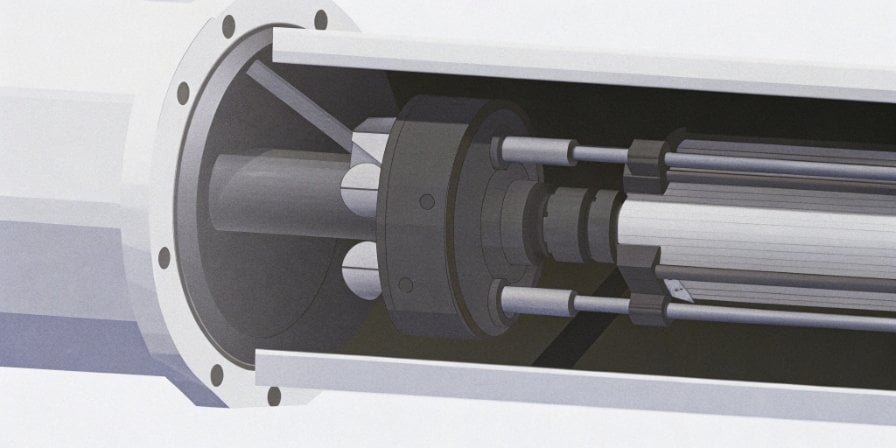
A high-pressure machine works very differently from a low-pressure one. Instead of a mechanical stirrer, it forces the two liquid components into a small mixing chamber at extremely high speeds. They collide, or “impinge,” on each other, creating an intensely turbulent mix. This happens in a fraction of a second. This method is perfect for raw materials with a lower viscosity, usually under 4000cps[^1], because it ensures the chemicals blend perfectly. The result is foam with a consistent density and excellent physical properties. It’s why this technology is essential for products that need to look good, feel good, and last a long time.
Key Applications for High-Pressure Foaming
| Application Area | Example Products | Why High-Pressure is a Must |
|---|---|---|
| Furniture & Bedding | Sofa cushions, memory foam mattresses, office chairs | Creates superior comfort, durability, and a premium feel. |
| Automotive Industry | Car seats, headrests, dashboards, steering wheels | Meets strict OEM quality and safety standards for every part. |
| Integral Skin Foam[^2] | Armrests, grab handles, safety padding | Forms a durable, tough outer “skin” and a soft foam core in one process. |
How does a high-pressure foaming machine improve polyurethane foam production?
Are inconsistent foam density and high defect rates hurting your bottom line? Every bad batch is wasted material, time, and money, putting your production targets and customer deadlines at risk.
A high-pressure machine improves production by delivering extremely precise material ratios (with an accuracy of ±0.5%) and superior mixing. This creates uniform foam density, fewer defects, and much less material waste. The self-cleaning mixhead also eliminates the need for flushing solvents, reducing downtime between pours.
Let’s dive deeper into the improvements. The biggest change you will see is in consistency. We have seen clients reduce their raw material waste by up to 15% after switching from old low-pressure systems. This is because high-pressure pumps are incredibly accurate. They deliver the exact same amount of Polyol and Isocyanate every single time. This precise ratio control means every product that comes off your line has the same density and quality. For a business owner, this means fewer customer complaints and a faster return on your investment, often within 6-12 months from material savings alone.
Another key benefit is efficiency. The mixing head on a high-pressure machine cleans itself after every pour using a hydraulic piston. This means you don’t have to stop production to flush the head with chemical solvents. This is a game-changer for factories that make different products and need to switch molds or formulas often. It drastically reduces downtime and eliminates the ongoing cost and environmental impact of cleaning solvents.
What industries commonly use high-pressure foaming machines?
Wondering if your industry can benefit from high-pressure foaming technology? Using outdated equipment while your competitors upgrade can leave you behind and cost you valuable orders. Let’s look at who uses these machines.
High-pressure foaming machines are essential in the automotive industry for seats and interior parts, the furniture industry for high-quality cushions and mattresses, and in specialized applications like integral skin products. These industries demand the highest levels of quality, consistency, and performance from their foam products.
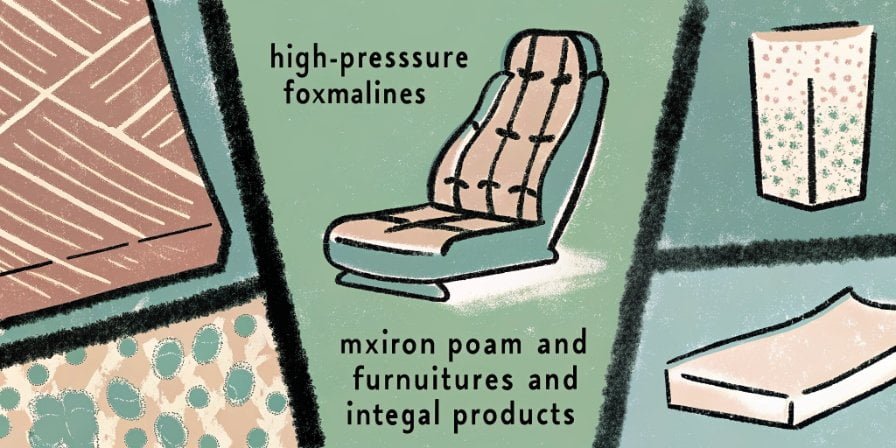
For many of our customers, especially those exporting to Europe or America, upgrading their equipment is a requirement, not a choice. For example, a furniture factory in Vietnam that wants to supply a major brand like IKEA cannot achieve the required quality standards with an old low-pressure machine. High-pressure technology is the key to unlocking these high-value contracts. It allows manufacturers to produce foam that is not only consistent but also meets specific performance criteria for resilience, durability, and feel.
Common Industries and Their Needs
| Industry | Key Products | Why High-Pressure is Crucial |
|---|---|---|
| Automotive | Seats, dashboards, door panels, headrests | To meet strict safety, durability, and lightweighting standards required by car manufacturers. |
| Furniture & Bedding | High-resilience (HR) sofa cushions, memory foam pillows, premium mattresses | To deliver superior comfort, support, and long-lasting performance that customers expect from high-end products. |
| Specialty Products | Integral skin steering wheels, medical positioning pads, equipment gaskets | To create products with a complex structure, like a soft core and a tough, integrated skin, in a single shot. |
What are the benefits of using a high-pressure foaming machine compared to low-pressure systems?
Is your old low-pressure machine causing headaches with constant cleaning and wasted material? This downtime and expense eats into your profits and creates delays that can disappoint your customers.
Compared to low-pressure systems, high-pressure machines offer superior mixing without a mechanical stirrer, which eliminates solvent flushing and reduces waste. They provide better ratio control for higher quality foam and big material savings. They are perfect for intermittent production with much less cleaning downtime.
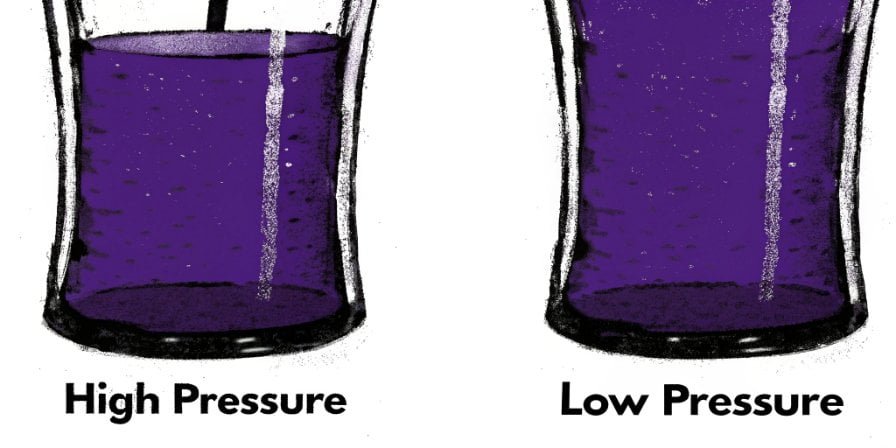
The decision between a high-pressure and a low-pressure machine comes down to your product and production needs. A low-pressure machine is a cost-effective choice for making large blocks of rigid foam for insulation or simple packaging foam. However, for high-value products like furniture cushions or automotive parts, the initial savings of a low-pressure machine are quickly lost. You will spend more on wasted raw materials, cleaning solvents, and labor downtime.
A high-pressure machine is an investment in quality and efficiency. It is especially valuable for companies that operate on a schedule with frequent starts and stops. Because the mixhead is self-cleaning, your operators can switch between molds or take breaks without a long and costly cleaning procedure. This flexibility, combined with the material savings and superior product quality, makes it the clear choice for any manufacturer serious about producing world-class polyurethane foam products.
High-Pressure vs. Low-Pressure: A Direct Comparison
| Feature | High-Pressure Machine | Low-Pressure Machine |
|---|---|---|
| Mixing Method | High-pressure impingement | Mechanical stirrer |
| Mixing Quality | Excellent, fine cell structure | Good, but less uniform |
| Ratio Accuracy | Very High (±0.5%) | Lower (±2-5%) |
| Material Waste | Minimal | Higher due to flushing & inaccuracy |
| Cleaning | Self-cleaning (no solvents) | Requires chemical solvent flushing |
| Downtime | Low, ideal for intermittent work | High, due to cleaning cycles |
| Initial Cost | Higher | Lower |
| Best For | Quality flexible, HR, memory foam | Basic rigid foam, packaging foam |
Conclusion
A high-pressure foaming machine delivers superior quality, reduces waste, and boosts efficiency. It’s a critical investment for manufacturers aiming for top-tier polyurethane products and long-term profitability.
[^1]: “The Effect of Mixing Pressure in a High-Pressure Machine on …”, https://pmc.ncbi.nlm.nih.gov/articles/PMC9866240/. A polyurethane processing handbook or technical paper describing impingement mixing notes that component viscosity affects jet formation and mixing efficiency, giving contextual support for viscosity limits in high-pressure processing. Evidence role: mechanism; source type: education. Supports: High-pressure impingement mixing is better suited to lower-viscosity polyurethane components, with practical viscosity limits depending on equipment and formulation.. Scope note: A specific 4000 cP cutoff may be formulation- and equipment-dependent, so the evidence should be treated as a typical processing guideline rather than a universal limit.
[^2]: “Microcellular & Integral Skin Polyurethane Foam”, https://polyurethanelaboratories.com/polyurethane-foam/microcellular-integral-skin/. A polymer processing reference describes integral-skin polyurethane foam as a material with a dense outer skin and cellular core formed during molding, supporting the table’s description of this product type. Evidence role: definition; source type: education. Supports: Integral-skin polyurethane foam has a denser outer skin and a softer cellular core formed in one molding process.. Scope note: This supports the structure of integral-skin foam generally, not the quality of products made by any specific machine.


Leave a Reply