
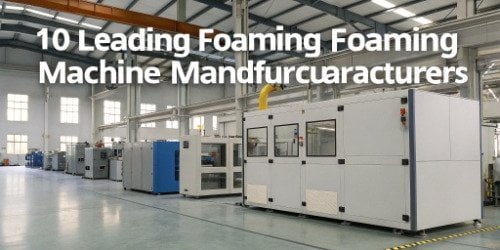
Struggling to find a trustworthy PU foaming machine supplier? The market is crowded, making it hard to choose between premium brands and value options. Here is our direct breakdown.
The top tier of PU foaming machine manufacturers is led by European giants like Hennecke, KraussMaffei, and the Cannon Group. A complete “top 10” is subjective, but it also includes other strong European players and increasingly competitive Chinese manufacturers who offer excellent value and technology.
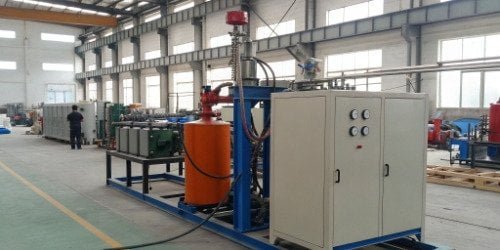
When I talk to clients like Mr. Hieu, a production director in Vietnam, they often ask me for a simple list of the “best” brands. The truth is, the “best” isn’t just about the brand name. It’s about finding the right partner with the right technology for your specific product, budget, and production goals. A machine that is perfect for a giant automotive supplier in Germany might be the wrong choice for a growing furniture factory in Southeast Asia.
So, let’s break down who the key players are and what really separates them.
Who are the top foaming machine manufacturers in the world?
Choosing a manufacturer feels overwhelming. You hear famous names like Hennecke or Cannon but wonder who else is out there and what makes them different from a supplier in China.
The global market is dominated by a few key European companies known for their innovation and history. However, a growing number of Chinese manufacturers, including us at Foamor, now provide high-performance machinery, often using similar core technologies but with a focus on complete, affordable solutions.
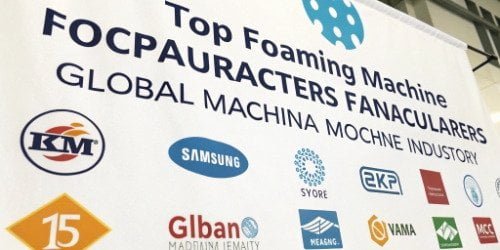
The global landscape of PU machine builders is not a simple list of ten equals. It’s more like a pyramid. At the very top, you have the technology leaders. Below them, you have other strong, specialized companies. And then you have a wide base of manufacturers, especially in China, who focus on delivering reliable technology at a better price point. This is where we fit in. One interesting fact is that the foam machinery division of KraussMaffei, a top German brand, was acquired by a Chinese company.[^1] This shows how much the industry is changing. Here’s a simple breakdown of the key players you should know.
The Global Landscape of PU Machine Builders
| Manufacturer | Country | Key Strength | Target Market |
|---|---|---|---|
| Hennecke | Germany | High-end technology, innovation | Automotive, high-volume industries |
| KraussMaffei | Germany/China | Advanced reaction process machinery | Automotive, technical parts |
| Cannon Group | Italy | Wide range of solutions, innovation | Automotive, furniture, insulation |
| OMS Group | Italy | Specialized in panel & rigid foam lines | Construction, refrigeration |
| Chinese Mfrs (e.g., Foamor) | China | High value, turnkey solutions, support | Furniture, packaging, emerging markets |
What are the different types of foam machines?
You hear technical terms like “high-pressure” and “low-pressure” being used. Choosing the wrong type for your product can lead to wasted raw materials and inconsistent foam quality.
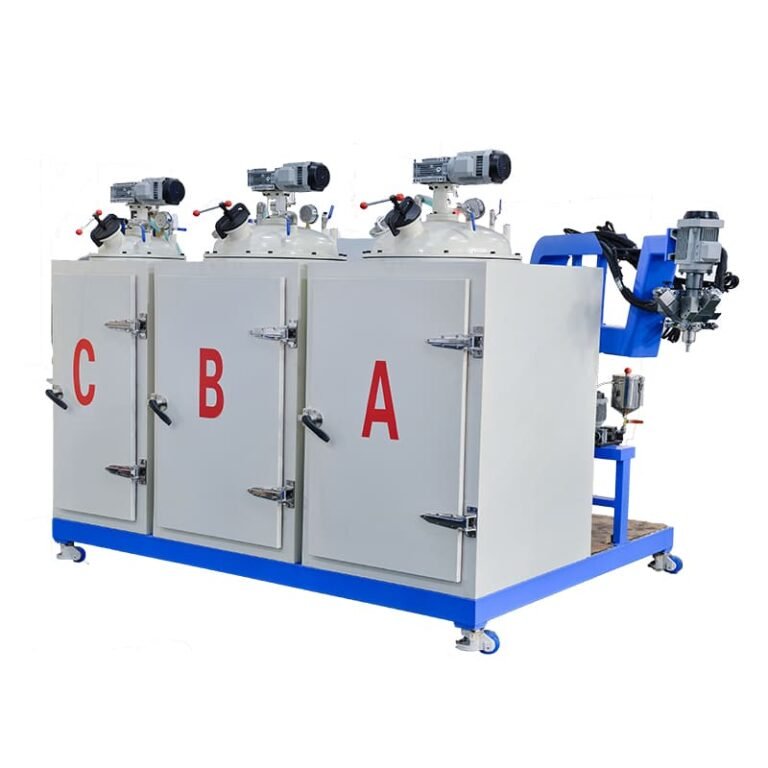
The main types are High-Pressure and Low-Pressure foaming machines. High-pressure machines give you precise, powerful mixing for products like furniture cushions. Low-pressure machines are cost-effective workhorses for applications like insulation foam or packaging. There are also specialized Elastomer Casting Machines.
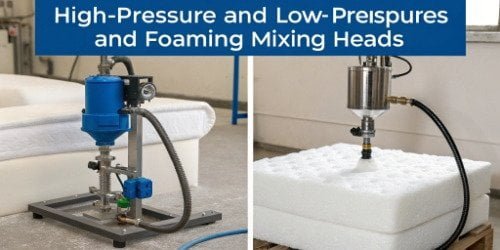
Choosing the right machine is the most critical decision you will make. It’s not about which one is “better” overall, but which one is right for your application. For example, if you are making high-quality sofa cushions or mattresses, you need the excellent mixing that only a high-pressure machine can provide. This ensures the foam has the right density and resilience. We often see factories struggling with old low-pressure machines trying to meet higher quality standards, and they just can’t do it. On the other hand, if you are producing rigid foam for insulation panels, a reliable low-pressure machine is often the most economical and effective choice. It gets the job done without the higher investment of a high-pressure system.
Choosing the Right Machine for Your Product
| Machine Type | Key Feature | Best For | Cost Level |
|---|---|---|---|
| High-Pressure Machine | Precision mixing (±0.5%), self-cleaning head | Flexible foam, HR foam, memory foam | Medium to High |
| Low-Pressure Machine | Cost-effective, simple operation | Rigid foam, insulation, packaging foam | Low to Medium |
| Elastomer Casting Machine | High-temperature capability | Gaskets, seals, technical parts | High |
What is the price of a continuous foam machine?
You need to create a budget for a new production line. But with prices varying so much, it feels almost impossible to plan your investment or calculate your return on investment.
A continuous foam machine’s price varies widely. A basic low-pressure machine from China might start around $15,000. A standard high-pressure machine, which we specialize in, typically ranges from $30,000 to $60,000. A fully automated line from a top European brand can easily exceed $200,000.
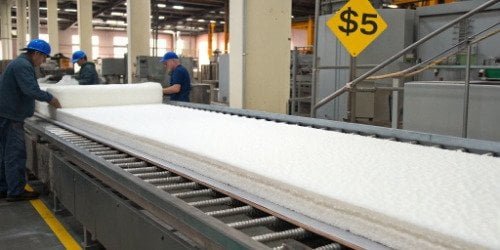
The machine’s price tag is only the beginning of the story. I always advise clients to look at the Total Cost of Ownership and the Return on Investment (ROI). For a customer like Mr. Hieu, whose raw material costs just went up 15%, saving material is crucial. A high-pressure machine costs more upfront, but its precision metering can reduce chemical waste significantly.[^2] This saving alone can often mean the machine pays for itself in just 6 to 12 months. When you factor in less downtime and higher product quality, the true value becomes clear. The final price depends on several factors, and a good supplier will give you a transparent breakdown.
What Factors Determine the Final Price?
- Machine Type: High-pressure machines cost more than low-pressure ones due to their precision pumps and mixing heads.
- Capacity & Output: Larger tanks, more powerful pumps, and higher output (kg/min) increase the price.
- Automation Level: A fully automated line with PLC controls, auto-refill, and robotic handling is more expensive than a semi-manual setup.
- Brand: European brands command a premium price for their R&D and brand recognition.
- Ancillary Equipment: The price often doesn’t include molds, conveyors, pre-heating stations, or cutting units. These must be budgeted separately.
Who are the major foaming machine manufacturers in China?
You are considering a Chinese supplier to get better value for your money. But you have heard stories and worry about quality, communication, and what happens if the machine breaks down.
China has hundreds of PU foaming machine manufacturers, offering a strong balance of price and performance. While there isn’t one single “top” brand like in Europe, companies like us at Foamor focus on being a reliable partner. We provide complete, tested solutions with strong technical and process support.
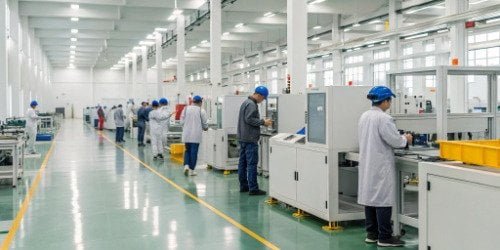
For nearly 20 years, I’ve seen the Chinese manufacturing industry transform. We are no longer just making cheap copies. At Foamor, we integrate proven, advanced technologies into machines that are both reliable and affordable. More importantly, we understand the fears of customers in markets like Vietnam, Nigeria, or Mexico. You worry about getting support after the sale. That is why we built our company around being a partner, not just a supplier. We provide on-site installation and training until your team can run the line independently.[^3] If a problem occurs, we guarantee a response within 24-48 hours with remote video support. We test every single machine before it ships, even making foam samples to match your product’s specifications.[^4] We provide the machine, the process knowledge, and the support to make you successful. Your success is our best reference.
Finding a Reliable Partner, Not Just a Supplier
- Look for Turnkey Solutions: A good partner doesn’t just sell you a machine. They help with line design, installation, commissioning, and training.
- Ask About After-Sales Support: What is their response time? Do they offer remote diagnostics? Can they send engineers to your site?
- Verify Quality Control: Ask for their pre-shipment inspection process. Do they do full machine test runs and trial foam testing?
- Seek Process Knowledge: The best suppliers help you make good foam, not just sell you a machine. We provide formulation support to get you started right.
Conclusion
The “best” foam machine depends on your needs. European brands lead in technology, while Chinese partners like us offer great value and total support. Choosing a partner is the key.
[^1]: “KraussMaffei – Wikipedia”, https://en.wikipedia.org/wiki/KraussMaffei. This source confirms the acquisition of KraussMaffei’s foam machinery division by a Chinese company, highlighting industry shifts. Evidence role: historical_context; source type: institution. Supports: KraussMaffei’s foam machinery division was acquired by a Chinese company, indicating industry changes.. Scope note: The source may not discuss the implications of the acquisition in detail.
[^2]: “Investigation of a High-Pressure Foam Wastewater …”, https://nepis.epa.gov/Exe/ZyPURL.cgi?Dockey=9101WNIF.TXT. This source explains how high-pressure machines reduce chemical waste through precision metering. Evidence role: mechanism; source type: research. Supports: High-pressure machines reduce chemical waste through precision metering.. Scope note: The reduction in waste may depend on specific machine models and settings.
[^3]: “SmartFoam Machinery | Work Smarter and Save Money with …”, https://smartfoammachinery.com/. This source outlines the importance of on-site installation and training for PU foaming machines. Evidence role: mechanism; source type: education. Supports: On-site installation and training are critical for successful operation of PU foaming machines.. Scope note: The source may not specifically reference Foamor’s practices.
[^4]: “Pre-shipment inspection – Wikipedia”, https://en.wikipedia.org/wiki/Pre-shipment_inspection. This source highlights the importance of pre-shipment testing and foam sample matching for PU machines. Evidence role: mechanism; source type: education. Supports: Pre-shipment testing and foam sample matching are essential for ensuring machine compatibility with product specifications.. Scope note: The source may not specifically reference Foamor’s practices.
Leave a Reply