

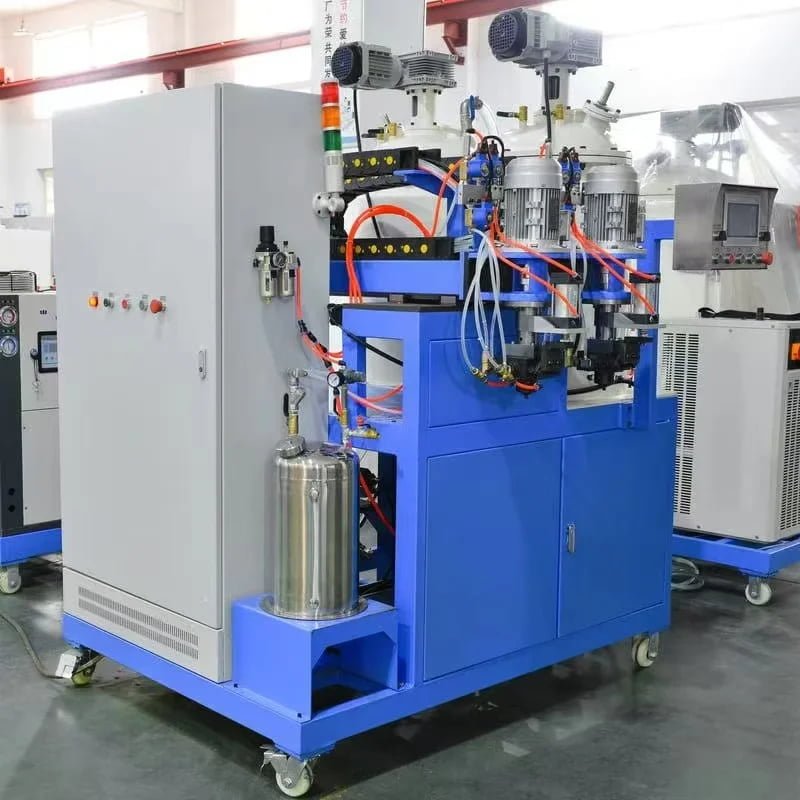
You see the high price of a high-pressure machine and worry it’s too expensive. But your old machine wastes materials and needs constant cleaning, hurting your profits and production schedule.
Yes, a high-pressure machine is often worth the extra cost. Its precision reduces material waste and eliminates cleaning solvents. This means you can recover the initial investment through daily operational savings, often within 12 to 18 months, making it a smarter long-term choice.

The initial price tag is just one part of the story. The real cost of a machine shows up in your daily operations, through material consumption, waste, and downtime. Many factory managers I talk to are surprised when we break down the numbers. The machine that looks cheaper on day one can end up costing you much more over its lifetime. Let’s look at exactly where these savings come from and see if they apply to your factory.
What are the long-term cost benefits of investing in a high-pressure foaming machine?
You focus on the initial purchase price. But hidden costs like material waste, cleaning solvents, and downtime from a low-pressure machine are eating into your profits every single day.
The biggest long-term cost benefit is significantly lower material consumption. High-pressure machines offer precise metering (±0.5%) and self-cleaning heads that prevent waste. You also save on cleaning solvents, labor for cleaning, and waste disposal fees, leading to a much lower total cost of ownership.
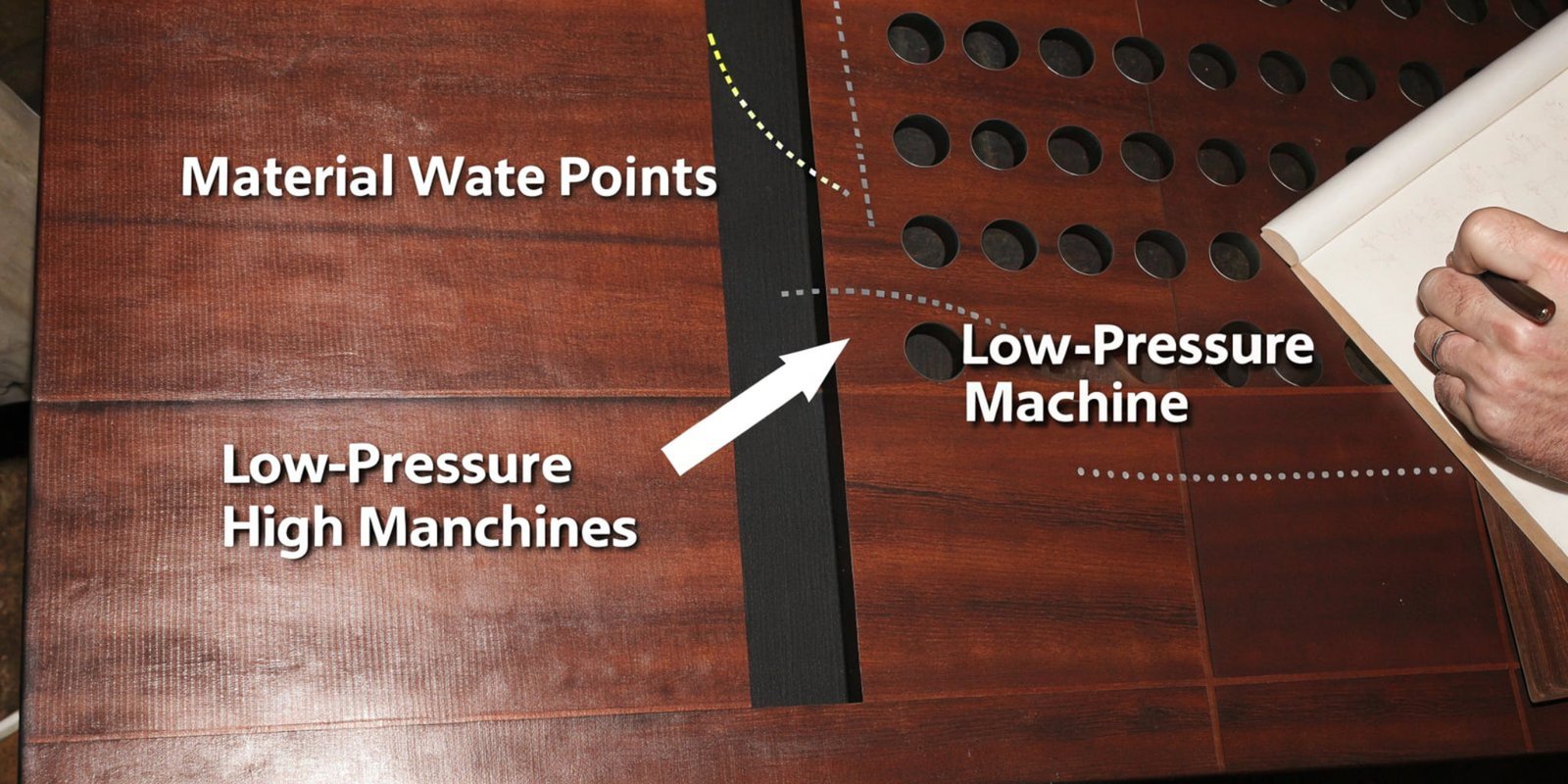
In my nearly 20 years in this industry, I have seen many factories struggle with the hidden costs of low-pressure machines. The real expense is not the machine itself, but what you lose in daily production. A low-pressure machine’s mixing head needs to be cleaned with a solvent after every few shots, or even after every single shot[^1]. Each cleaning cycle flushes out and wastes perfectly good raw materials. From our experience, this waste, including the solvent, costs about $0.15 USD every time. If your team cleans the head 50 times a day, that is $7.50 lost. Over a year, that adds up to over $2,000 in pure waste. This number doesn’t even include the cost of buying, storing, and safely disposing of the chemical solvents. A high-pressure machine eliminates this problem completely with its self-cleaning mixing head.
The Hidden Costs of Low-Pressure Systems
| Cost Factor | Low-Pressure Machine | High-Pressure Machine | Your Annual Savings |
|---|---|---|---|
| Material Waste per Clean | ~$0.10 | $0 (Self-Cleaning) | ~$1,500+ |
| Solvent Cost per Clean | ~$0.05 | $0 | ~$750+ |
| Waste Disposal | Required for solvents | Not Required | ~$500+ |
| Downtime for Cleaning | ~1-2 minutes per cycle | 0 seconds | Increased Production |
| Total Hidden Costs | ~$2,750+ per year | $0 | Significant |
How does the initial cost of high-pressure machines compare to the efficiency gains over low-pressure systems?
A high-pressure machine can cost twice as much as a low-pressure one, which feels like a big risk. But running an inefficient machine means you’re losing money on every part you make.
While the initial cost is higher, the efficiency gains are immediate. High-pressure machines mix materials perfectly, creating better foam with less material. This means fewer rejected parts and a higher yield. The investment often pays for itself, with a breakeven point of just 12-18 months.

Let’s do a simple calculation together. This is something I do with all my clients, like Mr. Hieu in Vietnam, to help them see the real value. Imagine a low-pressure machine costs $15,000, and a comparable Foamor high-pressure machine costs $35,000. The difference is $20,000. This looks like a lot of money. But now let’s look at the daily savings. We already calculated that you save over $2,750 per year just on cleaning waste. On top of that, the precision metering of a high-pressure machine can reduce your overall material consumption by 5-8%[^2]. For a medium-sized factory, this can easily mean savings of $50 to $100 per day.
Calculating Your Breakeven Point
Let’s use a conservative saving of $75 per day.
- Initial Extra Cost: $20,000
- Daily Savings (Materials + Cleaning): $75
- Breakeven Calculation: $20,000 / $75 per day = 267 working days
This means in about one year of production, the high-pressure machine has already paid for its extra cost. After that, all the daily savings go directly to your profit. This is why I tell my clients that the most expensive machine is often the one that wastes your material every day.
In which scenarios does a high-pressure foaming machine provide better value than low-pressure alternatives?
You might not be sure if your production really needs a high-pressure machine. Choosing the wrong one means you either overspend or can’t meet your customers’ quality demands.
A high-pressure machine provides better value in high-volume production, especially for products requiring consistent quality like automotive seats or memory foam mattresses. If you make flexible, HR, or memory foam, or supply to demanding clients like IKEA, high-pressure is the right choice.
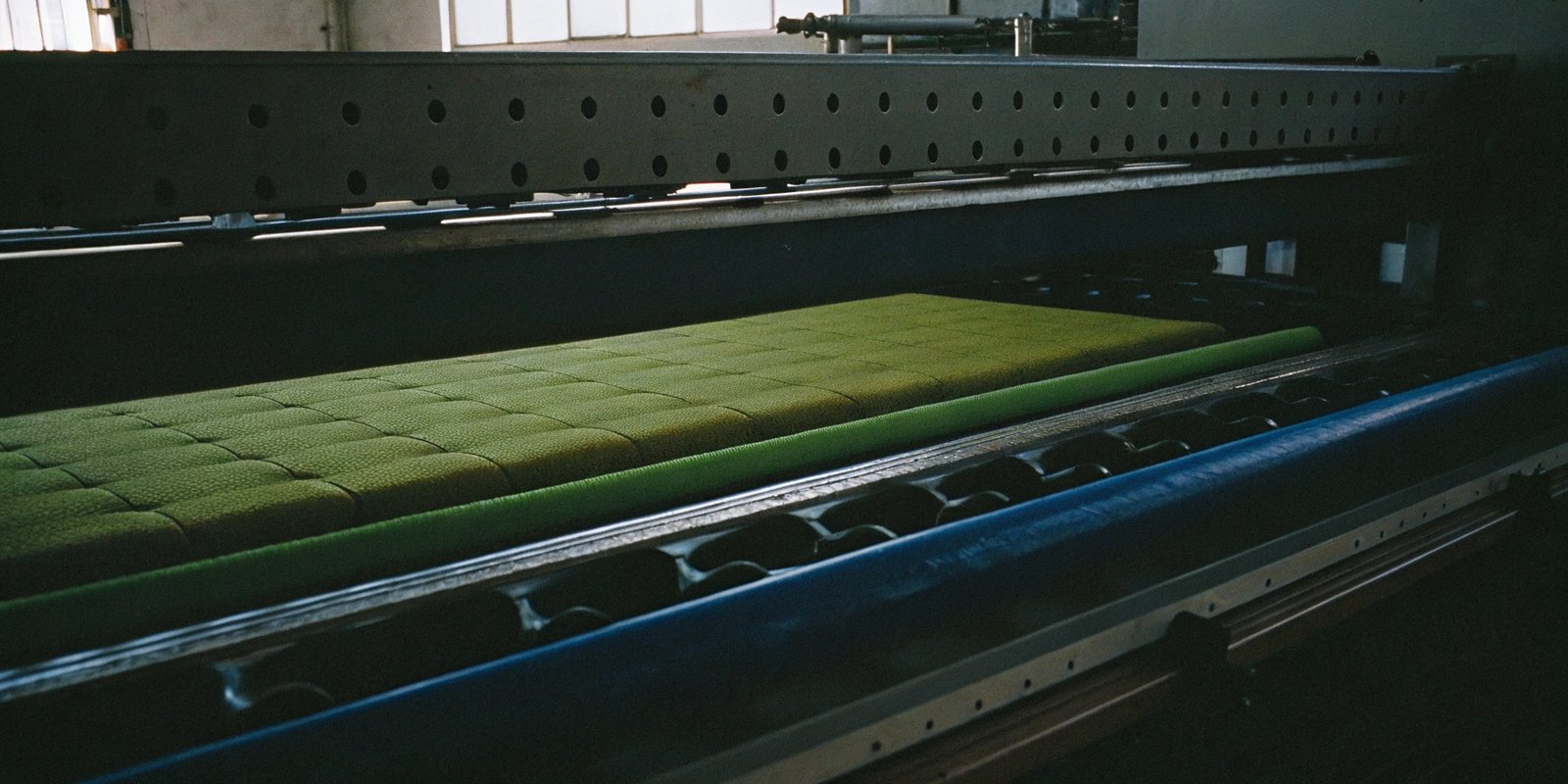
The choice between high and low pressure depends entirely on your product and your market. A low-pressure machine can be a good starting point for simple, rigid foam applications like insulation or basic packaging[^3] where quality is not the main concern. However, for most of the furniture, automotive, and bedding manufacturers we work with, a high-pressure machine is not a luxury; it’s a necessity. We helped a sofa factory, Nam Anh Furniture, switch to a high-pressure line. Their main customer was a European retailer with very high standards. With their old low-pressure machine, their rejection rate was almost 10%. After upgrading, that rate dropped to below 1%.
When to Choose High Pressure
- For High-Quality Foam Products: If you produce flexible foam, high-resilience (HR) foam for sofas, or memory foam for mattresses and pillows, you need the superior mixing of a high-pressure machine. It creates a finer, more uniform cell structure that feels better and lasts longer[^4].
- For High-Volume Production: If your factory runs two shifts or produces thousands of parts a day, the small daily savings on material add up to a huge amount of money over the year. The speed of a self-cleaning head also increases your total output.
- For Strict Customer Requirements: If you are a supplier for big international brands or the automotive industry, their quality standards are non-negotiable. A high-pressure machine gives you the consistency and process control to meet these demands and win more orders.
- When Material Costs are Rising: Raw material prices are always changing. The precision of a high-pressure machine protects your profit margins by making sure not a single gram of material is wasted.
Are the performance advantages of high-pressure machines significant enough to justify the extra expense?
You’ve heard high-pressure machines perform better, but you wonder if it’s a real, tangible difference. You can’t afford to spend money on features that don’t directly impact your bottom line.
Absolutely. The performance advantages are significant. High-pressure mixing creates a much finer and more consistent foam cell structure. This directly improves product durability, comfort, and appearance. It also reduces defects, increases production speed, and gives you a major competitive advantage.

The difference in performance comes from the mixing technology. A low-pressure machine uses a mechanical stirrer, like a small blender, to mix the polyol and isocyanate. This method is slow and can be incomplete, leaving some parts unmixed and creating large, uneven bubbles in the foam. A high-pressure machine works differently. It uses extreme pressure (100-150 bar) to shoot the two liquids at each other inside a tiny mixing chamber[^5]. This is called impingement mixing. The collision is so powerful that the chemicals are mixed perfectly in a fraction of a second. This superior mixing directly translates into a superior product. It’s the difference between a lumpy cake batter mixed by hand and a smooth one made with a high-speed mixer.
From Machine Performance to Product Quality
| Feature | Low-Pressure Machine | High-Pressure Machine | Impact on Your Business |
|---|---|---|---|
| Mixing Method | Mechanical Stirrer | High-Pressure Impingement | Better, more consistent foam quality. |
| Foam Cell Structure | Larger, less uniform | Finer, more uniform | Stronger, more durable products. Fewer defects. |
| Production Speed | Slower (requires cleaning) | Faster (self-cleaning) | Higher output and less downtime. |
| Material Usage | Higher (waste & drips) | Lower (precision metering) | Lower production cost per unit. |
| Process Control | Less Stable | Highly Stable & Repeatable | Consistent quality batch after batch. |
Conclusion
In short, a high-pressure machine’s initial cost is higher, but it pays for itself through material savings, better quality, and higher efficiency, making it the smarter long-term investment.
[^1]: "The Effect of Mixing Pressure in a High-Pressure Machine on …", https://pmc.ncbi.nlm.nih.gov/articles/PMC9866240/. Polyurethane processing references note that low-pressure mixing heads using mechanical agitation commonly require solvent or air-assisted cleaning to remove reactive residues after dispensing cycles. Evidence role: mechanism; source type: institution. Supports: Low-pressure polyurethane foaming machines may require frequent solvent cleaning of the mixing head.. Scope note: Cleaning frequency depends on formulation, shot size, machine design, and production schedule; the source may establish the practice without confirming the exact interval stated here.
[^2]: "Polyurethane Foams: Past, Present, and Future – PMC", https://pmc.ncbi.nlm.nih.gov/articles/PMC6213201/. A process-engineering or polyurethane manufacturing study comparing dosing accuracy, scrap, and overpacking can support that improved metering and mixing reduce material consumption in foam production. Evidence role: statistic; source type: paper. Supports: Precision metering in high-pressure polyurethane foaming can reduce overall material consumption by several percentage points.. Scope note: The exact 5–8% range is likely plant-specific; the source may provide comparable savings ranges or the underlying variables needed to calculate them.
[^3]: "Rigid PU Foam Low Pressure Polyurethane Foam Machine", https://pufoam-tech.com/2-1-low-pressure-rigid-polyurethane-foam-machine.html. Polyurethane processing references distinguish low-pressure mechanical mixing as suitable for some lower-throughput or less complex rigid-foam applications, including insulation and packaging, where capital cost and simplicity may be prioritized. Evidence role: general_support; source type: education. Supports: Low-pressure polyurethane foaming equipment can be appropriate for simpler rigid-foam applications such as insulation or packaging.. Scope note: Suitability depends on product specifications and output scale; the source would support common use cases rather than a categorical rule.
[^4]: "Variation of Mechanical Characteristics of Polyurethane Foam", https://pmc.ncbi.nlm.nih.gov/articles/PMC6747564/. Polymer-foam studies report that cell size distribution and foam morphology affect mechanical properties such as resilience, compression behavior, and durability in flexible polyurethane foams. Evidence role: mechanism; source type: paper. Supports: A finer and more uniform polyurethane foam cell structure can improve comfort-related and durability-related properties.. Scope note: The source would support the link between cell morphology and performance; sensory comfort and service life also depend on formulation, density, and testing conditions.
[^5]: "The Effect of Mixing Pressure in a High-Pressure Machine on …", https://pmc.ncbi.nlm.nih.gov/articles/PMC9866240/. Technical descriptions of high-pressure polyurethane impingement mixing state that polyol and isocyanate streams are injected at high pressure into a small mixing chamber, where their collision rapidly mixes the components. Evidence role: definition; source type: encyclopedia. Supports: High-pressure polyurethane foaming uses impingement mixing, often at pressures on the order of 100–150 bar.. Scope note: Operating pressure ranges differ by equipment and formulation; the source may support the impingement-mixing principle and a typical pressure range rather than every machine operating at 100–150 bar.
Leave a Reply