

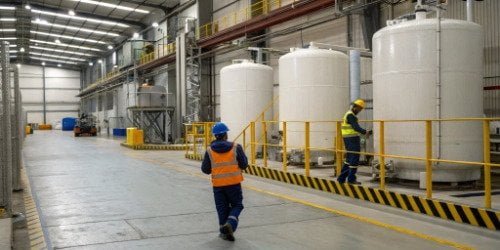
Are you worried about the safety risks in your foam factory? Accidents can stop production and harm your team. Understanding the real hazards is the first step to managing them.
The main hazards in PU foam production come from the raw materials, specifically isocyanates (MDI), and some cleaning solvents like methylene chloride used with low-pressure machines. The finished, fully cured polyurethane foam product itself is generally considered safe and non-hazardous.
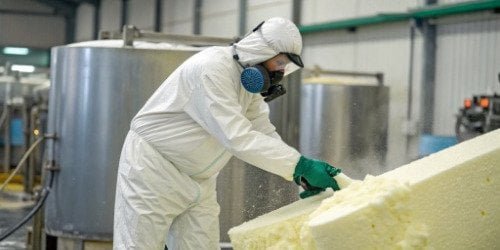
When you run a production line, safety is always the number one priority. It’s not just about meeting regulations; it’s about protecting your people and ensuring your factory runs smoothly without costly interruptions. Many factory managers we talk to are concerned about the chemicals involved in making polyurethane foam. They ask us what the real risks are and how to manage them. The good news is that with the right knowledge and equipment, you can run a very safe and efficient PU foam production line. Let’s break down the potential hazards one by one so you know exactly what to look out for and how to protect your team.
Is PU foam hazardous?
Struggling to separate facts from fiction about PU foam safety? Misinformation can lead to unnecessary fear and costly, incorrect safety measures. You need clear, simple answers.
The raw chemical components, especially isocyanates, are hazardous and require careful handling. However, once they react and cure, the final polyurethane foam product is chemically inert and safe for everyday use in furniture, mattresses, and insulation.
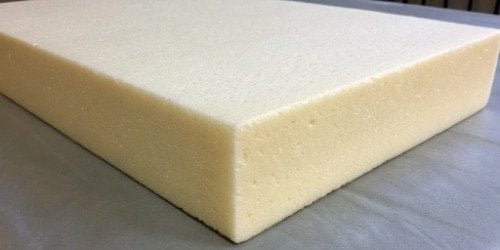
It’s very important to understand the difference between the “before” and “after” of the foaming process. The hazards exist almost entirely during the production phase, when you are handling liquid chemicals.[^1] The two main components are polyols (Part A) and isocyanates (Part B, or MDI). Isocyanates are sensitizers, which means they can cause respiratory issues if inhaled. This is why proper ventilation and Personal Protective Equipment (PPE) are absolutely essential for workers handling these raw materials.
However, once the polyol and isocyanate are mixed inside the foaming machine, they undergo a chemical reaction. This reaction creates the stable, solid foam structure. After this reaction is complete and the foam has fully cured (usually within 24 hours), the isocyanates are consumed. The final product is inert, meaning it is chemically stable and does not release harmful substances.[^2]
Before vs. After: The Chemical State
| State | Chemicals | Hazard Level | Required Actions |
|---|---|---|---|
| Before Reaction | Liquid Polyols & Isocyanates | High (Isocyanates) | Use PPE, ensure good ventilation, follow handling procedures. |
| After Reaction | Solid, Cured PU Foam | Low / Inert | No special handling required for the finished product. |
What are the disadvantages of polyurethane foam?
Are you facing inconsistent foam quality and high material waste? These problems eat into your profits and can cause you to lose orders to competitors with better products.
The main disadvantages are related to production process control. Without the right equipment and parameters, you can face issues like unstable density, structural defects, and high raw material consumption. These are process challenges, not flaws in the foam itself.
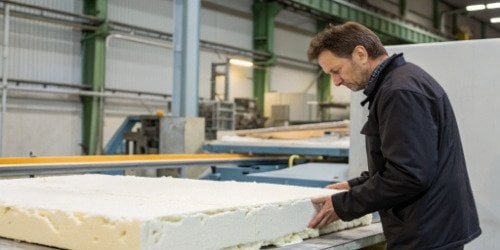
When customers ask about the “disadvantages” of PU foam, they are usually talking about the difficulties they face in production. A common complaint we hear from users of older, low-pressure machines is that their foam quality is not stable. One batch is good, the next is bad. This is a huge problem, especially if you supply to demanding clients like IKEA. The root cause is often poor process control. The mixing ratio might be slightly off, the temperature could fluctuate, or the pressure might be inconsistent.[^3] These small variations lead to big problems in the final product. This is why upgrading to a high-pressure foaming machine is often a key step. High-pressure machines offer precise metering (often with an accuracy of ±0.5%), ensuring the chemical ratio is perfect every time.[^4] This directly solves the problem of inconsistency and reduces material waste significantly.
What are the common defects found in polyurethane foam?
Are you tired of seeing foam collapse, shrink, or have large holes? These defects mean wasted material, time, and money, and they put your production schedule at risk.
Common defects include foam collapse, shrinkage, large voids or bubbles, and uneven density. These are almost always caused by incorrect processing parameters, material issues, or environmental factors, all of which can be controlled.
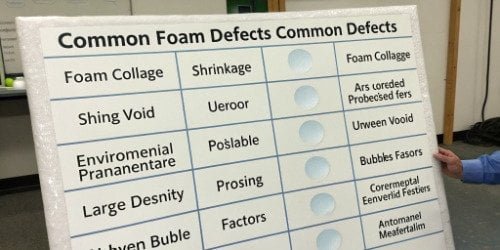
As a production director, your goal is to make a qualified product every time. Seeing defects is frustrating. In our 20 years of experience, we’ve helped countless factories solve these exact problems. The key is to diagnose the root cause correctly. For example, if your foam collapses after rising, it often points to an issue with the chemical formulation or an incorrect ratio. If you see shrinkage, the problem might be related to the mold temperature or a poor curing process. We help our clients by not just selling them a machine, but by providing the process knowledge to go with it. A reliable machine is the foundation, but knowing how to adjust parameters is what makes you a master of foam production.
Troubleshooting Common Foam Defects
| Defect | Potential Cause | How to Fix It |
|---|---|---|
| Foam Collapse | Incorrect Isocyanate/Polyol ratio; wrong catalyst amount. | Check and calibrate the machine’s metering pumps. Adjust formulation. |
| Shrinkage | Mold temperature is too low; insufficient curing time. | Increase mold temperature. Allow for a longer demolding time. |
| Large Voids | Air trapped in the mixing head; moisture in raw materials. | Check for leaks in the material lines. Ensure raw materials are dry. |
| Uneven Density | Poor mixing; inconsistent material flow. | Clean the mixing head. Check pump pressure and stability. |
Is polyurethane foam a fire hazard?
Do you worry about fire safety in your warehouse full of foam products? The flammability of your product is a major concern for both storage and for your end customers.
It depends on the formulation. Foam made with water as the blowing agent is self-extinguishing. If flammable blowing agents like cyclopentane are used, the foam is flammable and requires strict fire prevention measures during production and storage.
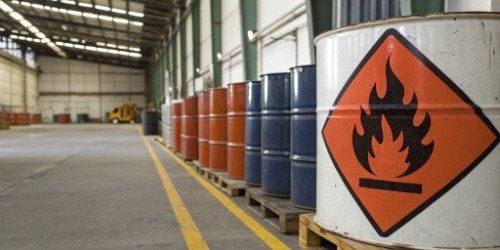
The fire behavior of PU foam is determined almost entirely by the blowing agent used in its formulation. Blowing agents are the substances that create the “bubbles” to make the liquid mixture expand into foam. For applications like furniture and mattresses, water is often used. When exposed to a flame, a water-blown foam will char and self-extinguish once the flame source is removed.
However, for rigid foam used in insulation panels, blowing agents like cyclopentane are common because they offer excellent insulation properties. Cyclopentane is highly flammable.[^5] If you use it, your production area must be equipped with explosion-proof electronics, robust ventilation, and gas detectors. You must manage fire risk very seriously. The other option is to add fire retardants to the chemical mix. This significantly improves the fire resistance of the foam, helping it meet strict building codes and safety standards.
Impact of Blowing Agent on Fire Safety
| Blowing Agent | Flammability | Common Application | Safety Notes |
|---|---|---|---|
| Water | Low (Self-Extinguishing) | Flexible Foam (sofas, mattresses) | Generally safe. Adding fire retardants improves performance.[^6] |
| Cyclopentane | High | Rigid Foam (insulation panels) | Requires explosion-proof setup and strict fire safety protocols. |
| HFCs/HFOs | Low / None | Rigid Foam (insulation panels) | Less flammable alternative to cyclopentane, but can be more expensive. |
Conclusion
Understanding production hazards is key to a safe, profitable factory. With the right equipment and knowledge, you can easily manage the risks from raw materials and achieve consistent, high-quality foam.
[^1]: “Occupational Exposure to Volatile Organic Compounds in … – PMC – NIH”, https://pmc.ncbi.nlm.nih.gov/articles/PMC12786908/. This source explains the risks associated with handling liquid chemicals during polyurethane foam production. Evidence role: mechanism; source type: institution. Supports: Hazards are primarily present during the production phase of polyurethane foam.. Scope note: The source may not address all phases of foam production.
[^2]: “Polyurethane Foams: Past, Present, and Future – PMC”, https://pmc.ncbi.nlm.nih.gov/articles/PMC6213201/. This source confirms the chemical stability and inert nature of cured polyurethane foam. Evidence role: mechanism; source type: research. Supports: Cured polyurethane foam is chemically stable and does not release harmful substances.. Scope note: The source may not address all formulations of cured foam.
[^3]: “Effect of Varying Mixing Ratios and Pre-Heat Temperature on the …”, https://www.sciencedirect.com/science/article/pii/S1877705815044628. This source explains how variations in mixing ratio, temperature, and pressure affect foam quality. Evidence role: mechanism; source type: education. Supports: Mixing ratio, temperature, and pressure inconsistencies can lead to foam quality issues.. Scope note: The source may not address all factors affecting foam quality.
[^4]: “High-pressure dosing units”, https://cannon.com/processing-equipment/dosing-units/. This source discusses the accuracy of high-pressure machines in polyurethane foam production. Evidence role: mechanism; source type: research. Supports: High-pressure machines provide precise metering for chemical ratios in foam production.. Scope note: The source may not address all types of high-pressure machines.
[^5]: “CYCLOPENTANE – CAMEO Chemicals – NOAA”, https://cameochemicals.noaa.gov/chemical/498. This source details the flammability risks associated with cyclopentane in industrial applications. Evidence role: mechanism; source type: institution. Supports: Cyclopentane is highly flammable.. Scope note: The source may focus on general industrial use rather than PU foam production specifically.
[^6]: “Flame Retardants Used in Flexible Polyurethane Foam | US EPA”, https://www.epa.gov/saferchoice/flame-retardants-used-flexible-polyurethane-foam. This source discusses the role of fire retardants in enhancing the fire resistance of polyurethane foam. Evidence role: mechanism; source type: research. Supports: Fire retardants improve the fire resistance of polyurethane foam.. Scope note: The source may not cover all types of fire retardants used in foam production.
Leave a Reply