
Struggling with insulation regulations and poor foam quality? Your current process might be costing you more than just materials. It’s time for a better, safer solution.
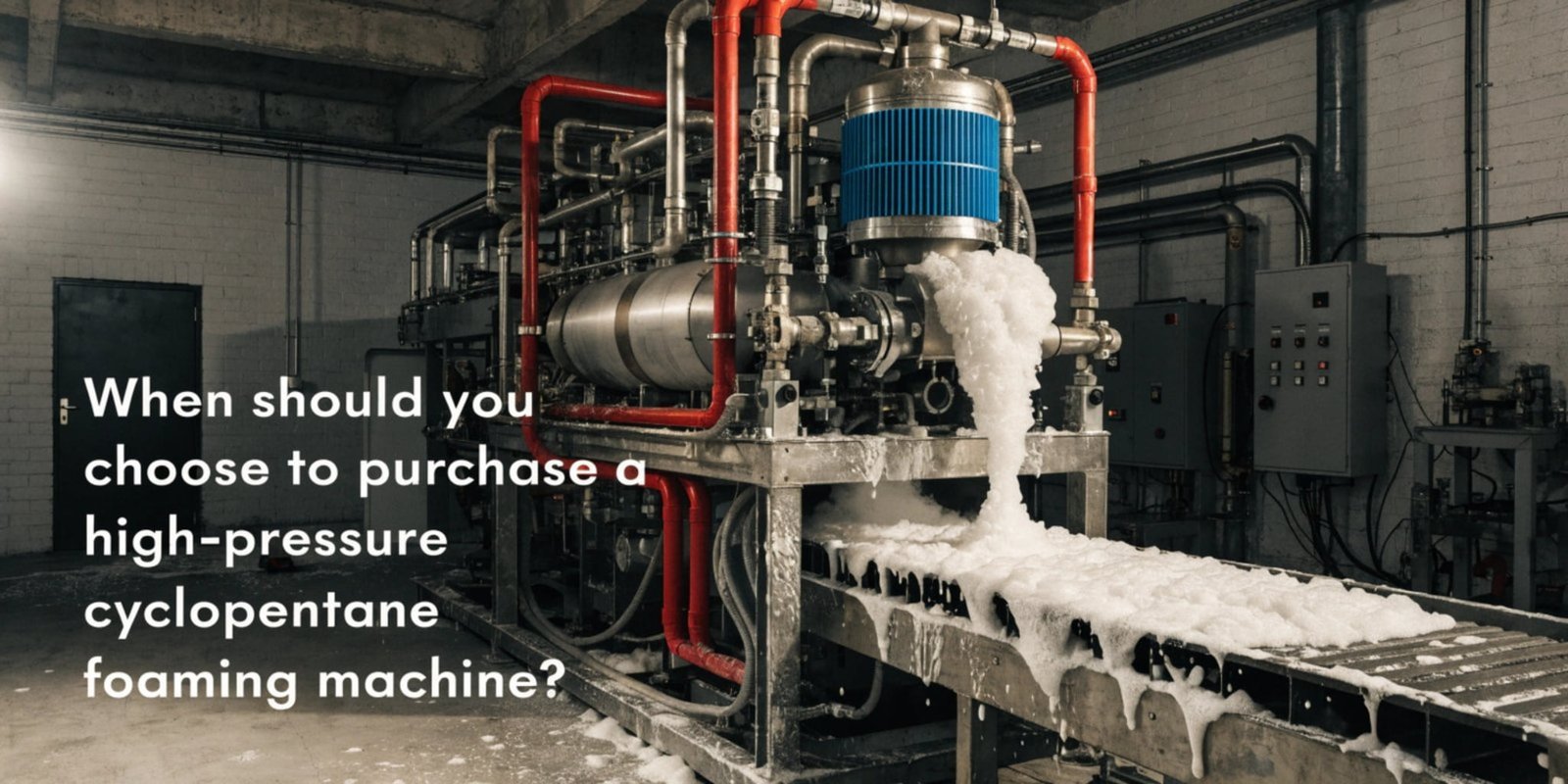
You should choose a high-pressure cyclopentane foaming machine when you need to meet environmental regulations, improve insulation performance, and ensure safety. It’s essential if your polyol blend contains cyclopentane, especially in regulated industries like refrigeration and construction materials where it’s often mandatory.
This seems straightforward, but the decision involves more than just regulations. We have helped many customers, like production directors in Vietnam’s furniture and appliance industries, navigate this choice. They often worry about cost, safety, and if they really need this specific machine. Let’s break down what you actually need to think about before you make a decision.
What are the key factors to consider when purchasing a high-pressure cyclopentane foaming machine?
Choosing the right machine feels overwhelming. You worry about picking the wrong specifications and wasting money. A mistake here can shut down your production line for weeks.
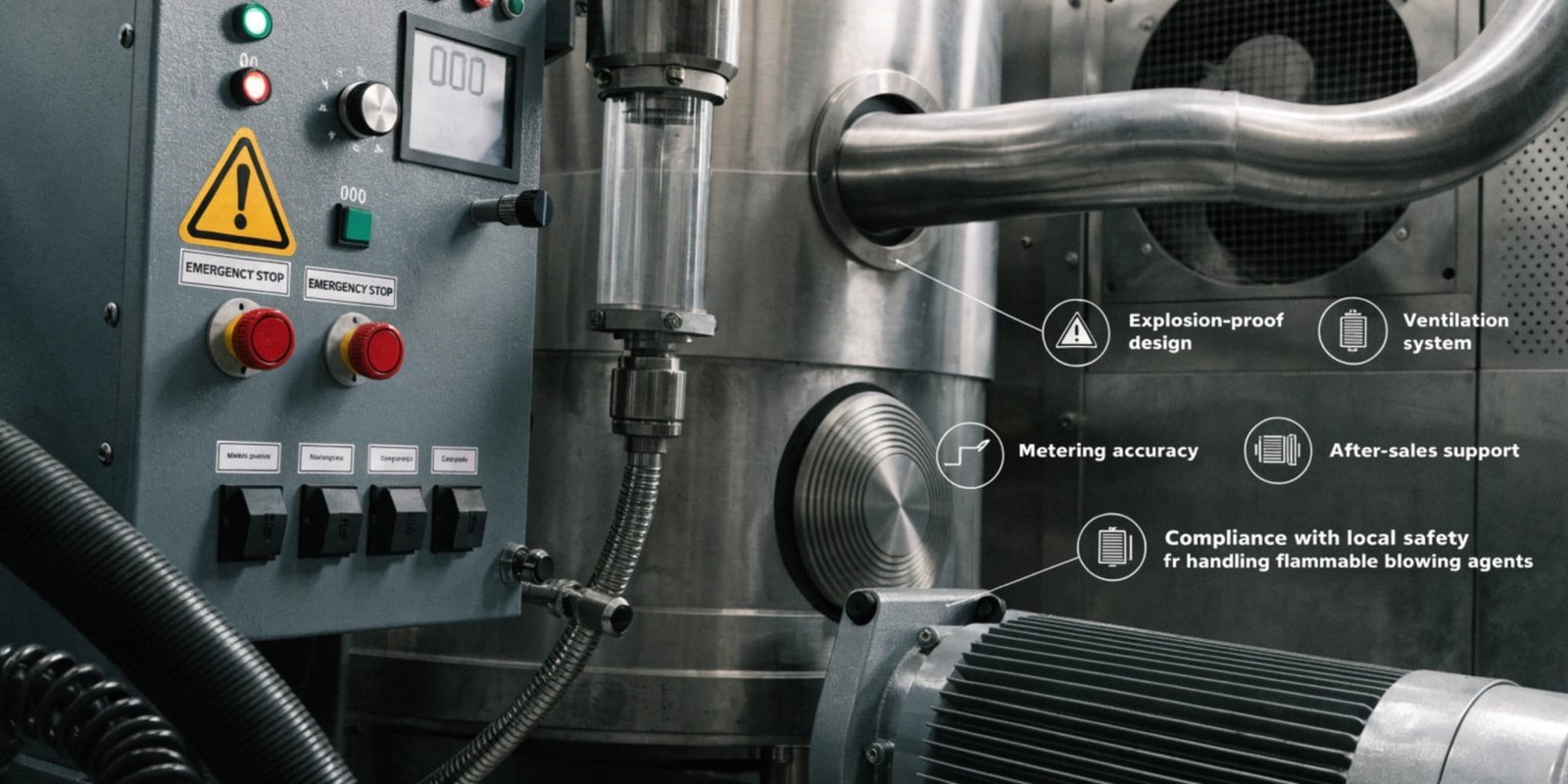
Key factors include the machine’s safety features (explosion-proofing, ventilation), metering accuracy for precise mixing, output capacity to match your production needs, and robust after-sales support from the supplier. Always check if the machine meets local safety standards for handling flammable blowing agents.
When we talk to production directors like Mr. Hieu in Vietnam, their biggest fear isn’t the price—it’s the risk. The risk of the machine not working, the risk of it being unsafe, and the risk of the supplier disappearing after payment. To avoid this, you must look beyond the brochure and ask hard questions. We always guide our clients to focus on three core areas.
1. Safety First, Always
Cyclopentane is flammable, so your machine must be built to handle it safely. This is not negotiable. Look for features like explosion-proof motors, dedicated gas detection sensors, and a powerful ventilation system integrated with the machine’s controls. A proper machine will automatically shut down and sound an alarm if it detects a leak[^1]. Don’t let a supplier tell you these are optional extras; they are essential for protecting your factory and your people.
2. Technical Performance and Precision
The whole point of upgrading to high pressure is precision. You need to verify the machine’s metering accuracy. For our machines, we guarantee a precision of ±0.5%. This means you use the exact amount of raw material needed, every single time, reducing waste. Also, look at the mix head. Is it a high-pressure, self-cleaning impingement mixer? This design is critical for achieving a fine, uniform cell structure in the foam, which leads to better insulation and product quality.
3. Supplier Reliability and Support
What happens when the machine has a problem? A machine from China can feel very far away if you have an issue in Ho Chi Minh City. This is a valid concern. That is why you must evaluate the supplier’s after-sales support system. Do they offer 24/48-hour remote support? Can they diagnose problems via video call? Do they provide on-site installation and, most importantly, on-site training for your operators? A reliable partner doesn’t just sell you a machine; they ensure it runs successfully in your factory.
| Key Factor | Why It’s Important | What to Ask Your Supplier |
|---|---|---|
| Safety Features | Prevents fire/explosion, ensures worker safety. | “Is it fully explosion-proof? Show me the certifications.” |
| Metering Accuracy | Reduces raw material waste and ensures foam quality. | “What is the guaranteed metering precision? (e.g., ±0.5%)” |
| After-Sales Support | Minimizes downtime and solves problems quickly. | “What is your response time? Do you offer on-site training?” |
| Component Brands | Determines reliability and lifespan of the machine. | “What brands are the pumps, motors, and PLC?” |
How does a high-pressure cyclopentane foaming machine improve manufacturing efficiency?
Your production line suffers from constant stops. The foam quality is inconsistent, leading to high scrap rates. This inefficiency is eating into your profits every single day.
It improves efficiency by ensuring precise, high-pressure impingement mixing. This results in a more uniform cell structure, faster cure times, and less material waste. The self-cleaning mix head also eliminates solvent flushing, reducing downtime between shots and lowering operational costs.
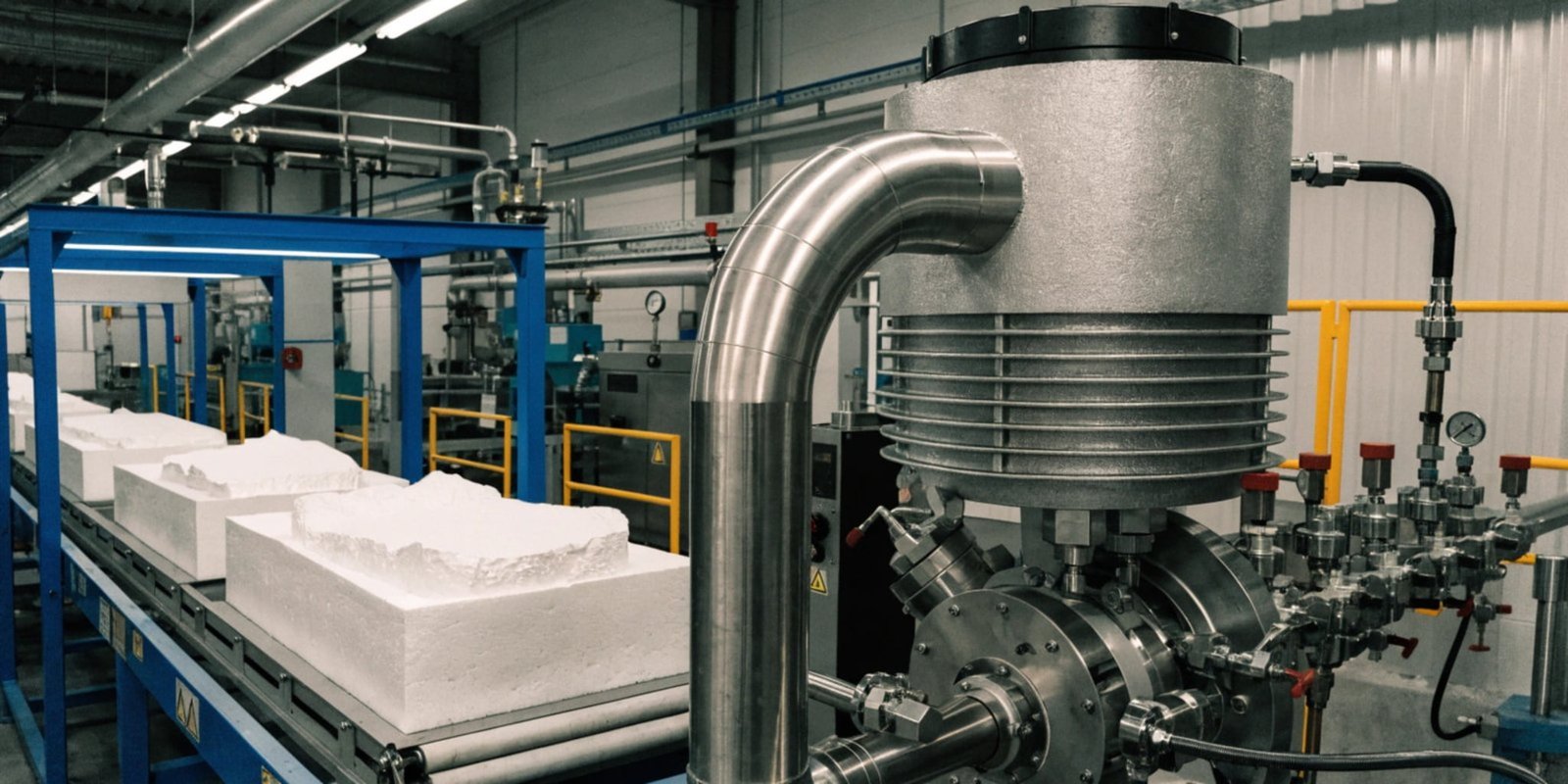
Efficiency isn’t just about speed; it’s about making more high-quality products with less waste and less downtime. When we worked with a furniture manufacturer who was struggling with an old low-pressure machine, their main complaints were material waste and constant cleaning. After upgrading to one of our high-pressure systems, their operation transformed. Here is how.
Precision Mixing Reduces Waste
In a high-pressure machine, the polyol and isocyanate are fired at each other at over 150 bar. This intense pressure creates immediate, perfect mixing at the molecular level. An old low-pressure machine with a mechanical stirrer can’t do this. The result of better mixing is a more consistent foam density and structure[^2]. You no longer have dense spots or soft spots in your product. For our client, this meant their rejection rate dropped from 10% to less than 1%, saving them thousands of dollars in wasted chemicals every month.
Faster Cycles Mean Higher Output
High-pressure mixing creates a more reactive chemical process[^3]. This means the foam cures, or becomes solid, much faster. Where a low-pressure system might require a 5-minute mold time, a high-pressure system can often achieve the same result in 2-3 minutes. This might not sound like much, but over an 8-hour shift, it can mean a 30-50% increase in the number of parts you can produce. Furthermore, the L-type, self-cleaning mix head cleans itself with a piston after each shot, so it’s ready for the next part in seconds. No more stopping to flush the head with solvents.
Automation and Reliability
Modern high-pressure machines are controlled by a PLC (Programmable Logic Controller). You can store dozens of different recipes for different products. An operator can switch from making a sofa cushion to an insulated panel with the press of a button. This automation reduces human error and ensures that every part is made to the exact same specification. Reliable components from trusted brands (like Siemens or Schneider for electronics) also mean the machine runs day in and day out with minimal unexpected stops.
What are the benefits of using cyclopentane foaming machines for insulation production?
Your products are failing to meet new energy standards. Competitors are marketing their superior insulation performance, and you’re losing market share because you can’t compete.
The main benefits are superior insulation performance (low K-factor) and environmental compliance. Cyclopentane has zero Ozone Depletion Potential (ODP) and very low Global Warming Potential (GWP), making it a long-term, sustainable choice for producing highly efficient rigid foam.
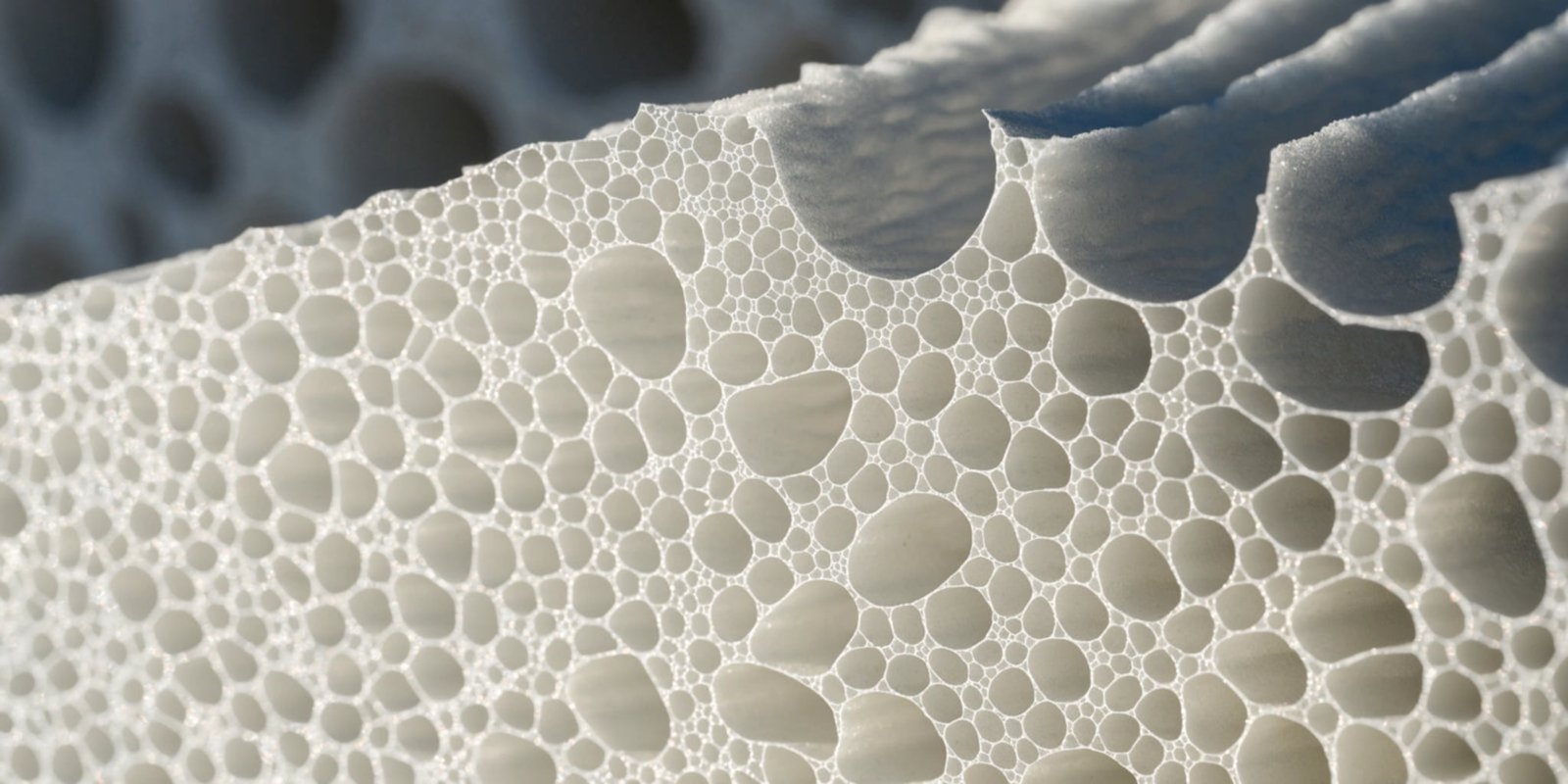
Many countries, including China and most of Europe, have made cyclopentane a mandatory blowing agent for insulation products like refrigerators and building panels. This isn’t just a trend; it’s a permanent shift driven by two powerful forces: the need for better energy efficiency and the demand for environmentally friendly products. For companies that export to clients like IKEA or serve the construction market, using cyclopentane is no longer a choice—it’s a requirement to do business.
Superior Thermal Insulation
The job of insulation is to stop the transfer of heat. The effectiveness of an insulation material is measured by its “K-factor,” and a lower K-factor is better. The gas trapped inside the cells of polyurethane foam is what does the insulating. Cyclopentane gas has a very low thermal conductivity[^4]. When a high-pressure machine creates a foam with a very fine, closed-cell structure, it traps this gas perfectly. The result is a rigid foam with an excellent K-factor, which means a refrigerator uses less electricity and a building stays cooler in the summer.
Meeting Global Environmental Standards
The old blowing agents, like R-11 or HCFC-141b, were great for insulation but were very damaging to the ozone layer. They are now banned under international agreements like the Montreal Protocol. Cyclopentane is the solution[^5]. It has an Ozone Depletion Potential (ODP) of zero and a very low Global Warming Potential (GWP). By using a cyclopentane-based system, you are not only complying with current laws but also future-proofing your products. You can confidently market your products as “green” or “eco-friendly,” which is a powerful advantage, especially when bidding for government projects or contracts with large multinational corporations.
| Blowing Agent | Ozone Depletion (ODP) | Global Warming (GWP) | Status |
|---|---|---|---|
| CFC-11 | 1 | High | Banned |
| HCFC-141b | 0.11 | High | Phased Out |
| Cyclopentane | 0 | Very Low | Industry Standard |
When is a high-pressure foaming machine more cost-effective than other options?
You are worried about the high initial investment. The upfront cost of $30,000 to $60,000 seems steep, and you are tempted by cheaper low-pressure machines. But is that a wise long-term decision?
A high-pressure machine is more cost-effective in the long run for medium to high-volume production. The significant savings on raw materials due to precise metering and reduced waste often lead to a return on investment (ROI) within 6 to 18 months.
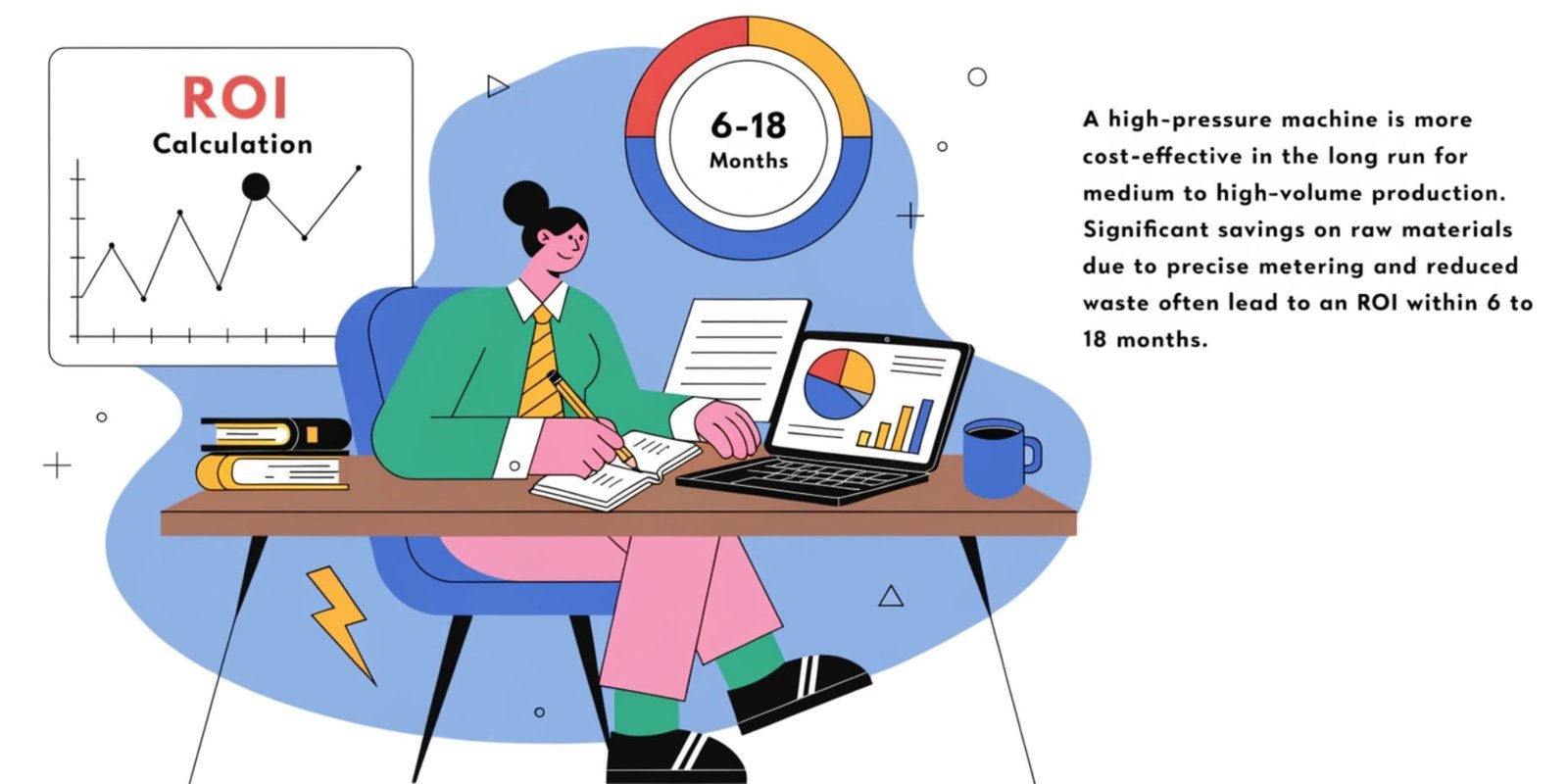
The price tag on a high-pressure machine can cause hesitation. But as a production director, your job is to think about the Total Cost of Ownership, not just the initial purchase price. A cheaper machine that wastes material and breaks down frequently is not a good investment. When we talk to factory owners, we help them do a simple calculation to see how quickly a high-pressure machine pays for itself.
Calculating Your Return on Investment (ROI)
Let’s take the example of a factory using 10 tons of raw materials per month. A low-pressure machine can easily have a waste factor of 5-10% due to imprecise mixing and density variations. A high-pressure machine reduces that waste to under 1%.
- Material Savings: A 5% reduction in waste on 10,000 kg of material is 500 kg saved per month. If your chemicals cost $3/kg, that’s $1,500 saved every month.
- ROI Calculation: If the price difference between a low-pressure and a high-pressure machine is $20,000, you would pay back that difference in just over 13 months ($20,000 / $1,500) from material savings alone. This doesn’t even include the profits from higher output and fewer rejected parts. Many of our customers see a full ROI in 6-12 months.
Beyond the Initial Price Tag
The financial benefits go beyond just material savings. Think about the other costs associated with a cheaper, less reliable machine. How much does it cost you every time your production line stops for an hour to fix or clean the machine? How much does it cost to lose an order because you couldn’t meet the quality standards or the delivery deadline? A high-pressure machine is an investment in consistency, quality, and reliability. It allows you to confidently bid on larger, more profitable contracts because you know your equipment can handle the job.
| Cost Factor | Low-Pressure Machine | High-Pressure Machine |
|---|---|---|
| Initial Investment | Low | High |
| Material Waste | High (5-10%) | Low (<1%) |
| Maintenance | High (frequent cleaning, breakdowns) | Low (scheduled maintenance) |
| Product Quality | Inconsistent | Consistent, High Quality |
| Long-Term Cost | High | Low |
Conclusion
Choosing the right cyclopentane machine is about safety, efficiency, and future-proofing your business. We provide the equipment and expertise to ensure your production line works, and we stay.
[^1]: “Control of Hazardous Energy (Lockout/Tagout) – Overview – OSHA”, http://www.osha.gov/control-hazardous-energy. Safety protocols for handling flammable substances recommend automatic shutdown and alarm systems to mitigate risks of leaks and explosions. Evidence role: expert_consensus; source type: government. Supports: Automatic shutdown and alarm systems are essential safety features for machines handling flammable substances like cyclopentane.. Scope note: The source may focus on general safety protocols rather than specific implementations in cyclopentane machines.
[^2]: “Study of the bubble nucleation and growth mechanisms in high …”, https://ui.adsabs.harvard.edu/abs/2016EurPJ..76….2S/abstract. Studies on foam production confirm that high-pressure mixing improves consistency in foam density and cell structure. Evidence role: mechanism; source type: research. Supports: High-pressure mixing improves foam density and cell structure consistency, enhancing product quality.. Scope note: The evidence may focus on general foam production principles rather than specific outcomes for high-pressure systems.
[^3]: “(PDF) High pressure continuous process liquid PU foam laydown …”, https://www.academia.edu/42920196/High_pressure_continuous_process_liquid_PU_foam_laydown_optimization_with_Z_pokers. High-pressure mixing accelerates chemical reactions in polyurethane foam production, leading to faster curing times and improved efficiency. Evidence role: mechanism; source type: paper. Supports: High-pressure mixing enhances the chemical reactivity in polyurethane foam production, improving curing times and efficiency.. Scope note: The source may focus on general chemical reaction principles rather than specific benefits for high-pressure systems.
[^4]: “(PDF) Aging of Rigid Polyurethane Foams: Thermal Conductivity of …”, https://www.academia.edu/3659815/Aging_of_Rigid_Polyurethane_Foams_Thermal_Conductivity_of_N2_and_Cyclopentane_Gas_Mixtures. Cyclopentane’s thermal conductivity properties are documented in studies on insulation materials and blowing agents. Evidence role: statistic; source type: research. Supports: Cyclopentane gas contributes to superior thermal insulation due to its low thermal conductivity.. Scope note: The evidence may focus on general thermal properties rather than specific applications in insulation production.
[^5]: “Benefits of Addressing HFCs under the Montreal Protocol – epa nepis”, https://nepis.epa.gov/Exe/ZyPURL.cgi?Dockey=P100YNEN.TXT. Cyclopentane’s adoption as a replacement for HCFCs and CFCs in insulation production is supported by international agreements like the Montreal Protocol. Evidence role: historical_context; source type: government. Supports: Cyclopentane is a sustainable alternative to older blowing agents banned under international agreements.. Scope note: The source may focus on the broader context of HCFC and CFC phase-out rather than cyclopentane specifically.
Leave a Reply