

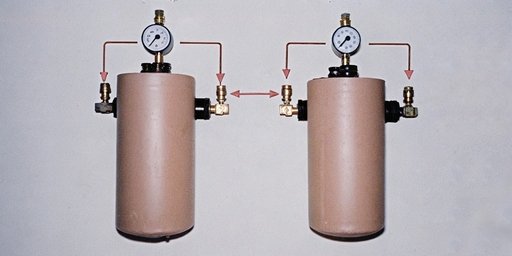
Are you tired of inconsistent foam quality and high material waste? These problems often stem from poor metering, costing you money and damaging your reputation with customers like IKEA.
The most reliable way to meter polyol and isocyanate is by using a high-pressure machine equipped with high-precision plunger pumps. These pumps, controlled by a PLC and motors, deliver an exact, consistent volume of each chemical to the mixhead, ensuring a perfect ratio every single time.

Getting the ratio right is everything in foam production.[^1] I’ve seen many factories, like our client Nam Anh Furniture in Vietnam, struggle with old low-pressure machines that waste up to 15% of their raw materials. The production director, Mr. Hieu, was frustrated with constant breakdowns and quality issues that put his big export orders at risk. He knew he needed a change, but the technology seemed complicated. It’s actually more straightforward than you might think. Let’s break down exactly how our machines achieve this precision and how it can solve your biggest production headaches.
What are the steps for metering polyol and isocyanate in a high-pressure machine?
You know the metering process is critical, but it feels like a black box. Misunderstanding the steps can lead to expensive mistakes and downtime, something no production director can afford.
The process starts with preparing the chemicals in temperature-controlled tanks. The metering pumps then draw the materials, and a control system ensures they are delivered at the precise ratio and pressure into the mixing head.
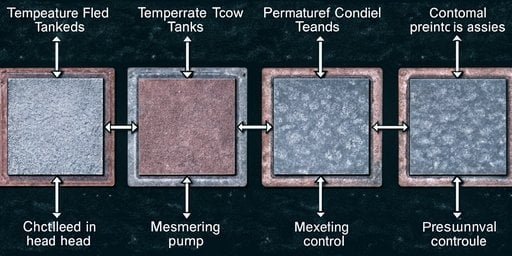
To make it easier to understand, let’s look at the metering process as a complete journey the chemicals take. For a production director like Mr. Hieu, seeing it broken down this way helps connect the equipment to the final product quality. Each step is designed to eliminate variables and ensure consistency.
Step 1: Material Preparation
Before any metering happens, the polyol and isocyanate must be at the right condition. They are stored in separate, double-jacketed tanks. We use these jackets to heat or cool the material to the perfect temperature, usually around 22-25°C. Why? Because temperature changes viscosity (thickness)[^2]. If the material is too thick or too thin, it won’t flow correctly. Our systems also include agitators in the polyol tank to keep any additives perfectly mixed[^3].
Step 2: Drawing and Metering
This is where the magic happens. We use high-precision axial plunger pumps[^4]. These are the heart of the machine. An electric motor drives each pump, which draws a very precise amount of chemical from the tank with each rotation. The amount of chemical is determined by the pump’s displacement and the motor’s speed[^5]. This is far more accurate than the gear pumps found in older low-pressure systems[^6].
Step 3: High-Pressure Delivery
After being metered, the chemicals are pushed through high-pressure hoses toward the mixhead. The system maintains a very high pressure, typically between 100 and 150 bar[^7]. This high pressure is crucial for the final step: impingement mixing[^8]. When the two chemical streams collide at this pressure inside the mixhead, they mix instantly and completely without needing a mechanical stirrer[^9]. This process is self-cleaning and results in a much finer and more consistent cell structure in the foam[^10].
How does a high-pressure machine ensure accurate proportioning of polyol and isocyanate?
Have you been dealing with inconsistent foam from an old machine? This wastes expensive chemicals, leads to customer complaints, and makes it impossible to meet the quality standards of demanding clients.
Accuracy comes from a combination of three key elements. First, high-precision plunger pumps deliver a fixed volume. Second, variable frequency drives (VFDs) control the pump motor’s speed precisely. Third, a closed-loop control system with flow meters provides real-time feedback to correct any deviation instantly.
When Mr. Hieu was evaluating a new machine, his main concern was ROI. He needed to justify a $30,000-$60,000 investment to his boss. The biggest selling point was reducing raw material waste. His old low-pressure machine had a metering error of 5% or more. Our high-pressure machines bring that error down to ±0.5%. For his factory, this translated to savings that could pay for the machine in just 8-12 months. This accuracy isn’t magic; it’s the result of a very well-designed system.
The Core of Accuracy: Plunger Pumps
Unlike gear pumps that can slip and wear, axial plunger pumps work like a series of high-precision syringes. Each piston stroke displaces a fixed, non-negotiable volume of liquid. This mechanical certainty is the foundation of accurate metering. It means that if you turn the motor at a specific speed, you get a predictable and repeatable flow rate. This is the first and most important step to stable quality.
The Brains: PLC and VFD
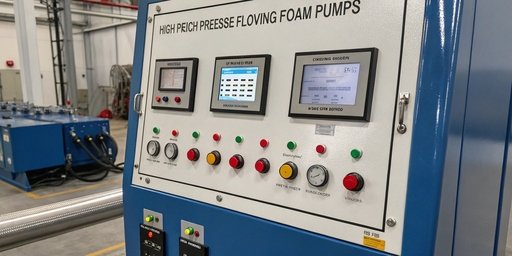
The operator enters the desired ratio (e.g., 100:45) into the PLC (Programmable Logic Controller) touch screen. The PLC then calculates the exact speed each motor needs to run at to achieve this ratio. It sends this command to the VFD (Variable Frequency Drive), which supplies the perfect amount of power to the motor. This setup allows for instant and precise adjustments to the flow rate without changing any gears or parts.
The Ultimate Guarantee: Closed-Loop Control
My insight is that relying only on the pump and motor is good, but it’s not perfect. This is called an “open-loop” system. For the highest precision, we add mass flow meters to create a “closed-loop” system.
| System Type | How It Works | Accuracy |
|---|---|---|
| Open-Loop | The PLC assumes the flow rate based on motor speed. It trusts the pump is perfect. | Good (around ±1-2%) |
| Closed-Loop | A flow meter measures the actual flow rate and sends this data back to the PLC. If the flow is off, the PLC instantly adjusts the motor speed to correct it. | Excellent (around ±0.5%) |
This closed-loop system is like having a supervisor watch the chemical flow every millisecond, making tiny adjustments to keep it perfect. It automatically compensates for small changes in temperature, viscosity, or pressure, guaranteeing the ratio is always exact. This is how we help our clients meet the strict quality demands of companies like IKEA.
What equipment is used to control the metering of polyol and isocyanate in high-pressure systems?
When you look at a PU machine, it can seem like a complex maze of parts. Not knowing what each component does makes it hard to operate, troubleshoot, or even have a confident conversation with a supplier.
The main control equipment includes material tanks, high-precision plunger pumps, motors with VFDs, a PLC control panel, and sometimes mass flow meters. Each part has a specific job in achieving the perfect ratio.

Understanding the key components demystifies the machine and empowers you to be in control of your production. When we install a machine, we train our clients’ teams, including engineers and operators, on what each part is and why it’s important. This knowledge is crucial for daily operation and basic maintenance. Here are the core components of the metering system and what they do:
| Component | Function | Why It’s Important |
|---|---|---|
| Material Tanks | Stores chemicals and uses a water jacket to maintain a stable temperature (22-25°C). The polyol tank also has an agitator. | Consistent temperature ensures consistent viscosity, which is critical for accurate metering. The agitator keeps polyol blends homogenous. |
| Plunger Metering Pump | A high-precision pump that delivers a fixed volume of liquid per revolution. We use axial plunger pumps. | This is the heart of the metering system. Its precision design is the main reason high-pressure machines are so accurate. |
| Electric Motor & VFD | The motor drives the pump. The Variable Frequency Drive (VFD) controls the motor’s speed[^11]. | By controlling the motor’s speed with the VFD, you get precise control over the chemical flow rate. |
| PLC Control System | The “brain” of the machine. The operator sets the ratio, shot times, and other parameters on a touch screen. | The PLC takes the operator’s input and automatically controls the VFDs and other components to execute the command perfectly. |
| Mass Flow Meter | (Optional but highly recommended) A sensor that measures the exact mass of chemical flowing through the line in real time. | This component enables closed-loop control. It provides feedback to the PLC for automatic, real-time adjustments, ensuring the highest accuracy (±0.5%). |
| Pressure Sensors | Monitors the pressure in the lines and at the mixhead. | This is a safety and quality control feature. It ensures the system is operating within the correct pressure range (100-150 bar) for proper impingement mixing. |
These components don’t work in isolation. They form a complete, intelligent system. The PLC commands, the VFDs and motors execute, the pumps deliver, and the flow meters verify. This synergy is what gives you a production line that works reliably day in and day out.
What common issues affect the metering process of polyol and isocyanate, and how can they be resolved?
Even the best machine can develop issues. A sudden problem with metering can bring your entire production line to a halt, causing huge delays and creating batches of useless, off-ratio foam.
Common problems include incorrect material temperature, air in the lines, pump wear, and clogged filters. Resolving them involves simple checks, regular purging, scheduled maintenance, and consistent filter cleaning.
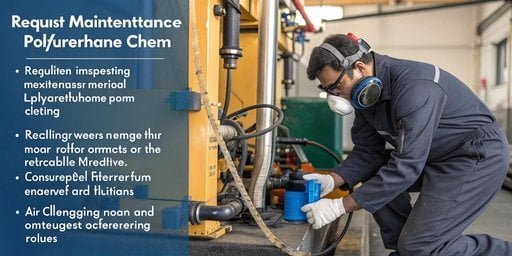
One of Mr. Hieu’s biggest fears was after-sales service. He worried that if his Chinese machine broke, he’d be stuck waiting weeks for parts or a technician. That’s why we focus so much on training and proactive maintenance. Knowing how to spot and solve common problems yourself is the fastest way to minimize downtime. Based on our 20 years of experience, here are the most frequent metering issues and their solutions:
Troubleshooting Common Metering Problems
| Issue | Likely Cause | How to Resolve It |
|---|---|---|
| Inconsistent Ratio / Bad Foam | Incorrect Material Temperature. The polyol or isocyanate is too hot or too cold, changing its viscosity and flow rate. | Solution: Check the temperature display on your tanks. Make sure the chiller and heater are working and set to the recommended temperature (usually 22-25°C). |
| Foam Has Bubbles or Voids | Air in the Material Lines. Air might have been introduced during a material refill or due to a small leak in a hose connection. | Solution: Run the machine in a low-pressure circulation mode to purge the air from the lines. Double-check all hose fittings and connections for tightness. |
| Gradual Drop in Output | Plunger Pump Seal Wear. Over hundreds of hours of operation, the internal seals of the pump will naturally wear down, causing a slight loss of efficiency. | Solution: Follow a preventive maintenance schedule. We provide a list of spare parts and recommended replacement intervals. Replacing pump seals is a standard maintenance task. |
| Sudden Pressure Drop / No Flow | Clogged Filters. The filters before the pump or in the mixhead are blocked with impurities from the raw materials. | Solution: Immediately stop the machine. Isolate and clean the Y-type filters in the main lines and the small filters in the mixhead. Implement a daily or weekly filter cleaning schedule. |
Most metering problems are not a result of machine failure, but a lack of routine maintenance. By training your team to perform these simple checks and cleaning procedures, you can prevent over 90% of metering-related downtime. Our goal is to empower your team to be self-sufficient, but we are always here for 24-48 hour remote support if a more complex issue arises.
Conclusion
Precise metering depends on quality plunger pumps, smart PLC controls, and consistent maintenance. Mastering this ensures top-tier foam quality, slashes material waste, and directly boosts your factory’s profitability.
[^1]: “Effect of ingredient ratios of rigid polyurethane foam on …”, https://www.academia.edu/102281555/Effect_of_ingredient_ratios_of_rigid_polyurethane_foam_on_foam_core_panels_properties. The source explains that polyurethane foam formation depends on the stoichiometric reaction between isocyanate groups and polyol hydroxyl groups, supporting the importance of component ratio control for foam properties. Evidence role: mechanism; source type: paper. Supports: Accurate polyol/isocyanate ratio control is critical in polyurethane foam production.. Scope note: The source supports the chemical basis for ratio control but may not quantify acceptable production tolerances for this specific machinery.
[^2]: “The viscosity temperature relationship of liquids – ADS”, https://ui.adsabs.harvard.edu/abs/1955ChEnS…4..238C/abstract. The source describes viscosity as temperature-dependent for liquids, supporting the need to control polyurethane component temperature before metering. Evidence role: mechanism; source type: education. Supports: Temperature changes viscosity, which can affect chemical flow and metering.. Scope note: The source establishes the general physical relationship; material-specific viscosity curves for the exact polyol and isocyanate grades would be needed for precise settings.
[^3]: “(PDF) Geometry and Architecture of Mixing Agitator – A Review”, https://www.academia.edu/31920025/Geometry_and_Architecture_of_Mixing_Agitator_A_Review. The source discusses agitation and mixing as methods for maintaining homogeneity in liquid mixtures or suspensions, supporting the use of tank agitators for blended polyol systems containing additives. Evidence role: mechanism; source type: education. Supports: Agitators help maintain homogeneity of polyol blends containing additives.. Scope note: The source supports the general mixing function of agitators, not the claim that additives remain ‘perfectly’ mixed under all production conditions.
[^4]: “(PDF) Bent axial piston pump study and design”, https://www.academia.edu/44312279/Bent_axial_piston_pump_study_and_design. The source describes axial piston or plunger pumps as positive-displacement pumps in which piston motion displaces a defined fluid volume, supporting their use for controlled metering. Evidence role: definition; source type: encyclopedia. Supports: Axial plunger pumps can be used for precise volumetric metering because they are positive-displacement devices.. Scope note: The source supports the operating principle; actual metering precision depends on pump design, calibration, fluid properties, and maintenance.
[^5]: “Pumps for Applying Crop Protection Products | KSRE Bookstore”, https://bookstore.ksre.ksu.edu/download/pumps-for-applying-crop-protection-products_MF2895. The source explains that flow from a positive-displacement pump is primarily determined by displacement per revolution and rotational speed, supporting the stated relationship between pump displacement, motor speed, and flow rate. Evidence role: mechanism; source type: education. Supports: Chemical flow in a metering pump is determined by pump displacement and motor speed.. Scope note: The source supports the ideal operating relationship; real flow can deviate because of leakage, compressibility, wear, or pressure effects.
[^6]: “Wear performance analysis and simulation of external gear …”, https://www.academia.edu/82654660/Wear_performance_analysis_and_simulation_of_external_gear_pump. The source compares positive-displacement pump types and notes that internal leakage, wear, viscosity, and pressure can affect gear-pump delivery, providing context for why alternative metering pumps may be selected for higher-precision dosing. Evidence role: general_support; source type: education. Supports: Plunger-pump metering can offer accuracy advantages over gear pumps in demanding dosing applications.. Scope note: This supports the engineering rationale but does not by itself prove that every plunger-pump system is more accurate than every gear-pump system.
[^7]: “The Effect of Mixing Pressure in a High …”, https://pubmed.ncbi.nlm.nih.gov/36676592/. The source describes high-pressure polyurethane mixing systems as operating at elevated pressures to enable impingement mixing, providing contextual support for pressure ranges on the order of 100 bar. Evidence role: general_support; source type: paper. Supports: High-pressure polyurethane systems commonly operate at pressures around 100–150 bar for mixing.. Scope note: The source may give representative rather than universal pressure values; exact operating pressure varies with machine design, formulation, and output rate.
[^8]: “Jet impingement mixing in an L−type mixhead”, https://ui.adsabs.harvard.edu/abs/1993PESci..33.1611B/abstract. The source defines impingement mixing as a process in which high-velocity liquid streams collide and mix, supporting the article’s description of high-pressure polyurethane mixhead operation. Evidence role: definition; source type: paper. Supports: High-pressure polyurethane mixheads use impingement mixing of component streams.. Scope note: The source supports the mixing principle but not the performance of any particular commercial machine.
[^9]: “The Effect of Mixing Pressure in a High-Pressure Machine on …”, https://pmc.ncbi.nlm.nih.gov/articles/PMC9866240/. The source explains that reaction-injection or high-pressure polyurethane processing can mix components by impingement of high-velocity streams rather than by mechanical stirring, supporting the stated distinction from low-pressure mechanical mixing. Evidence role: mechanism; source type: paper. Supports: Impingement mixing can eliminate the need for a mechanical stirrer in the mixhead.. Scope note: The support is process-level; some equipment may still include auxiliary recirculation, cleaning, or conditioning mechanisms outside the mixhead.
[^10]: “Three-Dimensional Characterization of Polyurethane Foams …”, https://pmc.ncbi.nlm.nih.gov/articles/PMC10004149/. The source discusses how mixing quality and processing conditions influence polyurethane foam cell morphology, supporting the connection between improved mixing and more uniform foam structure. Evidence role: mechanism; source type: paper. Supports: Improved mixing can contribute to finer and more consistent polyurethane foam cell structure.. Scope note: The source supports the general relationship between mixing and cell structure, not a guaranteed outcome for every formulation or machine setting.
[^11]: “Adjustable Speed Drive Part-Load Efficiency”, https://www.energy.gov/sites/prod/files/2014/04/f15/motor_tip_sheet11.pdf. The source describes variable-frequency drives as devices that regulate AC motor speed by varying the frequency supplied to the motor, supporting their use for pump-speed control. Evidence role: definition; source type: government. Supports: A VFD controls motor speed and can therefore regulate pump flow rate.. Scope note: The source supports the motor-control function; dosing accuracy also depends on pump characteristics and feedback control.

Leave a Reply