

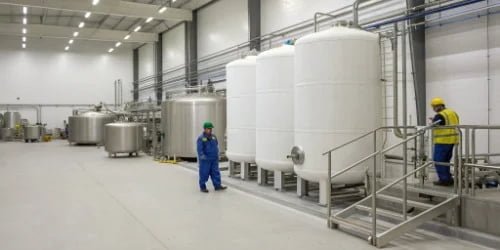
Are you struggling to get consistent foam quality? The world of chemical raw materials can be confusing, but understanding them is the key to making better products and saving money.
TDI, or Toluene Diisocyanate, is a crucial chemical used to create flexible polyurethane foams. Its main job is to react with another chemical, a polyol, to form the polymer structure. This reaction is what gives foam its unique properties, like the softness and bounce in a sofa cushion.
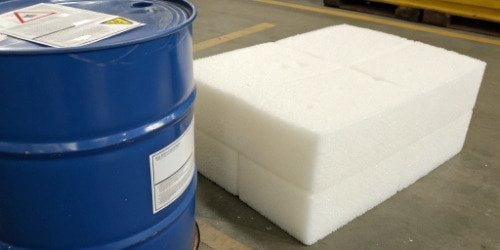
Understanding your raw materials is the first step toward mastering your production process. TDI is a powerful ingredient, but it has specific requirements. If you’ve seen "TDI" on a specification sheet and wondered what it means for your factory, your equipment, and your final product, you’re in the right place. We’re going to break down what TDI is, how it’s used in manufacturing, and why it’s essential for making certain high-quality products. Let’s get into the details so you can make informed decisions for your production line.
What is TDI in foam?
Do you see TDI on a material spec sheet and feel unsure what it means? This confusion can lead to choosing the wrong materials, resulting in wasted time and money.
In foam, TDI is the "hardener" or "activator" in a two-part polyurethane system. It reacts with the polyol, which is the "resin" part. This chemical reaction creates the polyurethane polymer network, which traps gas bubbles to form the foam’s cellular structure and make it soft.
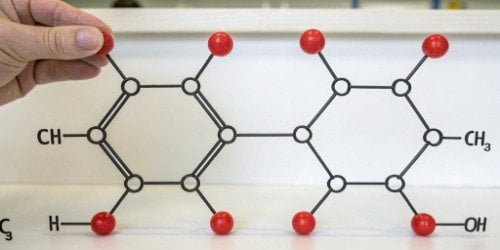
To understand this better, think of making polyurethane foam like baking a cake. You have two main groups of ingredients that you must mix together perfectly.
The Two-Component System
All polyurethane foams are made by mixing an Isocyanate with a Polyol.
- Isocyanate: This is the reactive component, the activator. TDI is one of the most common types of isocyanates.
- Polyol: This is the larger molecule that forms the soft, flexible body of the foam.
When these two are mixed under the right conditions, a chemical reaction called polymerization starts. This reaction generates heat and, with the help of a blowing agent, creates the CO2 gas that forms the bubbles in the foam.
The most common type of TDI used in flexible foam is TDI 80/20, which is a mix of two different TDI isomers. This specific blend gives excellent properties for things like furniture cushions. While another common isocyanate, MDI, is often used for rigid insulation foams, TDI is the champion for creating soft, flexible foams.
| Feature | TDI (Toluene Diisocyanate) | MDI (Methylene Diphenyl Diisocyanate) |
|---|---|---|
| Primary Use | Flexible Foams (sofas, mattresses) | Rigid Foams (insulation), some flexible |
| Volatility | Higher (stronger smell) | Lower (less smell) |
| Flexibility | Excellent | Good, but often more rigid |
What is TDI in manufacturing?
Are you worried about handling powerful chemicals in your factory? Improperly handling TDI can lead to health risks for your team and cause expensive damage to your equipment.
In manufacturing, TDI is a liquid raw material that needs strict safety rules and special equipment. Because it evaporates easily and has a strong smell, you must have good ventilation, personal protective equipment (PPE), and precise machines to keep your factory safe and efficient.
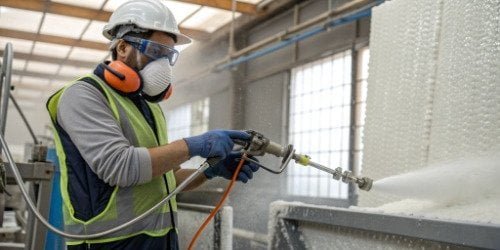
I’ve visited many factories, and the ones that succeed with TDI-based production all prioritize safety and process control. TDI presents more challenges than MDI, but with the right setup, it’s completely manageable.
The Challenges of TDI
The main difficulty with TDI is its higher volatility compared to MDI. This means it turns into a vapor more easily at room temperature, which creates a strong, pungent odor.
- Health and Safety: Breathing in TDI vapor can cause respiratory irritation.[^1] Because of this, a well-designed ventilation system is not optional—it’s essential. Your operators must also be trained to use proper PPE, including respirators, chemical-resistant gloves, and safety goggles.
- Equipment Requirements: TDI can be more corrosive than MDI.[^2] This is why using a high-quality foaming machine is so important. The pumps, seals, and hoses must be made from materials that can handle TDI without degrading. Our Foamor high-pressure machines, for example, use precision metering pumps and durable components designed specifically for these chemicals. A self-cleaning mixing head is also a huge benefit, as it reduces operator exposure during cleanup and prevents material blockages that cause downtime.
Managing TDI in your factory is all about having the right process and the right equipment.
What is TDI used for?
Are you trying to make better, more comfortable foam products for your customers? Using the wrong chemical system will lead to failed products, unhappy customers, and wasted raw materials.
TDI is mainly used to produce flexible polyurethane foams. Its biggest applications are in furniture like sofa cushions, bedding like mattresses and pillows, and car seats. It is especially good for making high-resilience (HR) foam, which offers amazing comfort, support, and long-lasting durability.
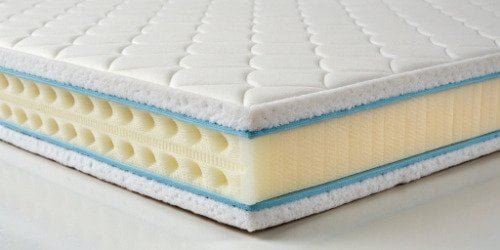
If your goal is to produce top-tier furniture or bedding, you need to understand TDI. I worked with a client in Vietnam, Nam Anh Furniture, who wanted to supply to major European brands. Their old low-pressure machine couldn’t produce the stable, high-quality foam required. By switching to a high-pressure machine designed for TDI-based HR foam, they met the quality standards and won the contract.
Where TDI Excels
TDI is the key ingredient for creating foams with a specific "feel" that customers love.
- High-Resilience (HR) Foam: This is where TDI truly shines. HR foam has a less uniform cell structure than conventional foam.[^3] This gives it a springy, bouncy feel and makes it more supportive and durable. It’s the standard for high-end sofas, premium mattresses, and automotive seats that need to last for years without sagging.
- Conventional Flexible Foam: TDI is also a workhorse for producing all grades of standard foam for furniture and packaging. By adjusting the chemical formulation, you can control the foam’s density and hardness to fit almost any application.
Here’s a quick look at where TDI-based foams are used:
| Application | Key Foam Property | Why TDI is a Good Choice |
|---|---|---|
| Sofa Cushions | High Resilience, Comfort | Provides a long-lasting, comfortable sit. |
| Mattresses | Support, Durability, Breathability | Creates a supportive yet breathable sleeping surface. |
| Automotive Seats | Durability, Vibration Dampening | Withstands constant use and provides a comfortable ride. |
| Carpet Underlay | Resilience, Cushioning | Adds comfort and extends the life of the carpet. |
What is a TDI product?
You’ve successfully made a foam product using TDI, but now you’re worried if it’s safe for your customers. Concerns about chemical safety can hurt your brand and your business.
A TDI product, like a mattress or a car seat, is the final, fully-cured item. While liquid TDI is hazardous to handle, the solid foam product is completely different. Once it has fully reacted and cured, it becomes stable, non-toxic, and perfectly safe for everyday human use.

The most important thing to remember is the difference between the raw material and the finished product. Handling liquid TDI requires caution, but the sofa your customer buys is completely safe. This transformation happens during the curing process.
From Liquid Chemical to Safe Product
The key to a safe TDI product is ensuring the chemical reaction is 100% complete.
- The Curing Process: Curing is not just about drying the foam. It’s the period where the isocyanate (TDI) and polyol molecules finish linking together to form a stable polymer. If the foam is not cured properly, there can be leftover unreacted chemicals, which can cause odors and potential health concerns. A complete cure makes the final foam inert, meaning it is no longer chemically reactive.[^4]
- The Role of Process Control: This is why your production line is so critical. A high-quality foaming machine does more than just mix chemicals. It ensures the exact ratio of TDI to polyol, maintains the correct temperature, and provides perfect mixing. This guarantees a complete reaction and a safe, high-quality final product. Using an old or low-quality machine can result in an improper mix, leading to an incomplete cure and a bad product.
Well-made TDI foam products easily pass international safety certifications, proving they are safe for everyone.
Conclusion
TDI is an essential chemical for making high-quality flexible foams. By using the right equipment and safety processes, you can use it to make excellent, safe, and profitable products.
[^1]: "HEALTH EFFECTS – Toxicological Profile for Toluene Diisocyanate …", https://www.ncbi.nlm.nih.gov/books/NBK592298/. This source provides information on the health effects of TDI exposure, including respiratory irritation caused by inhaling its vapor. Evidence role: expert_consensus; source type: government. Supports: Inhaling TDI vapor can lead to respiratory irritation, necessitating safety measures in manufacturing environments..
[^2]: "MDI and TDI production, usage, and occupational health hazards", https://pubmed.ncbi.nlm.nih.gov/41534575/. This source compares the chemical properties of TDI and MDI, including their relative corrosiveness and impact on equipment. Evidence role: mechanism; source type: research. Supports: TDI is more corrosive than MDI, which affects the choice of materials for manufacturing equipment..
[^3]: "Investigation on Foaming Mechanism of Polylactide-Based Rigid …", https://ui.adsabs.harvard.edu/abs/2025JPEnv..33.4570D/abstract. This source explains the structural differences between high-resilience foam and conventional foam, focusing on cell uniformity and its impact on properties. Evidence role: mechanism; source type: education. Supports: High-resilience foam has a less uniform cell structure compared to conventional foam, which contributes to its springy and supportive properties..
[^4]: "After cure, it’s inert. Safe, stable, silent. Single-component …", https://www.facebook.com/sprayfoamhub/videos/after-cure-its-inert-safe-stable-silentsingle-component-polyurethane-foam-insula/1011478471664681/. This source explains the curing process of polyurethane foam and how it renders the material inert and non-reactive. Evidence role: mechanism; source type: education. Supports: The curing process of polyurethane foam ensures that the material becomes inert and non-reactive..
Leave a Reply