

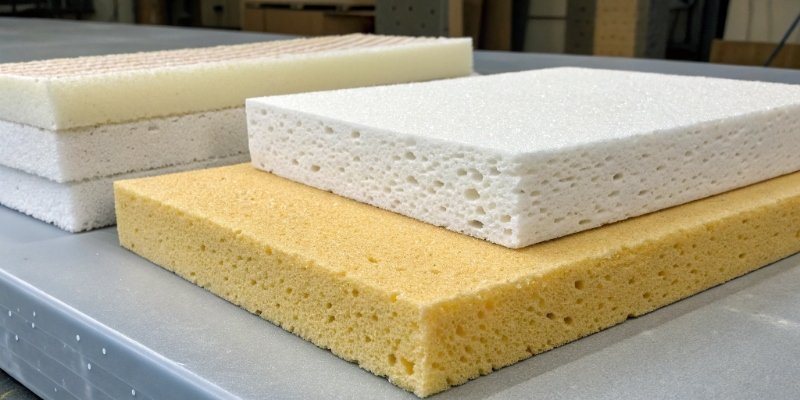
Your foam is too dense, wasting materials and money. This profit loss is frustrating. The fix lies in your formulation, not just how much you inject.
To reduce PU foam density, you must change the chemical formulation, specifically by adjusting the blowing agent, catalyst, or polyol. Simply injecting less material into a closed mold will not achieve a significant density change or the desired product characteristics.
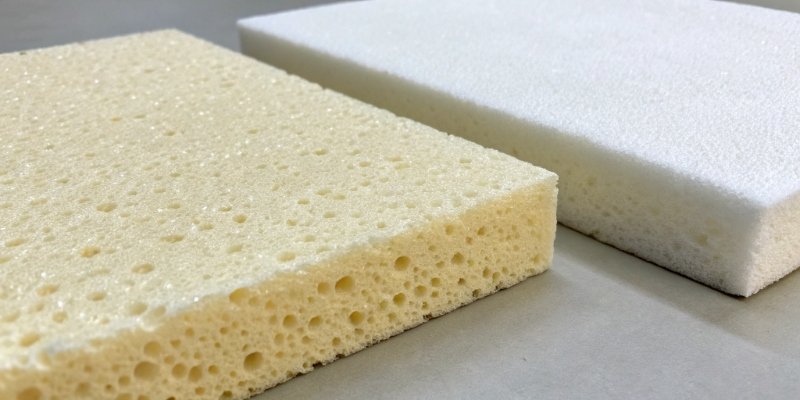
So, we know that changing the formula is the real answer. I talk to production managers like you every week, and this is a common challenge. Before we can effectively lower the density, it’s critical to first understand what “density” really means for different types of PU foam. You need a clear target and a solid understanding of the basics. This knowledge is the foundation for making smart, cost-saving decisions. Let’s start by looking at the typical density ranges you’ll encounter in the industry.
What is the density of polyurethane foam?
Are you confused by the wide range of density numbers you see from different suppliers? One says 30 kg/m³, another says 300. This makes choosing the right material feel like a guessing game.
Polyurethane foam density varies hugely depending on its intended use. It can be as low as 20-30 kg/m³ for flexible furniture foam or as high as 400-500 kg/m³ for a solid steering wheel. Density is always a measure of mass per unit volume.
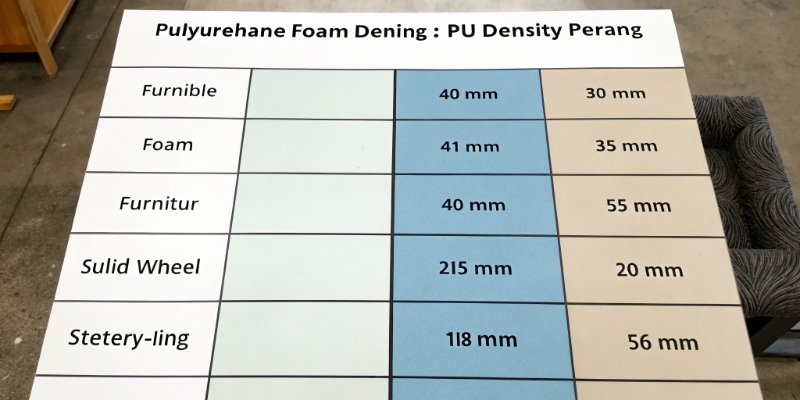
There is no single answer for the density of polyurethane foam because “polyurethane” describes a family of materials, not one specific product. The density is engineered for the application. A low-density foam is light and provides comfort, while a high-density foam provides structure and durability. Here at Foamor, we help our clients produce foam across this entire spectrum.
Common PU Foam Densities
To make it simple, I’ve put the numbers from my own experience into a table. These are the typical molded densities we see for common products made by our partners in Vietnam, Mexico, and other countries.
| Application | Typical Density Range (kg/m³) | Key Characteristic |
|---|---|---|
| Natural Free-Rise Foam | 20-30 | Soft, for sofa backrests/cushions |
| Rigid Insulation Foam | 40-50 | Fills cavities, provides thermal insulation |
| Self-Skinning Seat Cushion | 100-200 | Durable skin, comfortable core |
| Self-Skinning Steering Wheel | 400-500 | Very tough, solid feel, wear-resistant |
As you can see, the density required for a simple mattress is completely different from that of an automotive part. The final density impacts everything: the feel, the durability, and most importantly, the raw material cost.[^1]
How do you make polyurethane foam softer?
Your foam meets the density target, but it’s just too hard. Customers complain about comfort, and this can lead to rejected products and lost orders, which is incredibly frustrating.
To make polyurethane foam softer, you must adjust the formulation. This usually involves using a different type of polyol or adjusting the isocyanate index. Softness and density are two different properties that can be controlled independently.
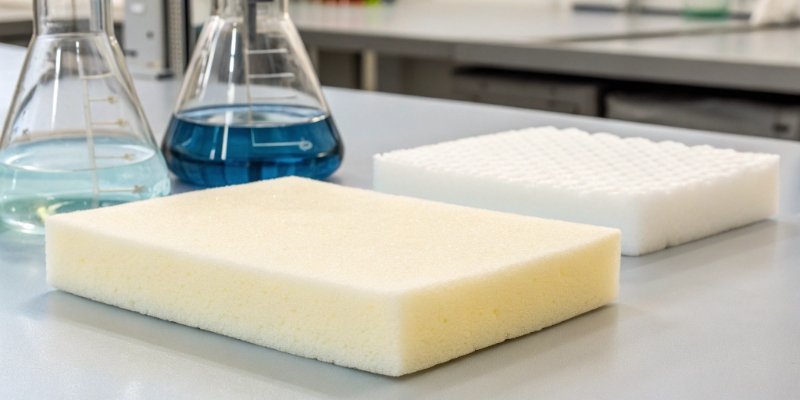
This is one of the most common misunderstandings I see. Many people think that a lower density automatically means a softer foam. This is not true. You can have a low-density foam that feels very stiff, and you can have a high-density foam that feels quite soft.
Density vs. Hardness
Think of it this way: density is about weight, while hardness (or softness) is about feel. The technical term for this feel is Indentation Force Deflection (IFD). It measures how much force it takes to compress a piece of foam. Here are the key factors we adjust to change the hardness without significantly changing the density:
- Polyol Selection: This is the biggest factor. Using polyols with a higher molecular weight will generally result in a softer foam. The chemical structure of the polyol defines the final properties of the foam’s polymer network.
- Isocyanate Index: The ratio of isocyanate to polyol is called the index. A lower index can sometimes lead to a softer foam, but this must be done carefully to avoid compromising the foam’s physical properties.
- Additives: Certain additives and surfactants can also influence the cell structure of the foam. A more open-cell structure can feel softer than a closed-cell structure at the same density.
Achieving the perfect combination of density and softness is a science. It’s why our process support is so valuable to our customers.
Will high-density foam get softer over time?
You’ve invested in high-density foam for durability, but it feels too firm when it’s new. You worry customers will find it uncomfortable and that you made the wrong choice.
Yes, all new polyurethane foam, including high-density foam, will soften slightly during an initial “break-in” period. However, high-quality, high-density foam is designed to minimize this change and will retain its support and shape for many years, unlike low-density foam.
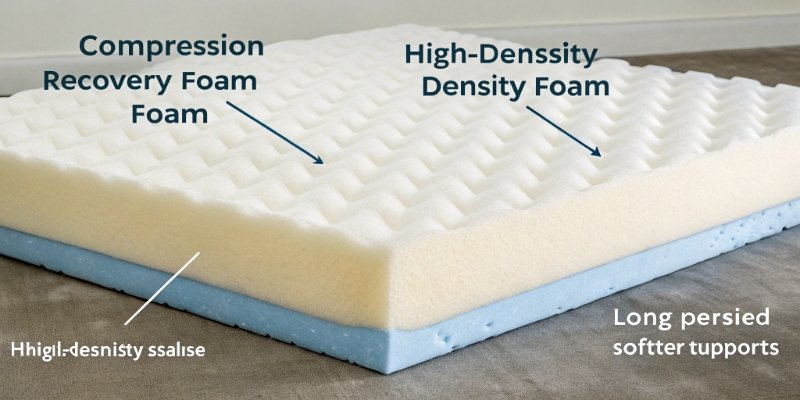
I remember a client in Vietnam who was making high-end sofas for export to Europe. He was worried the cushions felt too stiff. I explained that this initial firmness is actually a sign of quality. The foam needs a short period of use to settle. The cell walls become more flexible, and the foam “breaks in,” reaching its true comfort level.
The Long-Term Advantage of High Density
The key difference is what happens after this initial period. Let’s compare how high-density and low-density foams behave over time.
| Feature | High-Density Foam | Low-Density Foam |
|---|---|---|
| Initial Softening | Softens slightly (5-15%) | Softens significantly (20-40%) |
| Long-Term Support | Retains its shape and support | Collapses and develops body impressions |
| Durability | Lasts for many years (7-10+) | Breaks down quickly (1-3 years) |
| Customer Perception | Initially firm, then supportive | Initially soft, then unsupportive |
This is why premium furniture manufacturers and clients like IKEA demand high-density foam. It ensures the product lasts, leading to fewer warranty claims and better brand reputation. The initial firmness is temporary, but the durability is permanent.
Is all polyurethane foam considered high-density foam?
The term “polyurethane foam” is used for everything from insulation to pillows to car parts. This makes you wonder if it’s all the same high-density material.
No, polyurethane (PU) foam is not automatically high-density. “Polyurethane” simply describes the base chemistry. The foam can be produced in an extremely wide range of densities, from very light to heavier than wood.
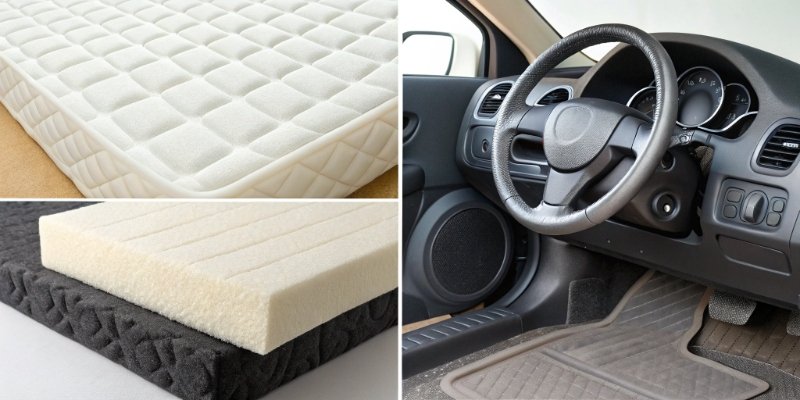
Absolutely not. Thinking all PU foam is the same is like thinking all metal is steel. Polyurethane is an incredibly versatile family of polymers. The final density is determined entirely by the chemical formulation and the manufacturing process. As a solutions provider, our main job is to help customers dial in the exact foam they need for their specific product.
The Spectrum of Polyurethane Foam
We can group PU foams into broad categories based on their density to understand their applications better.
1. Low-Density Foams (under 60 kg/m³)
These are the foams most people are familiar with. They are lightweight and are primarily used for comfort and cushioning.
- Examples: Mattresses, sofa cushions, pillows, packaging foam.
- Key Property: Open-cell structure, breathability, softness.
2. Medium-Density Foams (60 – 200 kg/m³)[^2]
These foams offer a balance of comfort, support, and durability. They often have an integral skin.
- Examples: Automotive seating, office chair armrests, safety padding.
- Key Property: Good resilience, durability, and often a self-skinning finish.
3. High-Density Foams (over 200 kg/m³)[^3]
These are structural or highly durable materials. They can be flexible or rigid.
- Examples: Automotive steering wheels, bumpers, imitation wood beams, structural components.
- Key Property: Extreme toughness, wear resistance, and solid feel.
The beauty of polyurethane is this adaptability. The key is having the right equipment and the process knowledge to create the specific density your product requires.[^4]
Conclusion
To control PU foam density, you must master your formulation. This unlocks the right product performance, manages costs, and ensures you deliver exactly what your customers need.
[^1]: “Effect of Chemical Structure and Apparent Density of Rigid … – PMC”, https://pmc.ncbi.nlm.nih.gov/articles/PMC11676247/. This source explains how polyurethane foam density affects product characteristics, including feel, durability, and cost. Evidence role: mechanism; source type: research. Supports: Polyurethane foam density significantly affects product feel, durability, and raw material cost.. Scope note: The source may not address all factors influencing raw material costs.
[^2]: “High-Density Foam Properties and Applications – Gaska Tape Inc.”, https://www.gaska.com/high-density-foam-properties-and-applications/. This source explains the properties and applications of medium-density polyurethane foams. Evidence role: definition; source type: education. Supports: Medium-density polyurethane foams are defined as those between 60 and 200 kg/m³, offering a balance of comfort and durability.. Scope note: The density range may vary slightly depending on industry standards.
[^3]: “Polyurethane foam – Wikipedia”, https://en.wikipedia.org/wiki/Polyurethane_foam. This source provides details on the characteristics and uses of high-density polyurethane foams. Evidence role: definition; source type: education. Supports: High-density polyurethane foams are defined as those over 200 kg/m³ and are used for structural or highly durable applications.. Scope note: The definition may not encompass all high-density foam applications or formulations.
[^4]: “Understanding Foam Types: Density, Firmness, and Best Uses – YouTube”, https://www.youtube.com/watch?v=XVJPp8FpESY. This source discusses the importance of equipment and process knowledge in achieving specific polyurethane foam densities. Evidence role: mechanism; source type: education. Supports: Achieving specific polyurethane foam densities requires appropriate equipment and process knowledge.. Scope note: The source may focus on specific manufacturing techniques rather than general principles.
Leave a Reply