

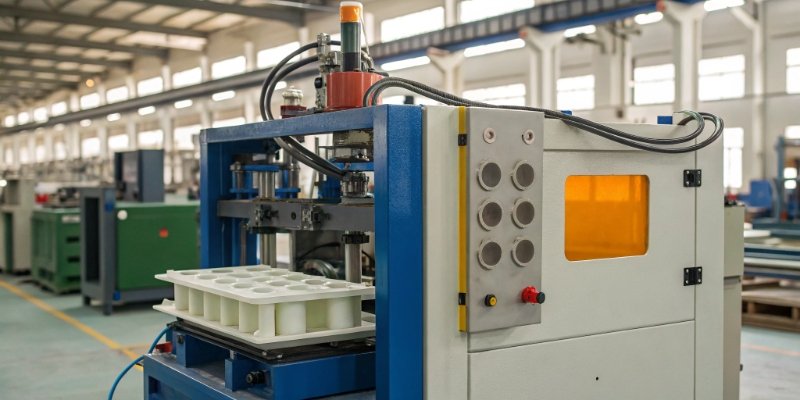
Struggling with inconsistent foam quality and high material waste? Your old equipment might be costing you more than just repairs. It’s time for a solution that delivers precision.
A PU foam injection molding machine precisely measures, mixes, and injects liquid polyurethane chemicals into a mold. Inside the mold, the liquid expands and cures to form a finished foam part. It is the core equipment for modern, efficient foam production lines, ensuring consistent quality and reducing waste.
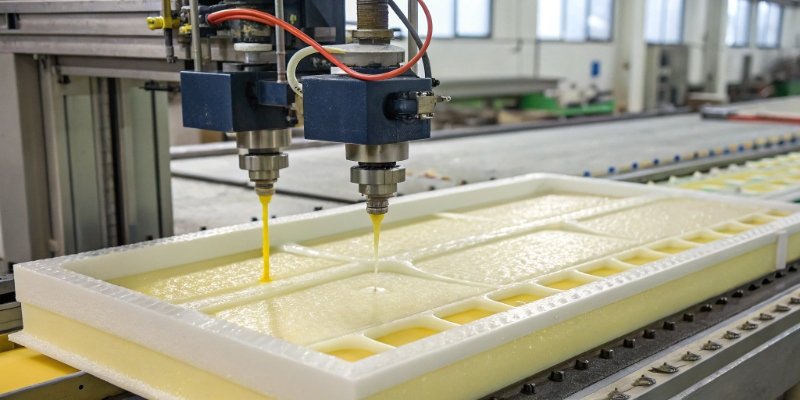
This machine is the heart of your production, but it’s more than just a single piece of hardware. It’s a complete system with several critical parts working together. To truly understand its value, you need to see how it solves the biggest problems in foam manufacturing, from material costs to product quality. Let’s look closer at the technology that can transform your factory floor.
What does PU foam mean?
You see the term “PU foam” on products everywhere, from furniture to cars. But what is it, really? Understanding this material is the first step to mastering its production.
PU foam is short for polyurethane foam. It is a versatile plastic material made by reacting two main liquids: a polyol blend and an isocyanate. The specific chemicals used determine if the foam becomes soft and flexible or hard and rigid.
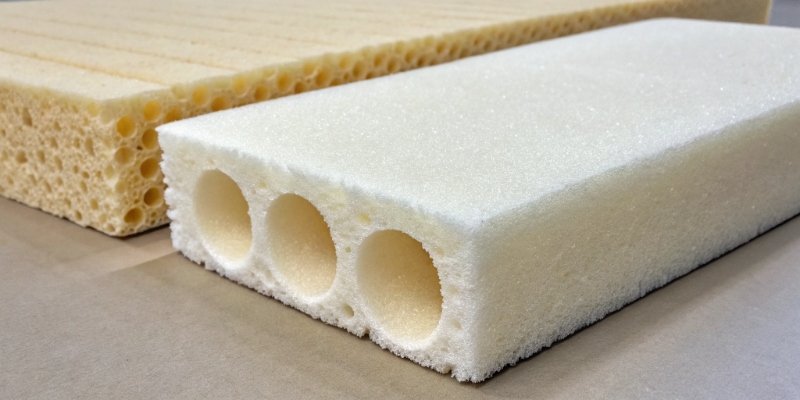
Polyurethane foam is one of the most adaptable materials in modern manufacturing. Its properties can be fine-tuned to fit an incredible range of applications. We work with clients to create two main categories of foam every day.
Main Types of PU Foam
- Flexible Foam: This type is soft, open-cell, and breathable. It’s used for comfort applications where it needs to cushion and then return to its original shape. Think about the seats in your car or the sofa in your living room. Memory foam is a special type of flexible foam that reacts to heat and pressure.[^1]
- Rigid Foam: This type is hard, closed-cell, and lightweight. It’s an excellent thermal insulator and provides structural support. You find it in refrigerator walls, building insulation panels, and as decorative wood-imitation molding.
The table below shows just a few common uses.
| Foam Type | Industry | Common Applications |
|---|---|---|
| Flexible Foam | Furniture | Sofa cushions, mattress toppers, pillows |
| Flexible Foam | Automotive | Car seats, headrests, armrests |
| Rigid Foam | Construction | Wall insulation panels, pipe insulation |
| Rigid Foam | Appliances | Refrigerator and freezer insulation |
Because of this versatility, choosing the right foam formulation is just as important as choosing the right machine.
What is foam injection molding and how does it work?
Want to make consistent, high-quality foam parts with less waste? The secret is in the process. Foam injection molding seems complex, but its core function is simple and very effective.
Foam injection molding is the process of injecting a reactive polyurethane liquid mixture into a closed mold. The mixture then expands to fill the mold’s shape and cures into a solid foam part. It is a highly repeatable and precise manufacturing method.
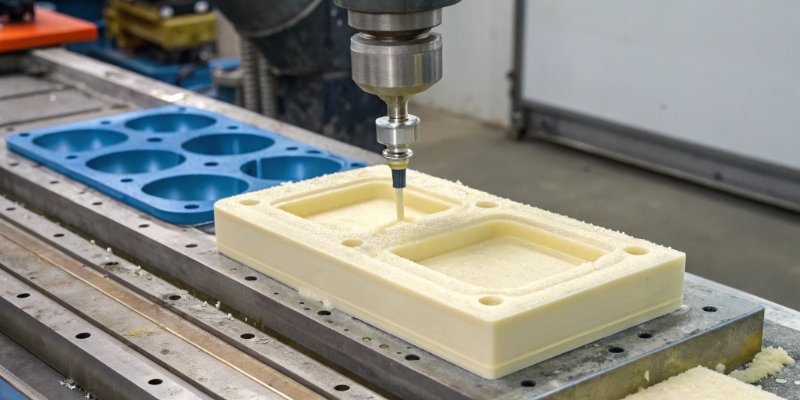
From my nearly 20 years of experience building these lines, I can tell you that a PU injection molding machine is a system of systems. It’s not just one part, but many parts working together perfectly. For a production director like Mr. Hieu in Vietnam, understanding these systems is key to solving his quality and waste problems. A machine is only as good as its weakest component.
The Systems Inside a PU Foam Machine
A reliable machine has several integrated systems that control the entire process. Here’s how it works.
| System | Its Main Job | Why It Is Critical for Quality |
|---|---|---|
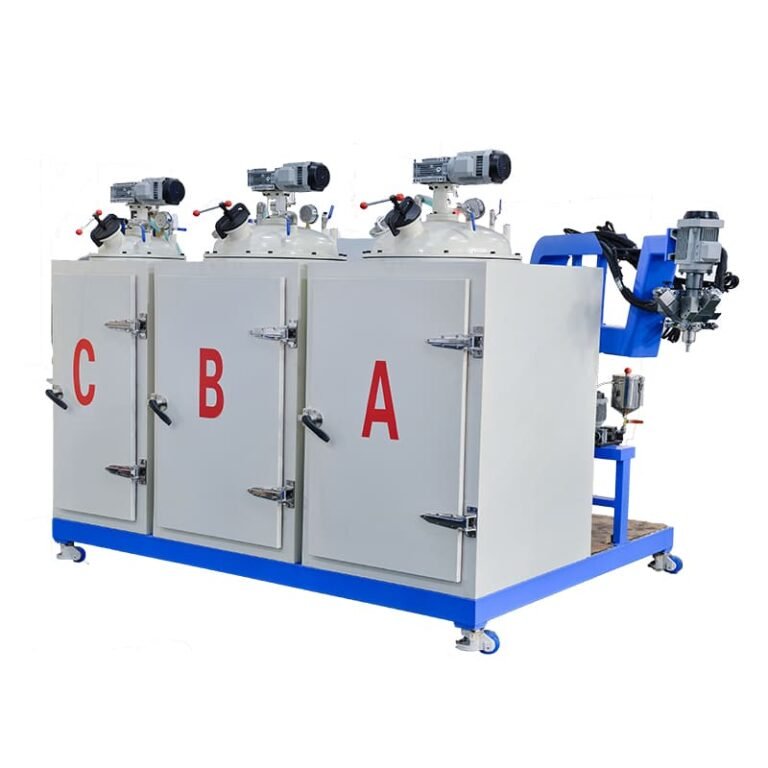
| Material Tanks & Temp Control | Store the raw chemicals (polyol and isocyanate) and keep them at the perfect temperature. | If the temperature is wrong, the chemical reaction will be poor, leading to bad foam. |
| Metering System | High-precision pumps measure the exact ratio of each chemical for every shot. | This is the key to reducing waste and ensuring consistent foam density. Precision here saves you money. |
| Mixing Head | Blends the two chemicals together with intense force just before they enter the mold. | A perfect, uniform mix is essential for strong, consistent foam cell structure. Bad mixing causes defects. |
| Control System (PLC) | The “brain” of the machine. It controls injection times, ratios, and temperatures. | This allows your operators to save recipes and produce the exact same part every single time with the push of a button. |
| Hydraulic System (High-Pressure) | Powers the self-cleaning piston in the mixing head and opens/closes the mold carrier. | This system enables the high-pressure mixing and automation that modern production demands. |
When we build a machine, we ensure every one of these systems is robust and works together flawlessly. That is the only way to guarantee a production line that works.
What is PU moulded foam?
How do car seats and office chairs get their perfect, ergonomic shapes? The answer is not by cutting foam from a big block. The answer is PU moulded foam.
PU moulded foam is any polyurethane part made by injecting the foam mixture into a custom-shaped mold. This process creates complex, three-dimensional parts with a durable outer skin and consistent properties, ready to be used with little to no finishing.
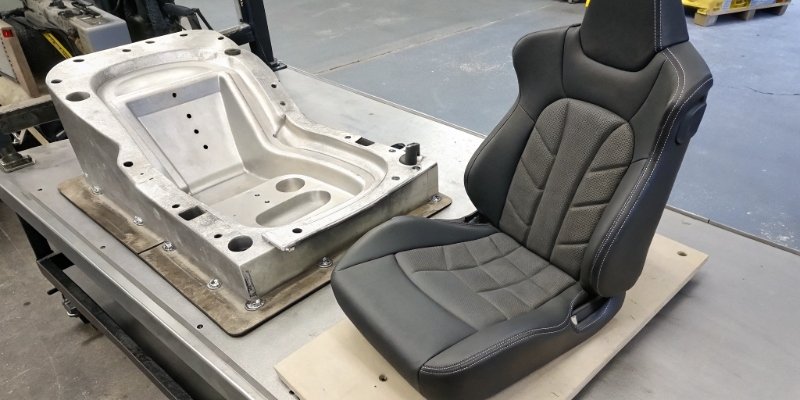
Moulded foam is completely different from slabstock foam, which is made in large rectangular blocks and then cut down to size. While cutting works for simple shapes, it creates a lot of waste and can’t produce the complex designs that modern products require. This is why leading manufacturers, including suppliers to IKEA, have moved to moulded foam.
Key Advantages of Moulded Foam
- Design Freedom: You can create almost any shape you can imagine. This is critical for ergonomic chairs, automotive interior parts, and stylish furniture. The mold defines the final product’s shape precisely.
- Less Waste: Unlike cutting, moulding produces a near-net-shape part. The only waste is minimal flash, which means you use your expensive raw materials much more efficiently. This directly translates to lower production costs.
- Integrated Skin: A special type called “integral skin foam” forms a tough, flexible outer skin and a soft foam core in a single process. This is perfect for armrests, steering wheels, and medical pads, as it eliminates the need for separate upholstery.
- Consistent Quality: Every part that comes out of the mold is a near-identical copy of the one before it. This level of consistency is impossible to achieve with manual cutting and fabrication.
For a factory making 30,000 sofas a year, switching to moulded foam cushions means better quality, less material waste, and a faster production cycle.
What are the different types of injection molding machines?
Choosing the right PU machine can feel confusing. You see terms like “high pressure” and “low pressure,” but what is the real difference for your factory and your budget?
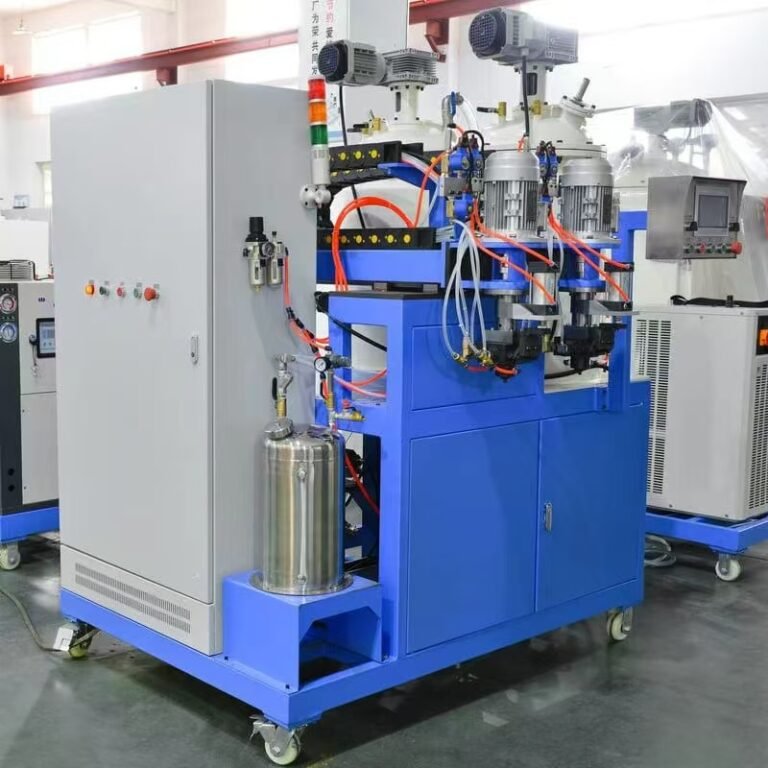
The two main types of PU foam injection machines are high-pressure and low-pressure. High-pressure machines use impingement mixing for superior quality and efficiency, while low-pressure machines use a mechanical stirrer and are more cost-effective for certain applications.
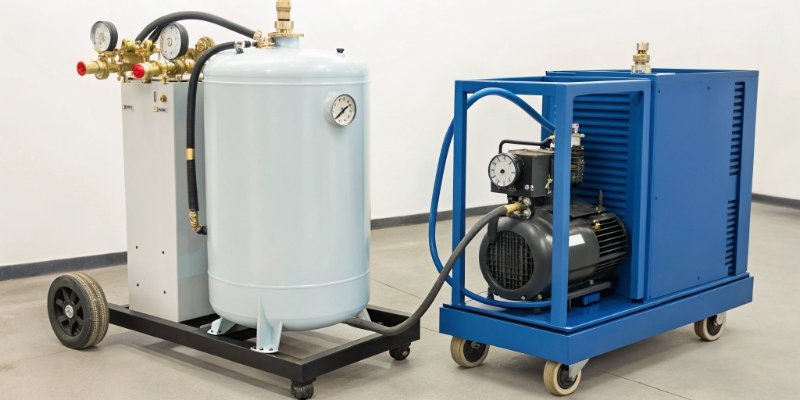
As a solution provider, we don’t just sell one type. We help you choose the right tool for the job. The choice between high-pressure and low-pressure is one of the first and most important decisions you will make. It impacts your initial investment, your operating costs, and your final product quality. An old, failing low-pressure machine was the source of problems for my client, Mr. Hieu. An upgrade to a high-pressure machine was the clear solution to meet his customer’s quality demands.
High-Pressure vs. Low-Pressure: A Direct Comparison
Let’s break down the key differences in a simple table.
| Feature | High-Pressure Machine | Low-Pressure Machine |
|---|---|---|
| Mixing Method | High-speed impingement (liquids collide)[^2] | Mechanical stirrer inside the mixing head |
| Mixing Quality | Excellent and highly uniform | Good, but can be less consistent |
| Cleaning | Self-cleaning via a hydraulic piston[^3] | Requires solvent flushing or air purge |
| Material Waste | Almost zero waste during mixing/cleaning | Some material waste from flushing the head |
| Best For | High-volume, high-quality flexible and HR foam (e.g., car seats, sofas)[^4] | Rigid foam, packaging foam, smaller production runs |
| Initial Cost | Higher initial investment | Lower initial investment |
| Return on Investment | Faster ROI through material savings and higher output | Slower ROI for high-volume production |
For furniture and automotive applications where quality and consistency are critical, a high-pressure machine is the professional standard. The savings on raw materials alone often mean the machine pays for itself in 6-12 months.
Conclusion
A PU foam injection molding machine is a vital system for efficient production. Understanding its types and how they work helps you choose the right machine and partner for your factory’s success.
[^1]: “Memory foam”, https://en.wikipedia.org/wiki/Memory_foam. This source explains the properties of memory foam, supporting the claim about its reaction to heat and pressure. Evidence role: mechanism; source type: encyclopedia. Supports: Memory foam reacts to heat and pressure to provide comfort and support..
[^2]: “Impingement mixing in reaction injection molding”, https://experts.umn.edu/en/publications/impingement-mixing-in-reaction-injection-molding. This source explains the high-speed impingement mixing method, supporting the claim about its role in achieving uniform foam quality. Evidence role: mechanism; source type: education. Supports: High-speed impingement mixing achieves excellent and highly uniform foam quality in high-pressure machines..
[^3]: “Advanced hydraulic systems for next generation of skid steer …”, https://docs.lib.purdue.edu/cgi/viewcontent.cgi?article=1965&context=open_access_theses. This source explains the self-cleaning mechanism in high-pressure PU foam machines, supporting the claim about its efficiency in reducing material waste. Evidence role: mechanism; source type: education. Supports: Self-cleaning via a hydraulic piston reduces material waste in high-pressure PU foam machines..
[^4]: “Gel Car Seat Cushions With Lumbar Support”, https://faculty.tamucc.edu/dbogucki/old_site/paingel/FVYC9ay20Co.html. This source explains the applications of high-pressure PU foam machines, supporting the claim about their suitability for high-volume, high-quality production. Evidence role: case_reference; source type: education. Supports: High-pressure PU foam machines are ideal for high-volume, high-quality flexible and HR foam production, such as car seats and sofas..
Leave a Reply