

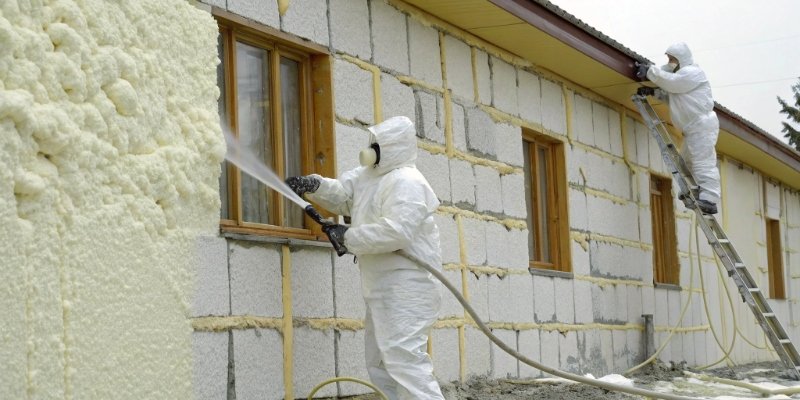
High energy bills are a constant problem. Traditional insulation methods often fall short, leaving your home uncomfortable and inefficient. Spray foam offers a modern, effective solution.
Yes, spray foam is an excellent material for insulating exterior walls. It creates a continuous, seamless layer that acts as an air, vapor, and thermal barrier. This makes it more effective than many traditional insulation types for improving energy efficiency and structural integrity.
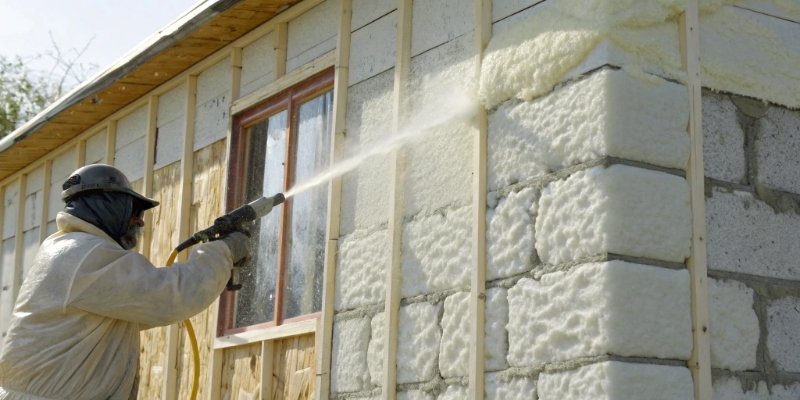
Using spray foam on the outside of your house is a powerful technique. But you probably have more questions about it. You might be wondering about the cost, how long it will last, and if there are any places where you shouldn’t use it. We’ve helped hundreds of clients with these questions. Let’s walk through them one by one so you can make an informed decision for your project.
What is the cheapest way to insulate exterior walls?
You need to insulate your home, but your budget is tight. Professional installation costs for some materials can be surprisingly high, putting the project out of reach.
The cheapest way to insulate often involves a DIY approach. For exterior walls, using a portable spray foam machine can be very cost-effective. While the equipment has an initial cost, it eliminates expensive labor fees, making the total project cost much lower, especially for larger areas.
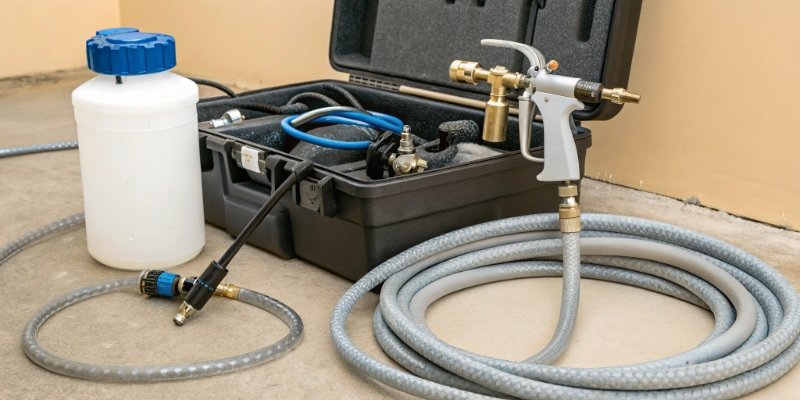
Let’s break down the real cost of insulating. When you hire a professional, a large portion of the bill is for labor. In countries across Europe and North America, high labor costs can make a project very expensive. This is where a DIY strategy completely changes the numbers. By investing in your own equipment, you take control of the biggest cost factor: labor. We’ve seen many small contractors and even homeowners adopt this method.
Cost Comparison: DIY vs. Professional
| Factor | Professional Installation | DIY with Portable Machine |
|---|---|---|
| Equipment Cost | Zero (included in service) | Medium (around $2,000 for a machine) |
| Material Cost | Marked up by the contractor | Purchased directly at wholesale |
| Labor Cost | Very High | Zero (your own time and effort) |
| Overall Value | Good | Excellent |
A portable spray foam machine, like the ones we provide, pays for itself very quickly. For a single medium-sized house, the savings on labor can be greater than the cost of the machine. After that, you own the equipment for future projects or even to start a small business.
How long will spray foam last outside?
You are investing your time and money into insulation. The last thing you want is to discover that it has failed and needs to be replaced in a few years.
When properly applied and protected from direct sunlight, spray polyurethane foam will last for the lifetime of the building—often 80 years or more. Its closed-cell structure is waterproof and rigid, preventing it from sagging, degrading, or losing performance over time.
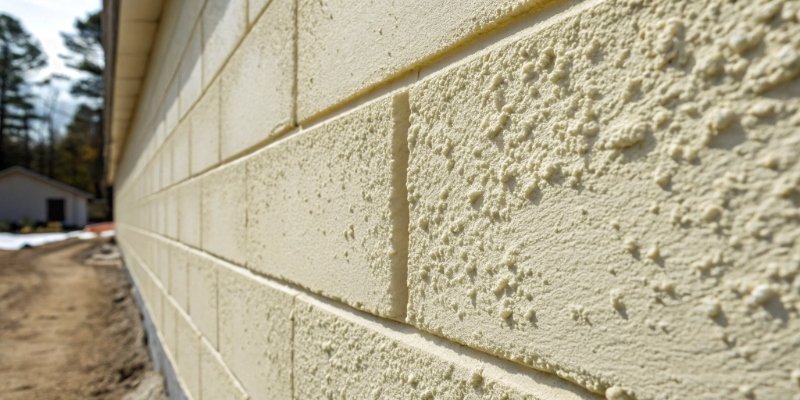
The secret to making spray foam last outdoors is simple: protection from UV radiation. The foam itself is incredibly durable, but direct sunlight will slowly break down its surface.[^1] That’s why it is always covered with a protective layer after it’s applied. This is a standard and essential step in the process.
Keys to a Long Lifespan
- UV Protection: This is the most important step. The foam must be coated with a UV-stable paint, an elastomeric coating, or covered by a physical barrier like siding or brick.
- Proper Application: The foam chemicals must be mixed at the correct ratio and temperature. As an equipment manufacturer, we design our machines to make this process simple and reliable, ensuring you get high-quality foam every time.
- Physical Integrity: While the foam is very strong, it can be damaged by a hard, sharp impact. If this happens, the damaged spot can be easily repaired to maintain the wall’s seal.
Because it is a rigid plastic that adheres directly to the wall, it won’t settle, get compacted, or become a home for pests. Its performance today will be the same decades from now.
Where should you not use spray foam insulation?
Spray foam seems like the perfect solution for everything. But using it in the wrong place can cause big problems, from safety hazards to expensive repairs down the road.
You should not use spray foam near high-heat sources like unrated light fixtures or furnace flues. Avoid using it on old “knob-and-tube” wiring or in wall cavities where you have an unfixed water leak. It is also not ideal for areas you need to access regularly.
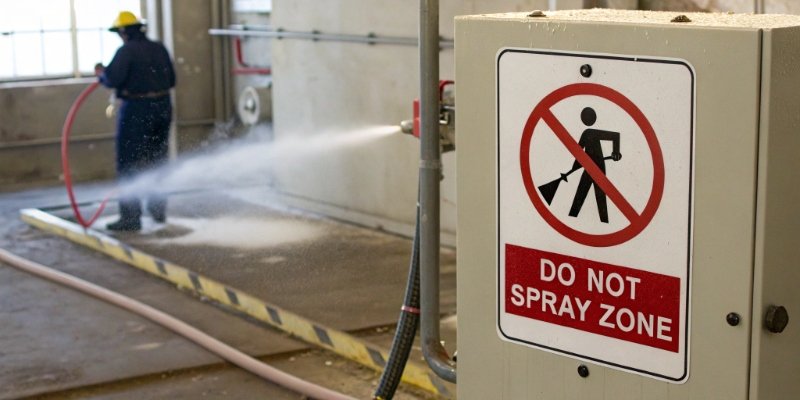
Knowing where not to use spray foam is just as important as knowing its benefits. It’s a fantastic tool, but it’s not right for every single situation. Over our 20 years in the business, we’ve learned the importance of careful planning. Before you start spraying, check for these specific problem areas.
Areas to Avoid or Use with Caution
- High-Heat Zones: Standard polyurethane foam can ignite at high temperatures.[^2] Always keep it a safe distance from heat sources unless you are using a special fire-rated foam and following local building codes.
- Outdated Electrical Wiring: Old knob-and-tube wiring was designed to let heat escape into the air.[^3] Encasing this wiring in foam is a serious fire risk and should be avoided completely.
- Active Water Leaks: You must fix any leaks before you insulate. Spray foam is a moisture barrier, which means it will trap any water already inside the wall, leading to mold and rot.
- Areas Requiring Access: Think about electrical junction boxes or plumbing cleanouts. Once spray foam is cured, it is rigid and solid. Accessing anything behind it becomes a difficult job that requires cutting the foam away.
Can you insulate a wall with spray foam?
Your home’s walls are a major source of energy loss. Drafts make rooms uncomfortable, and you can feel the heat or cold right through the wall, which drives up your energy bills.
Absolutely. Insulating walls with spray foam is one of its most effective and popular uses. It can be sprayed into open wall cavities during new construction or injected into existing walls to create a complete air seal and a powerful thermal barrier.
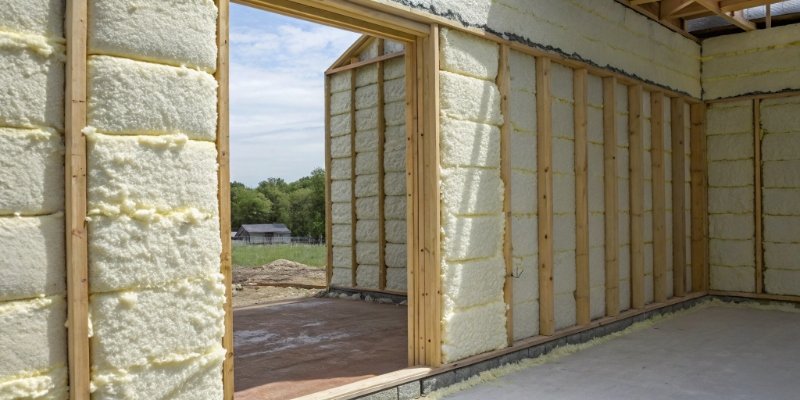
Using spray foam to insulate a wall is a game-changer for building performance. Unlike traditional insulation batts, which can have gaps and sag over time, spray foam expands to fill every single crack and void. This creates a solid, continuous layer with several huge advantages.
Benefits of Spray Foam in Walls
- Complete Air Seal: It stops drafts and air leakage completely. This is the single biggest factor in reducing energy loss and improving comfort.
- High R-Value: Closed-cell spray foam has a very high R-value (a measure of insulation power) per inch. This means you get more insulation performance in less space.
- Added Structural Strength: When cured, closed-cell foam is very rigid and acts like a glue, strengthening the entire wall assembly.
- Moisture Control: It acts as a vapor barrier, stopping moisture from entering the wall cavity and preventing mold and mildew.
This is the same core technology we provide to furniture manufacturers for making high-density sofa cushions. The process is similar: precisely mixing liquids to create a foam with specific, reliable properties. It’s a science we have perfected.
Conclusion
Spray foam is a powerful, cost-effective, and durable solution for exterior wall insulation. It delivers unmatched performance when applied correctly in the right situations.
[^1]: “The Greatest Weakness of a Spray Polyurethane Foam Roof”, https://www.westroofingsystems.com/weakness-spray-polyurethane-foam-roof. Exposure to UV radiation can degrade the surface of spray foam insulation over time, necessitating protective coatings. Evidence role: mechanism; source type: research. Supports: Direct sunlight can degrade the surface of spray foam insulation over time.. Scope note: The degradation rate depends on the intensity and duration of UV exposure.
[^2]: “Thermal and Flammability Analysis of Polyurethane Foams …”, https://pmc.ncbi.nlm.nih.gov/articles/PMC12300640/. Standard polyurethane foam is flammable at high temperatures, requiring adherence to fire safety standards during installation. Evidence role: mechanism; source type: government. Supports: Standard polyurethane foam can ignite at high temperatures.. Scope note: Fire resistance varies by foam type and additives used.
[^3]: “Does anyone know if it is safe to use spray foam insulation around …”, https://www.facebook.com/groups/1706748102970911/posts/3088244208154620/. Knob-and-tube wiring systems rely on air circulation for heat dissipation, making them incompatible with spray foam insulation. Evidence role: mechanism; source type: education. Supports: Old knob-and-tube wiring was designed to let heat escape into the air.. Scope note: This applies specifically to older electrical systems not updated to modern standards.

Leave a Reply