

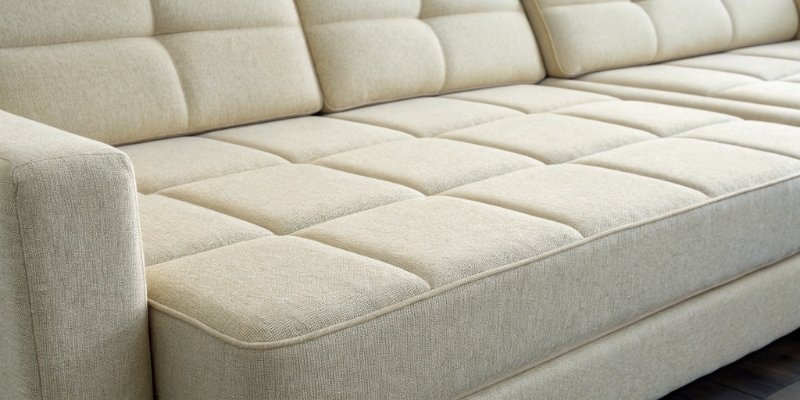
Is your sofa sinking in the middle? A sagging couch is uncomfortable and makes you feel like you wasted your money. Understanding foam density is the key to choosing a better one.
Sofa foam density for seat cushions typically ranges from 35 to 55 kilograms per cubic meter (kg/m³). Higher density foam generally provides better support and durability, meaning it resists sagging and lasts longer. The specific density depends on the desired quality and application.
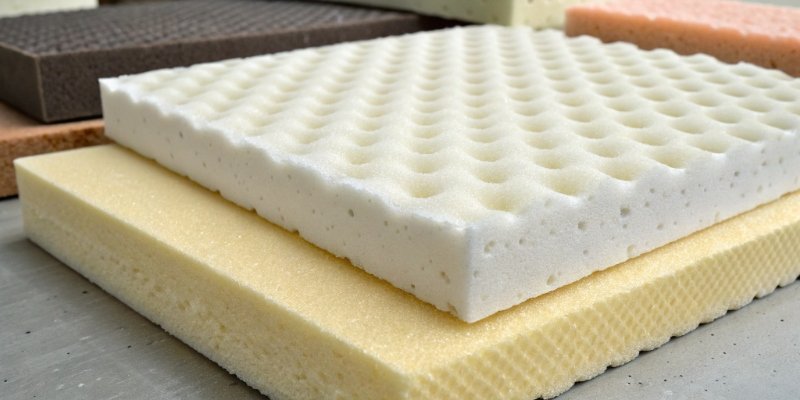
Choosing a new sofa can feel overwhelming. There are so many options, and it’s a big investment. You want a couch that looks good and feels comfortable for years to come. But how do you know if you’re buying a quality piece or something that will start to sag in just a few months? The secret is in the foam. In my nearly 20 years in the polyurethane foam machinery industry, I’ve seen exactly what separates a great sofa from a disappointing one. It’s not just about the fabric or the frame; it’s about the density of the foam inside. Let’s dive into what those numbers mean so you can make a smart choice.
What is good foam density for a sofa?
Are you worried about buying a new sofa only to have it become flat and uncomfortable? A poor choice leads to a lumpy, sagging couch. Knowing what makes a good foam density is the solution.
A good foam density for sofa seat cushions is between 35 kg/m³ and 55 kg/m³. This range offers an excellent balance of comfort, long-term support, and durability. For backrests and armrests, a slightly lower density, like 25-35 kg/m³, is often used for a softer feel.
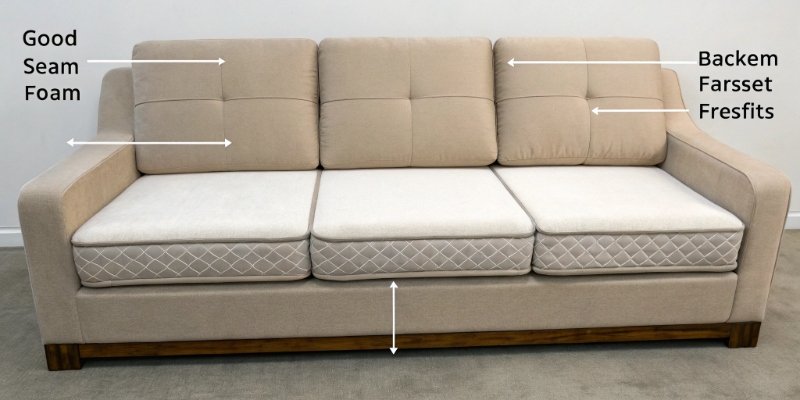
When we talk about “good” density, it really depends on which part of the sofa you’re looking at. The requirements for a seat cushion are very different from an armrest. The seat needs to support your entire body weight repeatedly, day after day. That’s why we need higher density foam there. A lower density foam would break down and sag much faster under that constant pressure.
At Foamor, we help furniture factories produce foam for all these applications. We’ve seen that the best manufacturers use a combination of densities to build a superior sofa. Think of it like this:
| Sofa Part | Recommended Density (kg/m³) | Why it’s a good choice |
|---|---|---|
| Seat Cushions | 35 – 55 kg/m³ | High durability, excellent support, resists sagging, long lifespan. |
| Back Cushions | 25 – 35 kg/m³ | Softer feel, allows you to sink in comfortably, lower cost. |
| Armrests | 20 – 30 kg/m³ | Provides structure and light padding without being too firm. |
Remember, density is not the same as firmness. Density measures the weight of the foam (mass per unit volume) and tells you about its durability. Firmness, often measured by ILD (Indentation Load Deflection), tells you how the foam feels.[^1] You can have a high-density foam that is soft and a low-density foam that is firm. The magic is in the chemical formulation, which is something we specialize in helping our clients perfect.
Is 40 density foam good for a sofa?
You’re looking at a sofa’s technical sheet and see “40 density foam.” What does that mean? It’s confusing, but understanding this number helps you know if you’re getting a quality product.
Yes, 40 kg/m³ density foam is an excellent choice for sofa seat cushions. It provides a superior blend of long-lasting durability and supportive comfort. It’s a premium option that strongly resists sagging, making it perfect for high-traffic furniture that gets used every day.
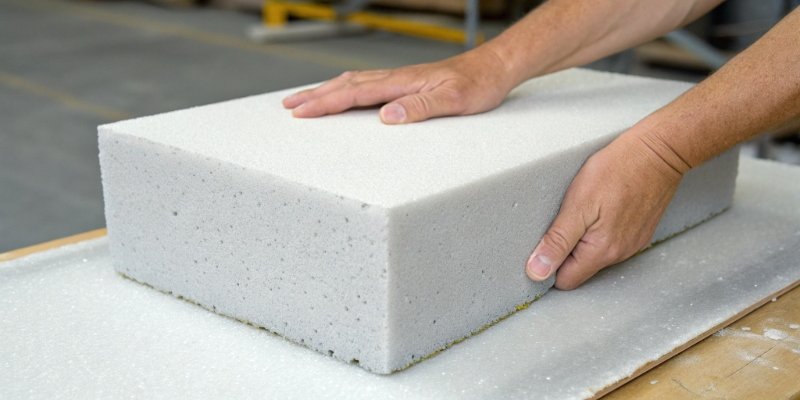
A foam with a 40 kg/m³ density sits comfortably in the high-quality category. When a manufacturer like Nam Anh Furniture in Vietnam decides to upgrade their production line with one of our high-pressure foaming machines, this is the kind of quality they aim for to satisfy clients like IKEA. It’s a significant step up from the standard foams you might find in budget furniture.
Why is it so good? First, longevity. This foam has more material packed into the same space, so its internal cell structure is stronger and more resilient. It bounces back better after you get up and maintains its shape for many more years than a lower-density foam. Second, support. It provides a solid, comfortable foundation that doesn’t “bottom out” or make you feel the frame underneath.[^2] It’s the ideal choice for a family’s main sofa. While it costs more to produce, the return on investment is clear: fewer customer complaints and a reputation for quality. It strikes a perfect balance between performance and cost, which is why it’s a target for so many quality-focused brands.
Is 1.8 density foam good for a sofa?
You might see foam density listed as “1.8” and get confused. It seems different from the numbers we just discussed. Don’t worry, it’s just a different unit of measurement used in some countries.
Yes, 1.8 density foam is good for a sofa and is a widely accepted industry standard for quality residential furniture, especially in North America. This is measured in pounds per cubic foot (lbs/ft³) and equals approximately 28 kg/m³, offering a solid balance of durability and comfort.
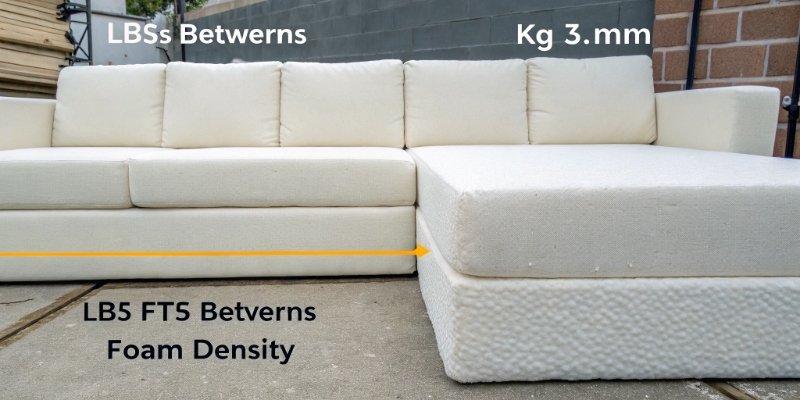
It’s crucial to understand the units. Most of the world uses kilograms per cubic meter (kg/m³), but the United States and some other regions use pounds per cubic foot (lbs/ft³). A 1.8 lbs/ft³ foam is considered the minimum benchmark for good, durable furniture. Anything lower, like 1.5 lbs/ft³, is typically found in budget pieces and may start to break down in just a year or two of regular use.
So, when you see 1.8 density, think of it as a good starting point for quality. It’s suitable for a living room sofa that gets moderate use.[^3] However, if you’re looking for something that will withstand heavy use from a large family for over a decade, you might want to look for a higher density. Here’s a simple conversion to help you compare:
| Common US Density (lbs/ft³) | Equivalent Metric Density (kg/m³) | Quality Level |
|---|---|---|
| 1.5 | ~24 | Entry-Level / Budget |
| 1.8 | ~28 | Good / Industry Standard |
| 2.0 | ~32 | Very Good |
| 2.5 | ~40 | Excellent / Premium |
As a supplier of foaming equipment, we design our machines to be precise, allowing factories to reliably produce foam at any target density, whether it’s 1.8 lbs/ft³ or 40 kg/m³.
Is 28 density foam good for a sofa?
You found a sofa you love, and the label says it uses 28 density foam. Is that a good deal, or will it cause problems later? Let’s figure out where this foam fits in.
A 28 kg/m³ density foam is a decent entry-level to mid-range choice for sofas. It provides adequate comfort for light to moderate use, but it will not be as durable as higher-density options and may show signs of sagging sooner with heavy, daily use.

A 28 kg/m³ foam, which as we learned is the same as 1.8 lbs/ft³ foam, is a very common material in the furniture industry. It represents the baseline for quality. It’s much better than the 18-24 kg/m³ foams found in cheap, throwaway furniture. For a production director like Nguyen Van Hieu in Vietnam, moving from an old, unreliable machine to a new one that can consistently produce stable 28 kg/m³ foam is a huge quality improvement.
So, where is it best used? It’s a great choice for back cushions and armrests, where you want a softer feel and durability is less critical. It can also be used for seat cushions on sofas that won’t see heavy, everyday use, such as those in a formal living room, guest room, or office. If you are a single person or a couple with a light-use lifestyle, a sofa with 28 density cushions can serve you well for several years. However, for a busy family’s main couch, I would strongly recommend aiming for 35 kg/m³ or higher to ensure it lasts.
Conclusion
For durable sofa seats, choose foam with a density between 35-55 kg/m³. Higher density means better durability and support. Always check the specs to ensure your new sofa will last.
[^1]: “What is ILD? | SleepOnLatex.com”, https://sleeponlatex.com/blog/what-is-ild?srsltid=AfmBOorvpwdVqtayuwrrN6wgmZa1RQoFz0c2EAR0rqHert7woea1ECJD. This source explains ILD as a measure of foam firmness and its role in determining comfort levels. Evidence role: definition; source type: education. Supports: ILD measures foam firmness and helps determine comfort levels..
[^2]: “Foam Types for Seats and Cushions”, https://www.foambymail.com/foam-types-for-seats-and-cushions.html?srsltid=AfmBOor58dvvmNirUvRxLTzzqGvG7svEcugWSW7btiq5fG2lpw0qT-zn. This source explains how high-density foam prevents bottoming out and enhances comfort in furniture applications. Evidence role: mechanism; source type: research. Supports: High-density foam prevents bottoming out and enhances comfort by maintaining structural integrity.. Scope note: The source may not specify the exact density threshold for avoiding bottoming out.
[^3]: “Understanding Foam Types: Density, Firmness, and Best Uses – YouTube”, https://www.youtube.com/watch?v=XVJPp8FpESY. This source discusses the suitability of 1.8 lbs/ft³ foam density for moderate-use living room sofas. Evidence role: case_reference; source type: education. Supports: 1.8 lbs/ft³ foam density is appropriate for living room sofas with moderate use.. Scope note: The source may not address heavy-use scenarios or alternative densities.
Leave a Reply