

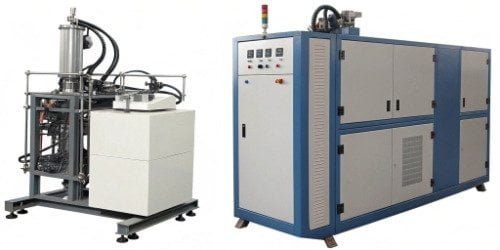
Wasting raw materials and getting inconsistent foam is hurting your profits. This puts you behind competitors and makes it hard to meet quality demands from big clients.
Yes, a modern PU foaming machine, especially a high-pressure model, is a better investment. It provides superior mixing, precise material control, and higher efficiency. This directly translates to less raw material waste, better product quality, and lower long-term operating costs compared to conventional systems.
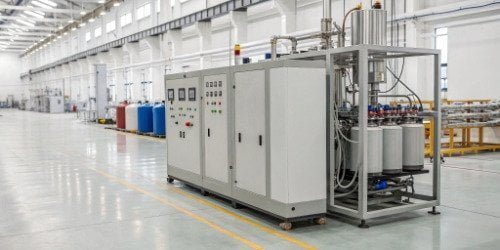
Choosing new equipment is a big decision. I’ve been in this industry for nearly 20 years, and I’ve seen many factory owners make costly mistakes. The key is to understand the real differences between the options available. It’s not just about the price tag on day one. It’s about the total cost and performance over the life of the machine. Let’s break down what you need to know to make a smart choice for your factory’s future.
How Many Types of Foaming Systems Are There?
You know you need a machine, but the options seem overwhelming. Choosing the wrong one is an expensive mistake that can halt production and compromise quality.
You really only need to know about three main types. First is the high-pressure foaming machine. Second is the low-pressure foaming machine. And third is the traditional manual mixing method. Each has a very different impact on your quality, efficiency, and costs.
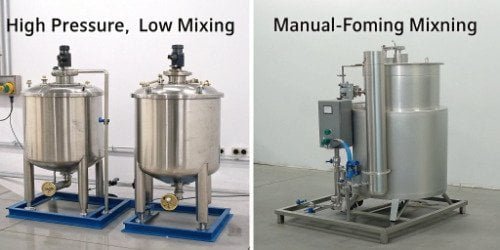
Let’s look at these three systems in more detail. Your choice here will define your production capability for years to come.
High-Pressure Foaming Machines
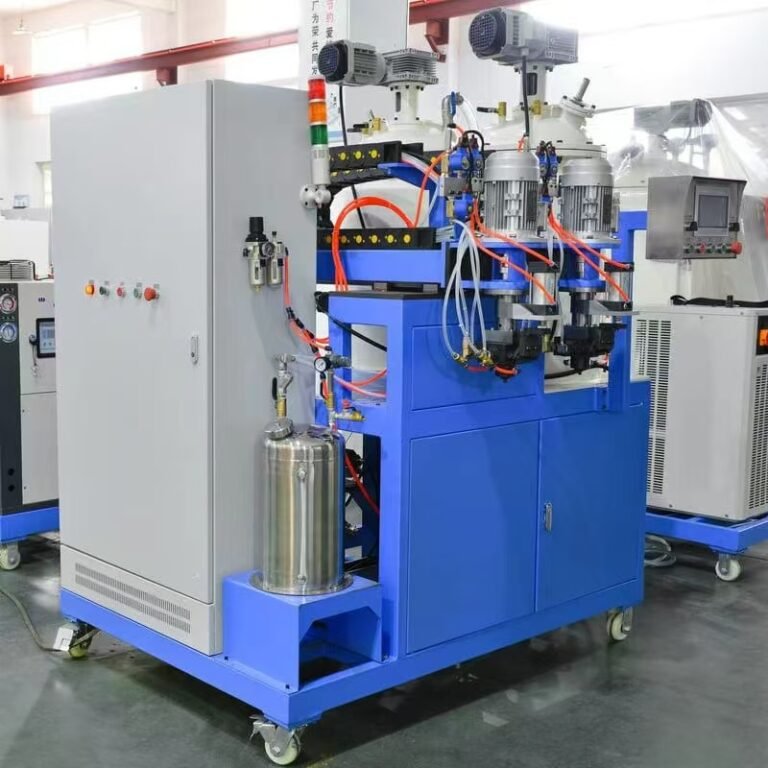
These are the top-tier systems. They use high pressure (100-200 bar) to slam the Polyol and Isocyanate components together inside a small mixing chamber. This creates a perfect, molecular-level mix in less than a second. Because the mixing is so powerful, the mixhead cleans itself out after every shot. This means no flushing with chemical solvents, no waste between shots, and incredible precision.
Low-Pressure Foaming Machines
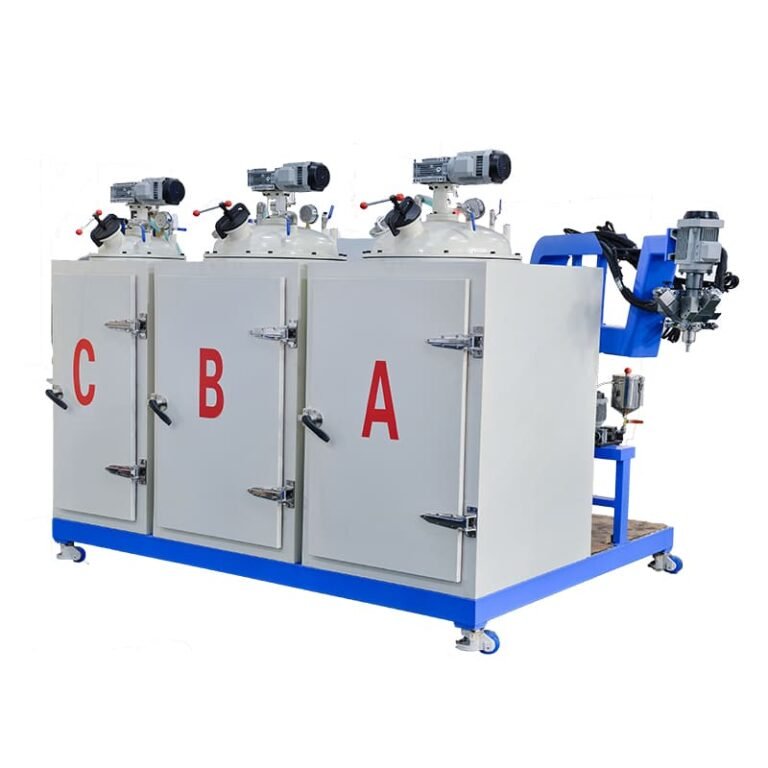
These are the workhorses for many applications. They use mechanical stirrers, like a small propeller, to mix the chemicals at a much lower pressure. The mixing quality is good, but not as perfect as a high-pressure system. The biggest difference is that after each pour, the mixing chamber must be cleaned with a solvent to prevent the foam from curing inside. This uses up cleaning agents and creates some material waste.
Manual Mixing
This is the most basic method. An operator measures chemicals by weight or volume into a bucket and mixes them with a drill and paddle. There is no machine cost, but everything else is a variable. The mixing accuracy, ratio control, and temperature are all dependent on operator skill. It’s slow, messy, and produces a lot of wasted material.
What Is a Conventional Foaming System?
You hear the term “conventional system” all the time. But what does it actually mean? This confusion can make it hard to compare new technology with what you have now.
A conventional foaming system typically refers to either manual mixing by hand or using an older, first-generation low-pressure machine. These methods depend heavily on operator skill and are known for their inefficiency, material waste, and inconsistent foam quality.
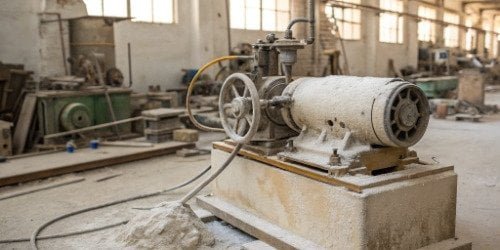
When we talk about “conventional” methods, we’re really talking about the way things were done before modern technology made production more precise and cost-effective.
The Manual Mixing Method
I remember visiting a sofa factory outside Ho Chi Minh City about ten years ago. They were using manual mixing. Two workers would pour chemicals into a large bucket, mix it with a powerful drill, and then quickly pour it into a mold before it started to rise. The air was thick with fumes, and there was cured foam all over the floor. The foam density varied from cushion to cushion. This method is cheap to start, but the hidden costs in wasted material and rejected products are huge.
Early-Generation Low-Pressure Machines
Many factories, like our client Nguyen’s furniture company, started with an old low-pressure machine. His machine from 2015 was constantly breaking down. These older models lack the precise pumps and controls of modern machines. They are prone to ratio drift, which means the foam quality changes throughout the day. They are a step up from manual mixing, but they still waste materials during cleaning and can’t produce the high-quality, stable foam that clients like IKEA demand today. Rising raw material costs make this waste a serious financial drain.
What Are the Pros and Cons of Each System?
Every supplier claims their machine is the best for you. How can you ignore the sales pitch and see the real advantages and disadvantages for your own factory’s needs?
High-pressure machines give you the best quality and efficiency but cost more upfront. Low-pressure machines are cheaper to buy but have higher running costs from waste and solvents. Manual mixing has almost no initial cost but is the most expensive to operate long-term.
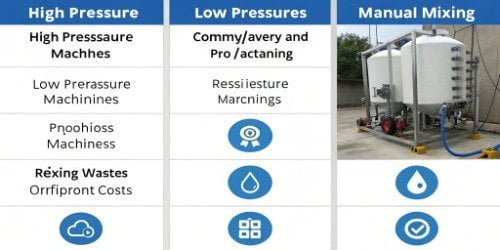
A smart investment is not just about the initial price. It’s about the total cost of ownership. Let’s put these systems side-by-side in a simple table. This is the kind of analysis we do with our clients to find the right fit. You have to look at how a machine will impact your material costs, labor, and product quality over the next 5-10 years. A machine that saves you 15% on raw materials, like a high-pressure system often does, can pay for its higher initial cost very quickly—sometimes in less than a year. This is the return on investment (ROI) that smart production directors and owners look for[^1].
| Feature | High-Pressure Machine | Low-Pressure Machine | Manual Mixing |
|---|---|---|---|
| Mixing Quality | Excellent (Molecular Impingement) | Good (Mechanical Stirring) | Poor to Fair (Operator Dependent) |
| Metering Accuracy | Very High (±0.5%) | Good (±1-2%) | Very Low (±5-10% or more) |
| Raw Material Waste | Minimal (Self-Cleaning Head) | Moderate (Solvent Flush Required) | High (Bucket Waste, Spills) |
| Efficiency/Speed | High (Fast shots, no cleaning downtime) | Medium (Slower, requires cleaning cycle) | Very Low (Labor-intensive, batch process) |
| Cleaning Method | None (Self-cleaning) | Requires Solvents (DCM, etc.) | Manual (Scraping buckets) |
| Initial Investment | High ($30,000 – $60,000+) | Medium ($15,000 – $30,000) | Very Low ($500 for a drill and buckets) |
| Operating Cost | Low | Medium | High |
| Operator Skill | Low to Medium (System is automated) | Medium (Requires process monitoring) | High (Quality depends entirely on skill) |
How Should Different Industries Choose the Right Foaming System?
You understand the technology, but which system is the correct choice for your products? Making the wrong decision means you either overspend or can’t meet your customers’ quality standards.
For high-specification products like automotive seats, memory foam mattresses, or high-end furniture, a high-pressure machine is the only choice. For general-purpose insulation or packaging foam, a low-pressure machine is a cost-effective solution. Manual mixing should only be for prototyping or very small-scale production.
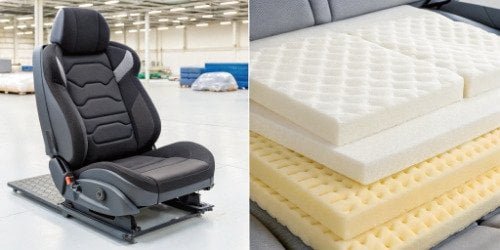
The right machine always depends on the final product. At Foamor, we don’t just sell equipment; we provide a solution tailored to your needs. Here is how we advise clients in different industries.
Furniture and Bedding (Sofas, Mattresses)
For companies making high-end sofas or memory foam mattresses for export to Europe or America, a high-pressure machine is essential. Customers can feel the difference. The foam has a more consistent density, better resilience, and lasts longer. This is exactly why our client, Mr. Nguyen, needed to upgrade. His old low-pressure machine couldn’t produce the quality his clients demanded. For basic, low-cost furniture, a modern low-pressure machine can be a good, budget-friendly option.
Automotive Industry (Seats, Headrests, Steering Wheels)
In the automotive sector, there is no debate. You must use a high-pressure machine. The safety and performance standards are extremely strict. Every part must have the exact same density and physical properties to meet crash test and durability requirements. The precision and repeatability of a high-pressure system are non-negotiable[^2] for any Tier 1 or Tier 2 automotive supplier.
Construction and Insulation (Insulation Panels, Spray Foam)
For producing rigid foam for insulation panels, a low-pressure machine is often the perfect choice. In this application, minor variations in cell structure are not critical[^3], and the focus is on cost-effective, high-volume production. Low-pressure machines provide reliable output at a lower initial investment.
Packaging (Foam-in-Place)
Foam-in-place packaging is another area where low-pressure machines dominate. The goal is to create a custom cushion to protect a product during shipping. The process is fast, and absolute cosmetic perfection is not the goal. A low-pressure system is reliable, easy to use, and gets the job done at the right price point.
Conclusion
Choosing the right PU foaming system is a critical investment in your factory’s future. The best choice balances initial cost with long-term performance, quality, and material savings for your specific product.
[^1]: “OTA Case Study: Crest Foam”, https://www.mass.gov/info-details/ota-case-study-crest-foam. Investing in high-pressure polyurethane foaming machines often yields a quick return on investment due to material savings and improved efficiency. Evidence role: statistic; source type: education. Supports: High-pressure machines often provide a quick return on investment through material savings and efficiency gains.. Scope note: ROI calculations may vary depending on production scale and initial investment costs.
[^2]: “ISO 7076-6:2016(en), Fire protection — Foam fire extinguishing systems”, https://www.iso.org/obp/ui/es/#!iso:std:63735:en. High-pressure polyurethane foaming systems are critical for industries like automotive, where precision and repeatability are essential for meeting safety and performance standards. Evidence role: expert_consensus; source type: institution. Supports: Precision and repeatability of a high-pressure system are non-negotiable for automotive applications.. Scope note: The necessity of precision and repeatability may depend on specific product requirements within the automotive sector.
[^3]: “CladFoam Polyisocyanurate Foam Core Structural Panels”, https://www.fiber-tech.net/cladfoam-polyisocyanurate-foam-core-structural-panels. In applications like insulation panels, minor variations in foam cell structure are generally acceptable as long as thermal performance remains consistent. Evidence role: mechanism; source type: research. Supports: Minor variations in cell structure are not critical for insulation panel production using low-pressure machines.. Scope note: Acceptable variations may depend on specific insulation standards and application requirements.
Leave a Reply