

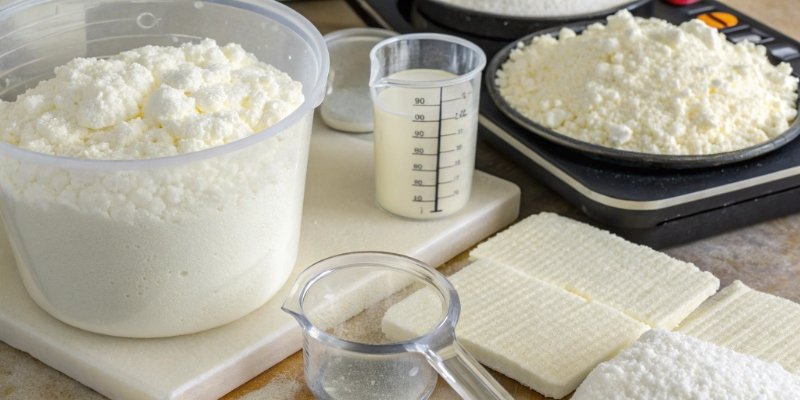
Confused by foam expansion calculations? Getting it wrong wastes materials and results in bad foam. I’ll show you the simple math and what truly matters for your production line.
To calculate the expansion ratio, divide the final foam volume by the initial liquid volume. For example, if 100ml of liquid expands to 3,000ml, the ratio is 30:1. This is a quick test for raw materials, but not for precise production planning.

So, you now understand the basic idea of expansion ratio. But in a real factory setting, like yours in Vietnam or ours here in China, we focus on what directly impacts cost and quality. Let’s dive into the details that truly matter, starting with the foundation of good foam.
What is the correct mixing ratio for polyurethane foam?
Is your foam too soft, brittle, or not curing properly? This wastes costly chemicals and causes delays. The problem is often the mixing ratio. Let’s get it right.
The correct mixing ratio is specified by your chemical supplier on the Technical Data Sheet (TDS), usually by weight (e.g., 100 parts Polyol to 120 parts Isocyanate). While some systems are near 1:1 by volume, always follow the TDS to ensure proper curing and foam properties.
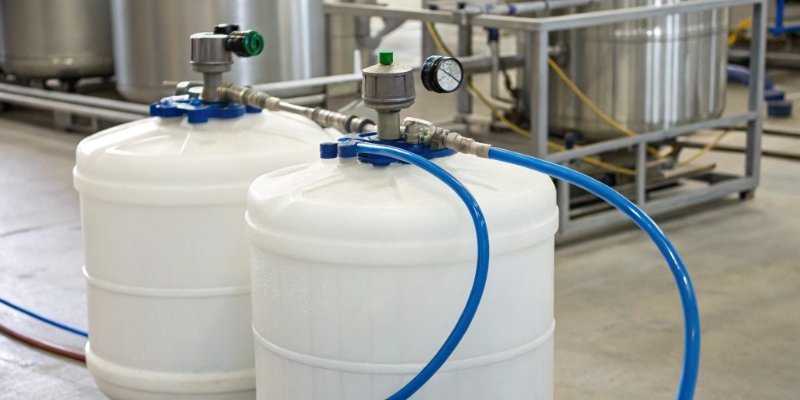
The mixing ratio is the most critical parameter for foam quality. Getting this wrong is like baking a cake with the wrong amount of flour; the result is always a disaster. At our facility, I’ve seen how even a small deviation can ruin an entire batch.
Why the TDS is Your Bible
Every PU foam system is a unique chemical reaction. The manufacturer has spent thousands of hours perfecting the formulation[^1]. The Technical Data Sheet (TDS) they provide is not a suggestion; it’s a strict instruction. It will specify the ratio by weight, not volume.
Volume vs. Weight
Why weight? Because the density of Polyol and Isocyanate can change with temperature[^2]. A machine that meters by volume might be inaccurate if the factory temperature fluctuates. A good high-pressure machine, like our Foamor models, uses precision pumps and flow meters to guarantee the correct weight ratio, every single time. This is non-negotiable for high-quality, consistent production.
| Issue | Likely Cause (Incorrect Ratio) | Result |
|---|---|---|
| Brittle, Crumbly Foam | Too much Isocyanate | Wasted product, customer complaints |
| Soft, Spongy, Wet Foam | Too much Polyol (or not enough Isocyanate) | Fails quality control, long cure times |
| Internal Voids / Collapse | Severe ratio imbalance | Complete production loss, potential damage |
What is the expansion rate of foam?
You see “expansion rate” on data sheets, but don’t know how to use it. Relying on this number alone can lead to costly mistakes. Let me explain its simple purpose.
Expansion rate is another term for expansion ratio. It describes how many times the liquid volume increases (e.g., “expands 30 times”). It’s useful for a quick quality check of raw materials, but for production planning and costing, we always use foam density instead.
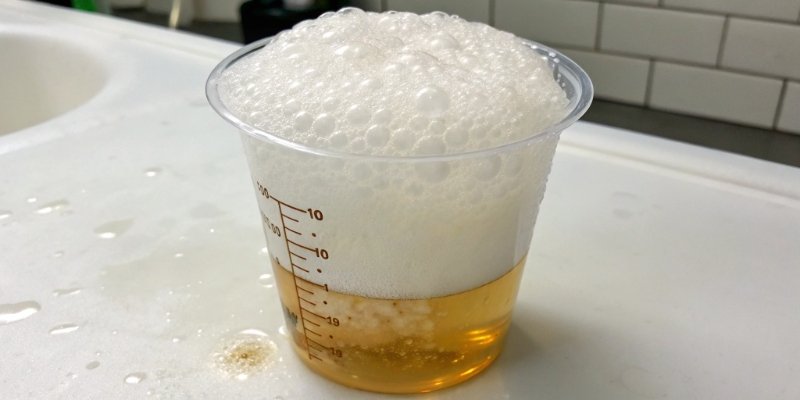
As I mentioned in my insight, the expansion rate is not a very useful number for actual manufacturing. We almost never use it when specifying a machine for a client. So, why does it exist?
It’s for a quick, simple “cup test.” When we receive a new batch of chemicals, our technicians might mix a small, precise amount (e.g., 100 grams) in a cup and observe the “free rise” volume. If the supplier’s TDS says it should expand 30 times and our test only yields 20 times, we know there’s a problem with the material, the temperature, or moisture contamination. It’s a pass/fail check, not a production measurement[^3].
The real world of production is different. In a factory making sofa cushions or mattresses, you are not using “free rise” foam. You are injecting the liquid into a closed mold. The mold restricts the foam’s expansion, which changes its final properties. This leads us to the most important metric of all: density.
How to calculate PU foam density?
You need to control material costs and ensure consistent product quality. Without understanding density, you’re just guessing your costs. Calculating density is simple and gives you precise control over your production.
Foam density is its mass per unit of volume (kg/m³). To calculate it, simply weigh a finished, cured foam part and divide that weight by its volume. This is the most critical number for calculating material costs, ensuring quality, and specifying machinery.
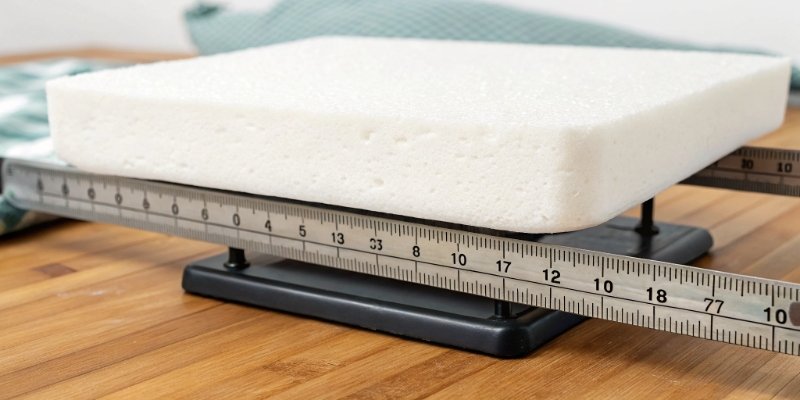
For a production director like Nguyen Van Hieu in Vietnam, density is everything. It connects raw material usage directly to the final product’s performance and cost. A higher density foam feels more supportive and durable[^4], but it also costs more to make because it uses more chemical.
The Simple Formula
The formula is straightforward:
Density = Mass / Volume
A Practical Example
Let’s imagine you are making a sofa cushion.
| Step | Action | Example |
|---|---|---|
| 1. Calculate Volume | Measure the dimensions of your finished cushion. | 0.5m (L) x 0.5m (W) x 0.1m (H) = 0.025 m³ |
| 2. Measure Mass | Weigh the finished, fully cured cushion. | The scale shows 0.75 kg. |
| 3. Calculate Density | Divide the mass by the volume. | 0.75 kg / 0.025 m³ = 30 kg/m³ |
Now you know your cushion has a density of 30 kg/m³.
Why Density is King
With this number, you can do three things:
- Control Quality: If the next cushion weighs 0.85 kg, you know its density is 34 kg/m³. It’s harder and uses more material. You can immediately check the machine settings.
- Control Costs: You know that every cushion requires exactly 0.75 kg of mixed chemical. You can forecast your monthly chemical needs with high accuracy[^5].
- Specify Equipment: When you tell us, “I need to make 100 cushions per hour with a density of 30 kg/m³,” we can calculate the exact flow rate needed and recommend the perfect high-pressure machine for the job.
Conclusion
Forget expansion ratio for production planning. Focus on two things: the correct mixing ratio for quality, and the target density to control your costs. Get these right, and you’re successful.
[^1]: “Synthesis of Rigid Polyurethane Foams Incorporating Polyols …”, https://pmc.ncbi.nlm.nih.gov/articles/PMC8950580/. This source discusses the extensive research and development efforts by manufacturers in creating polyurethane foam formulations. Evidence role: historical_context; source type: institution. Supports: The manufacturer has spent thousands of hours perfecting the formulation.. Scope note: The source may focus on specific manufacturers or regions, limiting its general applicability.
[^2]: “A Review of Research on the Effect of Temperature on the Properties of …”, https://pmc.ncbi.nlm.nih.gov/articles/PMC9654075/. This source explains how temperature variations affect the density of Polyol and Isocyanate, impacting mixing accuracy. Evidence role: mechanism; source type: research. Supports: The density of Polyol and Isocyanate can change with temperature.. Scope note: The source may focus on specific temperature ranges or conditions, which might not apply universally.
[^3]: “Rigid polyurethane foam cup test – YouTube”, https://www.youtube.com/watch?v=E3j34UbuDTc. This source explains the use of ‘cup tests’ as a quick quality control method for polyurethane foam materials. Evidence role: case_reference; source type: research. Supports: It’s a pass/fail check, not a production measurement.. Scope note: The source may focus on specific testing methods, which might not apply to all production scenarios.
[^4]: “Foam Performance – Polyurethane Foam Association”, https://pfa.org/foam-performance/. This source explains the relationship between foam density and its physical properties, such as support and durability. Evidence role: mechanism; source type: research. Supports: A higher density foam feels more supportive and durable.. Scope note: The source may focus on specific density ranges or applications, limiting its general applicability.
[^5]: “Polyurethane Foams: Past, Present, and Future – PMC”, https://pmc.ncbi.nlm.nih.gov/articles/PMC6213201/. This source explains how calculating foam density aids in accurate forecasting of chemical usage in production. Evidence role: mechanism; source type: research. Supports: You can forecast your monthly chemical needs with high accuracy.. Scope note: The source may focus on specific forecasting methods, which might not apply universally.
Leave a Reply