

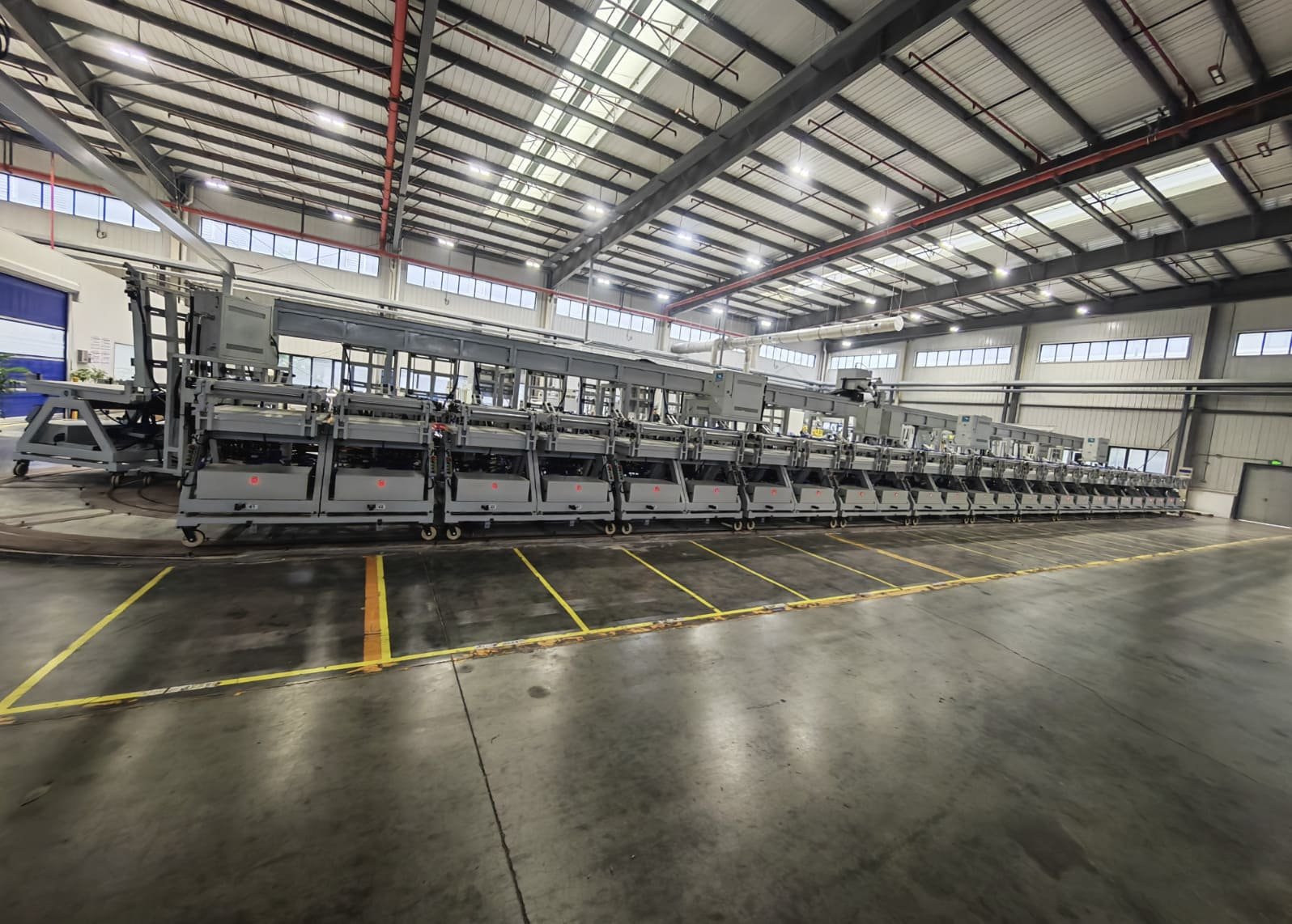
Struggling with inconsistent PU parts? Your old setup might be wasting material and time. A full production line integrates everything for maximum efficiency and quality.
A PU injection molding production line is a complete, automated system for making polyurethane parts. It combines raw material handling, a high or low-pressure foaming machine, and a conveyor (like a carousel) with mold carriers to produce parts like cushions and panels efficiently and consistently.
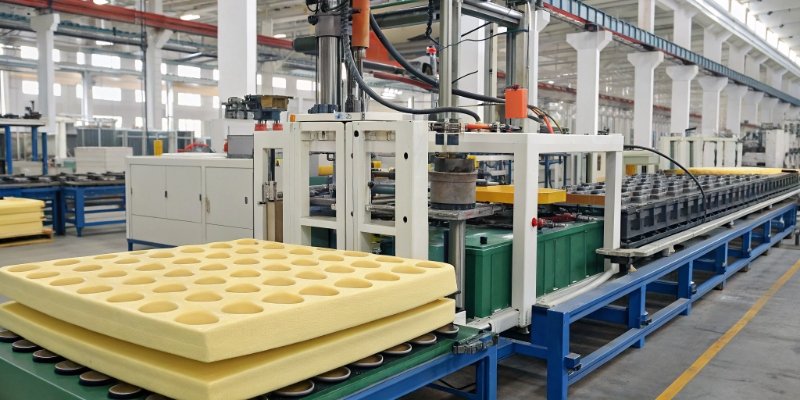
This might sound complex, but it’s really about connecting a few key systems to solve major production headaches. When we talk about this process, we’re talking about a significant upgrade from a simple, standalone machine. It’s a system designed for high volume, consistent quality, and less waste. But before we look at the whole line, let’s break down the basic concepts that make it all work. Understanding these fundamentals is the first step to improving your factory’s output.
What is PU molding?
Making PU parts seems simple, but getting consistent quality is tough. PU molding is the foundational process, but how does it actually work?
PU molding is a process where two liquid chemicals, a polyol and an isocyanate, are mixed and then poured or injected into a mold. These liquids react and expand inside the mold to create a solid or flexible polyurethane part.
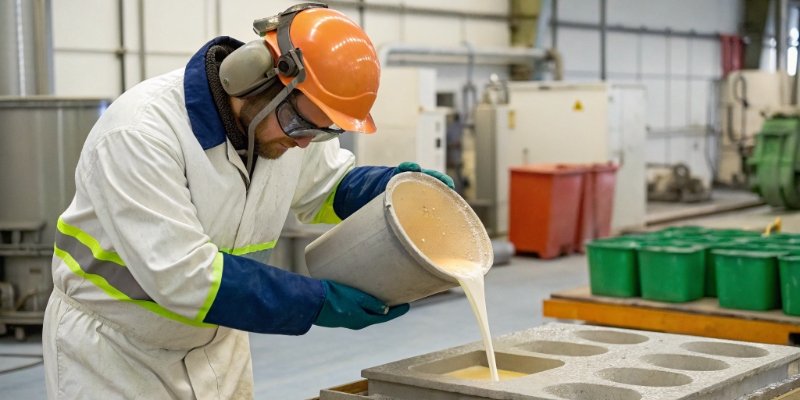
At its core, PU molding is all about a chemical reaction. It’s not like melting plastic. You start with two separate liquids, often called the ‘A-component’ (Isocyanate) and the ‘B-component’ (Polyol blend). When we mix them, a powerful chemical reaction begins. This reaction generates heat and causes the mixture to expand, filling every corner of the mold.
The Core Reaction
The magic happens when the two liquids meet. They start to cross-link and form a new, stable material: polyurethane. By changing the formulation of the A and B components, we can make all kinds of foam—from soft, flexible foam for sofa cushions to hard, rigid foam for insulation panels. The control over this reaction is critical for the final product’s quality.
The Mold’s Role
The mold does more than just give the part its shape. The mold’s temperature has a big impact on the foam’s skin and final properties[^1]. The material of the mold (like aluminum or steel) and its design also determine the surface finish. That’s why in our projects, we pay as much attention to the mold design as we do to the machine itself.
What is PU injection?
You’ve heard the term “injection,” but what does it mean for polyurethane? It’s not just about pouring; it’s about control, speed, and precision.
PU injection is the method of delivering the mixed liquid chemicals into a closed mold. This is done using a machine that precisely measures and mixes the components under pressure before injecting them, ensuring a complete and uniform fill.
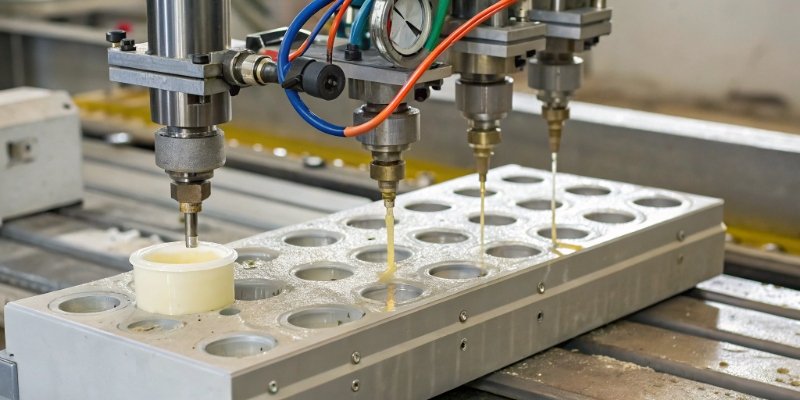
PU injection is how we move from manual pouring to a controlled, repeatable process. The injection machine is the heart of this operation. Its main job is to take the two liquid components from their tanks, measure them with extreme accuracy, mix them together perfectly, and then inject the mixture into the mold before the chemical reaction progresses too far. This precision is what separates low-quality, inconsistent foam from high-grade, reliable products that big clients demand.
High-Pressure vs. Low-Pressure
At Foamor, we specialize in both types of machines, and the choice depends on your product and budget.
| Feature | High-Pressure Machine | Low-Pressure Machine |
|---|---|---|
| Mixing | Impingement mixing (liquids collide at high speed) | Mechanical mixing (stirrer in a mixhead) |
| Cleaning | Self-cleaning with a piston | Requires solvent or water flush after each shot |
| Precision | Very high (±0.5%), less material waste | Good, but less precise than high-pressure |
| Best For | High-quality flexible foam, HR foam, automotive seats | Rigid foam, insulation, packaging foam applications |
The Importance of the Mixing Head
The mixing head is where the A and B components finally meet[^2]. In a high-pressure machine, the liquids are forced through tiny nozzles at over 150 bar, crashing into each other. This creates a super-fine, uniform mixture in a fraction of a second. This superior mix results in better foam cell structure, higher quality, and less waste—exactly the kind of upgrade that pays for itself by saving on expensive raw materials.
What are the key differences between PU molding and injection molding?
People often confuse PU processing with standard plastic injection molding. They sound similar, but the materials and processes are fundamentally different and not interchangeable.
The main difference is the material. PU molding uses a thermoset chemical reaction of two liquids in the mold. Traditional plastic injection molding melts solid thermoplastic pellets, injects the molten plastic, and cools it to solidify.
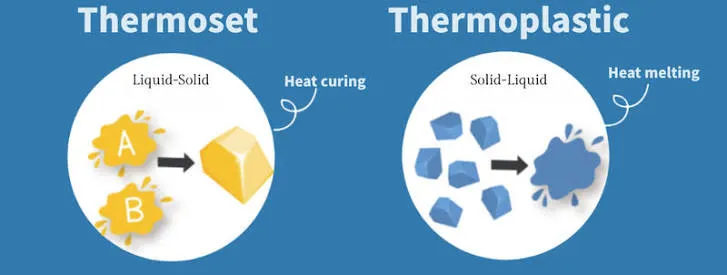
I get this question a lot from factory owners. They hear “injection molding” and think of the machines that make plastic chairs or toys. While the goal—making a part in a mold—is the same, the “how” is completely different. Understanding this is key to buying the right equipment for your factory. One process creates a chemical change, the other just a physical one.
Material Transformation
With PU, you are creating a new material inside the mold. The liquid polyol and isocyanate react to form a permanent, cross-linked polyurethane. You can’t melt it down and reuse it. This is called a thermoset material. With traditional injection molding, you start with solid pellets of plastic like PP or ABS. The machine heats them until they become a liquid, injects them, and then cools the mold. The plastic becomes solid again but no chemical change has happened. This is a thermoplastic material.
Process and Equipment
This difference in material leads to huge differences in the equipment.
| Aspect | PU Molding (RIM) | Traditional Injection Molding |
|---|---|---|
| Material State | Two liquids (A+B) | Solid pellets |
| Process | Chemical reaction in the mold | Melting, injection, and cooling |
| Injection Pressure | Lower (e.g., 150 bar) | Extremely High (e.g., 1000+ bar) |
| Mold Cost | Lower (can use aluminum) | Higher (requires hardened steel) |
Because PU molding involves lower pressures, the molds don’t have to withstand as much force. This means you can often use aluminum molds, which are faster and cheaper to make than the heavy-duty steel molds required for high-pressure thermoplastic injection. This is a huge advantage for businesses that need to produce many different parts or want to get started with a lower initial investment.
What is the production process for injection moulding?
You have the machine and the mold. How do they become a “production line”? It’s about creating a seamless, automated workflow for high-volume output.
A PU injection molding production process integrates multiple steps on an automated line. It starts with material feeding, moves to injection, curing in molds on a conveyor, and finally, demolding. This creates a continuous, efficient cycle.
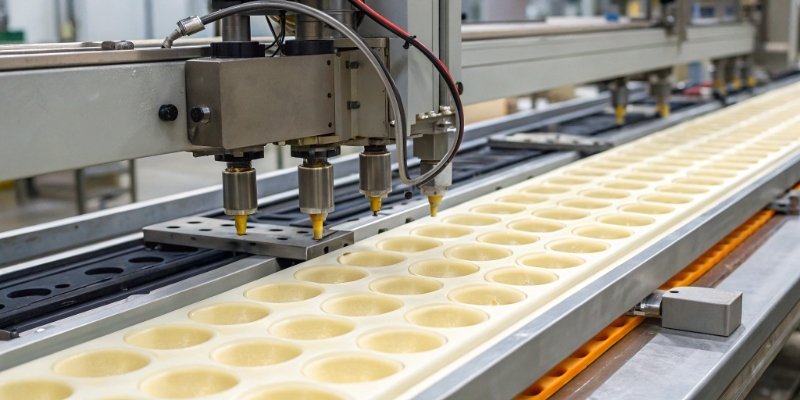
This is where everything we’ve discussed comes together to form a highly productive system. A standalone machine is good, but a full production line is what allows you to meet large orders from demanding customers like IKEA or automotive companies. As we build these lines for our clients, we focus on a smooth, continuous flow. The entire system works like a loop, bringing empty molds back to the start to be filled again.
Here is a typical workflow:
Stage 1: Material Preparation
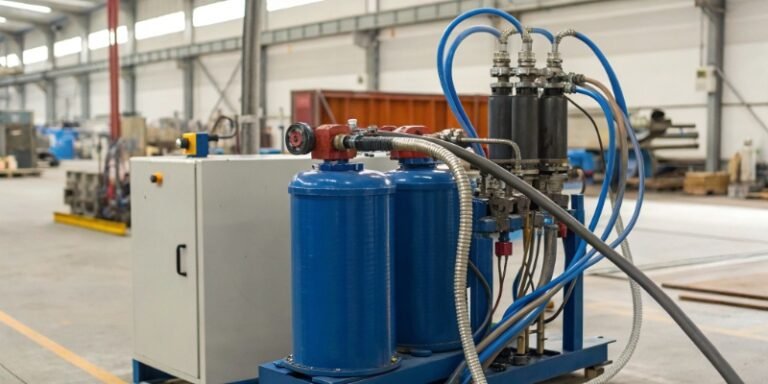
The raw materials, Polyol and Isocyanate, are stored in large day tanks[^3]. These tanks are often temperature-controlled because the temperature of the chemicals is critical for a stable reaction. Pumps feed the materials from the tanks directly to the injection machine.
Stage 2: Injection
An empty mold on the production line arrives at the injection station. A robot arm or an operator positions the mixing head over the mold’s injection port. The machine then injects the precise amount of mixed liquid chemicals in just a few seconds.
Stage 3: Curing on the Line
The filled mold now moves along the conveyor line[^4], which can be a large rotating carousel or a long oval track. During this travel time, which can be several minutes, the chemical reaction happens. The foam expands, cures, and becomes solid inside the moving mold.
Stage 4: Demolding and Reset
By the time the mold reaches the end of the line, the part inside is fully cured. An operator opens the mold and removes the finished part[^5]. The mold is then cleaned, a new layer of release agent is applied, and the closed mold is sent back to the start of the line to repeat the cycle. This continuous loop is the key to high-volume, non-stop production.
Conclusion
A PU injection molding line automates production from liquid chemicals to finished parts. It’s the key to achieving high quality, reducing waste, and scaling your business effectively.
[^1]: “A Review of Research on the Effect of Temperature on the Properties of …”, https://pmc.ncbi.nlm.nih.gov/articles/PMC9654075/. This source discusses the role of mold temperature in determining the surface finish and properties of polyurethane foam. Evidence role: mechanism; source type: research. Supports: Mold temperature significantly affects the surface finish and properties of polyurethane foam during molding..
[^2]: “Polyurethane PU Mix Heads, Pumps, Foaming Machines”, https://www.uskoreahotlink.com/products/machinery/polyurethane-equipment/. This source describes the function of the mixing head in PU machines, emphasizing its role in achieving uniform chemical mixing. Evidence role: mechanism; source type: research. Supports: The mixing head in PU machines ensures uniform mixing of A and B components for high-quality foam production..
[^3]: “Isocyanates – Overview | Occupational Safety and Health Administration”, https://www.osha.gov/isocyanates. This source explains the storage and handling requirements for Polyol and Isocyanate in PU production lines. Evidence role: mechanism; source type: research. Supports: Polyol and Isocyanate are stored in large day tanks to ensure stable conditions for PU production..
[^4]: “Complete PU Foam Production Line Guide – Yongjia”, https://www.yongjiapu.com/complete-pu-foam-production-line-guide/. This source describes the curing process of polyurethane foam in molds as they move along a conveyor line. Evidence role: mechanism; source type: education. Supports: The curing process of polyurethane foam occurs as molds move along a conveyor line in production systems..
[^5]: “Comparative Analysis of the Use of Polymers and Release Agents in …”, https://onlinelibrary.wiley.com/doi/full/10.1002/app.56495. This source explains the demolding process in PU production lines, including the role of operators in removing finished parts. Evidence role: mechanism; source type: education. Supports: Operators open molds and remove finished parts as part of the demolding process in PU production lines..
Leave a Reply