

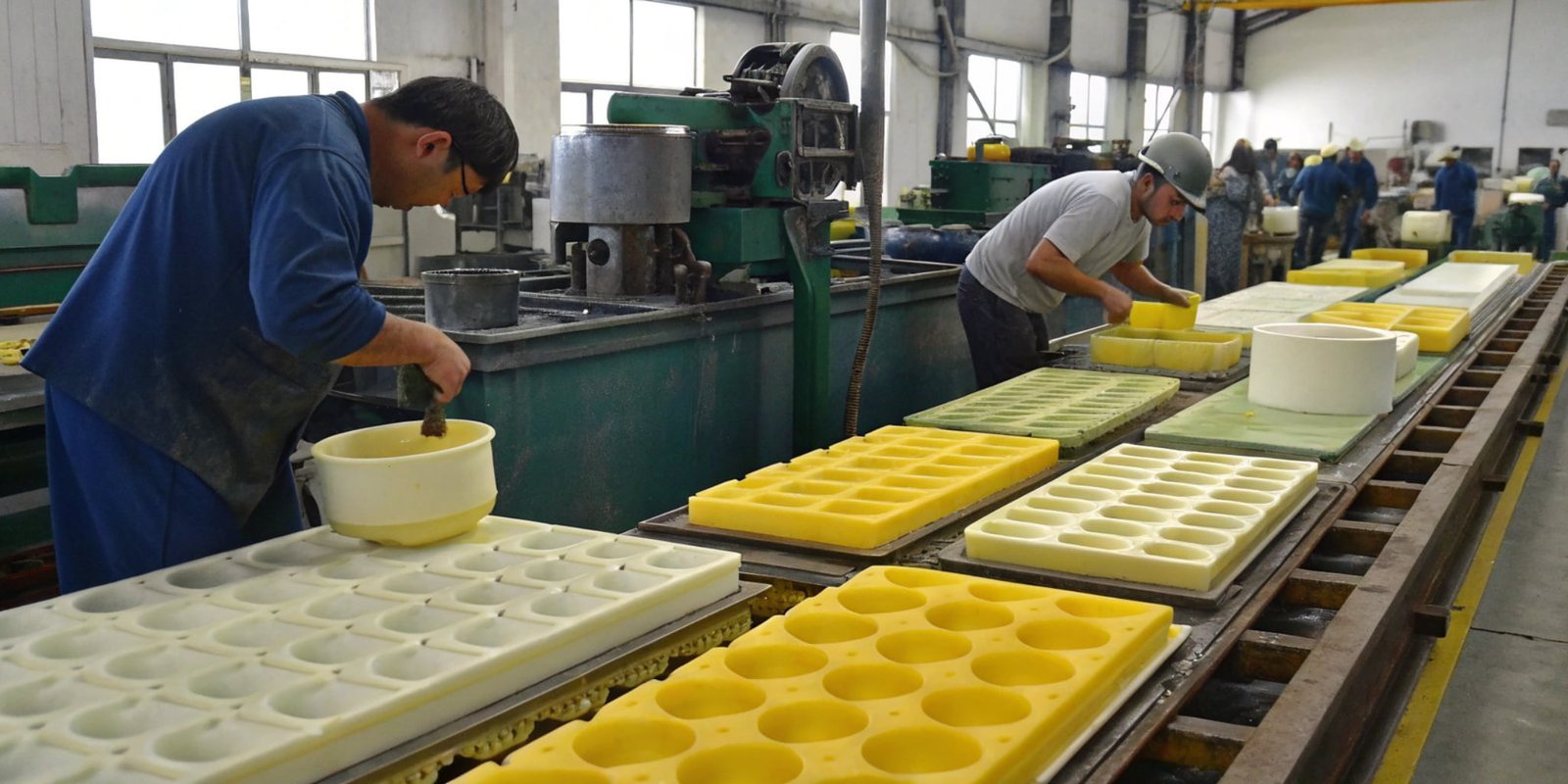
Are you curious about the materials in your chair, car, or even your mattress? It seems complex, but the process of making versatile polyurethane foam is something we have perfected over many years.
The short answer is that polyurethane products are made by precisely mixing two liquid chemicals—a polyol and an isocyanate—in a specialized machine. This mixture is then injected into a mold, where it expands and hardens into the final foam product, ready for use.
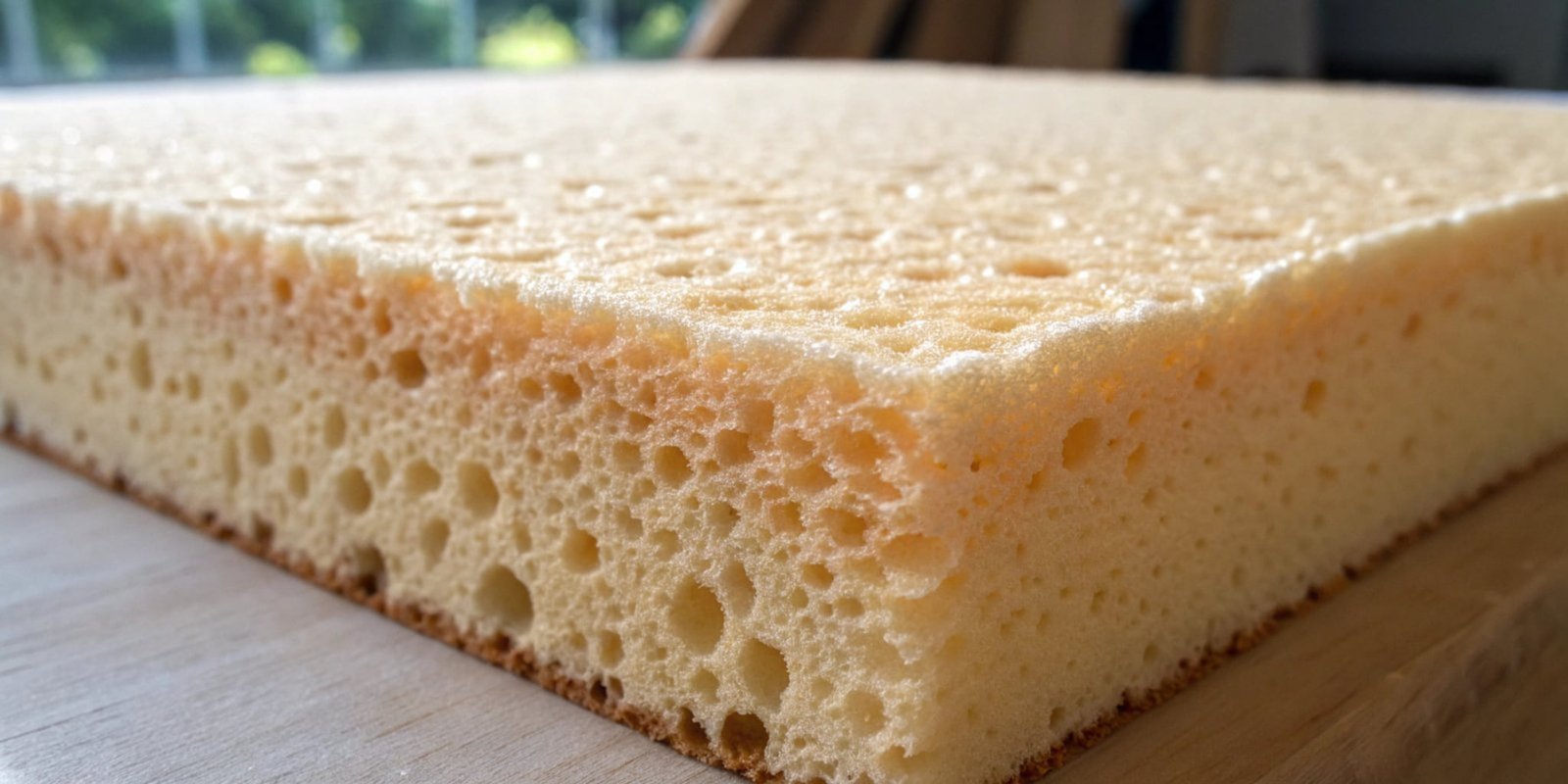
This process might sound simple, but getting it right requires deep knowledge and the right equipment. For nearly 20 years, I’ve helped manufacturers around the world set up production lines to do just this. From a small furniture factory in Vietnam to a large automotive supplier in Mexico, the core principles are the same. It’s a journey from liquid chemicals to a finished product that millions of people use every day. In this article, I will walk you through each step of how these amazing products come to life. Let’s dive in.
What is the process of manufacturing polyurethane products?
Understanding the entire PU manufacturing process can feel overwhelming. There seem to be so many steps and technical details. But we can break it down into a few clear, manageable stages for you.
The polyurethane manufacturing process follows four key steps: preparing the raw materials and additives, mixing them in a foaming machine, injecting the mixture into a product mold, and finally, allowing the part to cure and solidify. This structured process ensures consistent quality and production efficiency.
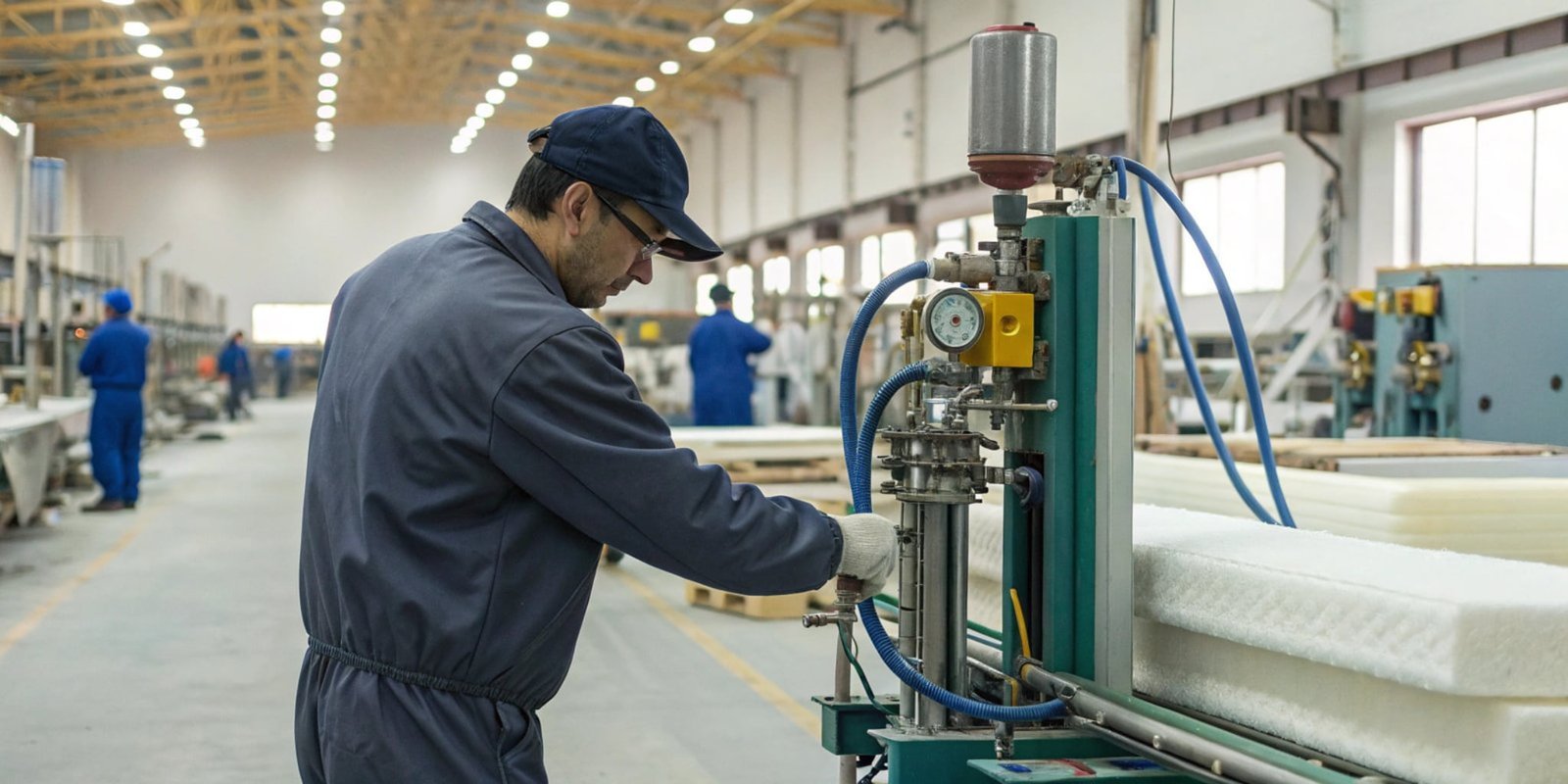
I remember working with a client, Nguyen, a production director in Vietnam. His factory was struggling with inconsistent foam quality. Sometimes the foam was too soft, other times too hard. After visiting his facility, we saw that their process lacked structure. They were mixing materials by hand and their curing times were all over the place. We helped them map out a clear, step-by-step workflow. By defining each stage, they were able to eliminate guesswork and stabilize their product quality.
Here’s a breakdown of that standard process:
The Four Stages of PU Production
| Stage | Description | Key Considerations |
|---|---|---|
| 1. Material Preparation | The two main liquids, Polyol and Isocyanate, are stored in separate tanks. Additives like catalysts, surfactants, and colorants are mixed into the Polyol component based on the product recipe. | Temperature control of the tanks is critical[^1]. If the materials are too cold or too hot, the reaction will be affected. |
| 2. Precise Mixing | The Polyol and Isocyanate are pumped from their tanks to the mixing head of a foaming machine. Here, they are mixed together intensely for a very short time. | The mixing must be fast and thorough. This is the main job of a high-pressure or low-pressure foaming machine. |
| 3. Molding | The liquid mixture is immediately injected or poured from the mixing head into a custom mold. The mold has the exact shape of the final product, like a car seat or a mattress. | Molds need to be clean and coated with a release agent so the finished part doesn’t stick. |
| 4. Curing & Demolding | Inside the closed mold, a chemical reaction starts. The mixture expands to fill the mold and then hardens, or “cures.” After a set time, the mold is opened, and the finished part is removed. | Curing time can range from a few minutes to half an hour[^2], depending on the foam formulation and part size. |
By following these four stages, factories can transform simple liquids into complex, high-quality foam products reliably every single day.
How are raw materials used to create polyurethane products?
You know that PU foam is made from chemicals. But how do these simple-looking liquids turn into a soft sofa cushion or a hard insulation panel? The secret is in the chemistry and the recipe.
Polyurethane is created from two primary liquids: Polyol (“white material”) and Isocyanate (“black material”). We mix special additives into the polyol to control properties like density, softness, and color. The final product depends entirely on the ratio between these components.
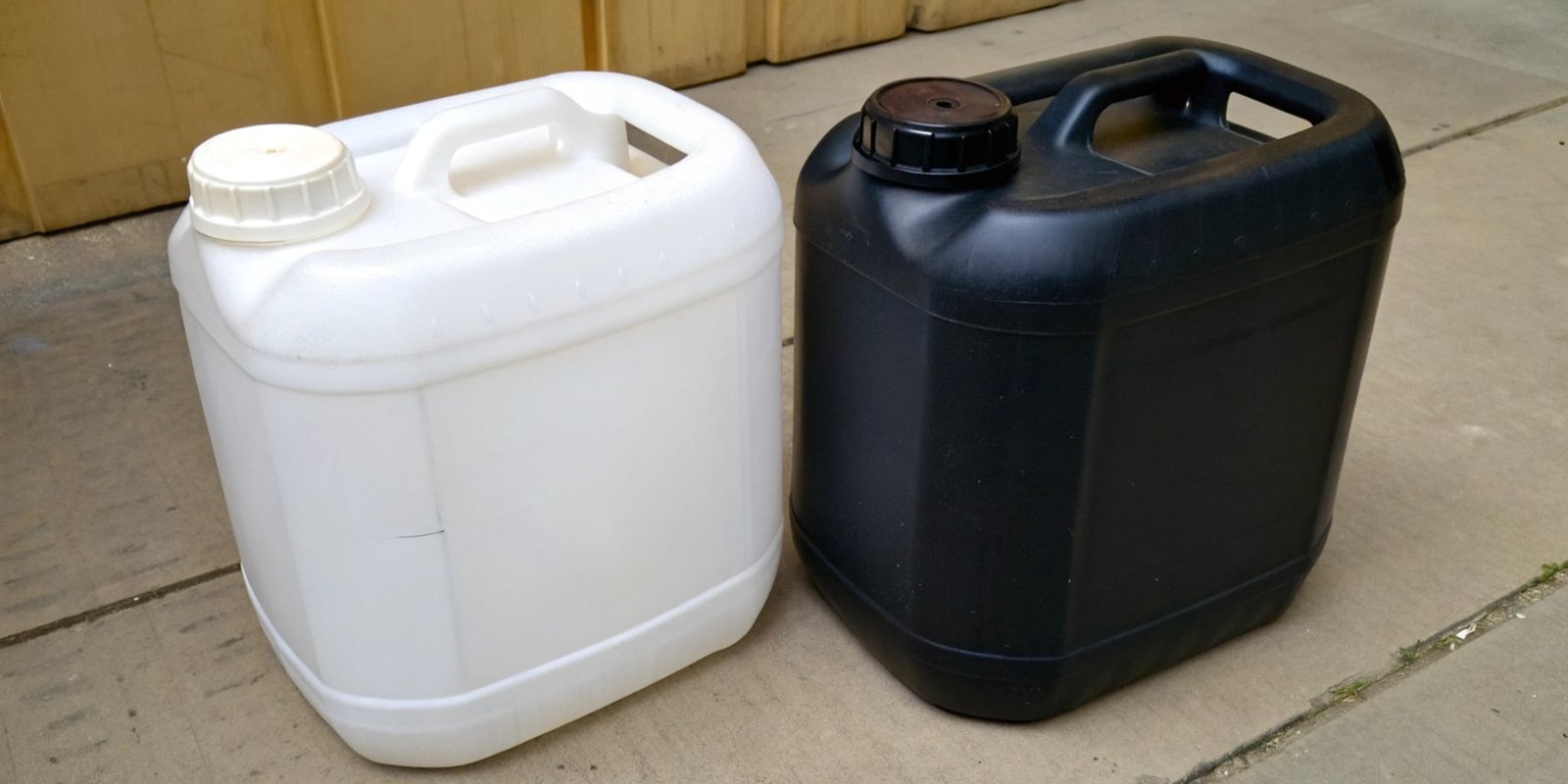
Think of it like baking a cake. You have your main ingredients—flour and sugar. But you also add things like baking soda to make it rise and vanilla for flavor. In foam making, the Polyol and Isocyanate are our flour and sugar. The additives are what make each foam unique. I’ve spent years helping clients develop their “secret sauce.” A slight change in the catalyst can cut curing time in half. A different surfactant can make the foam feel much softer. It is a science we have turned into an art.
Let’s look at these ingredients more closely.
The “White Material”: Polyol and Its Additives
The Polyol component is the foundation for the foam’s properties. We start with a base polyol and then add small amounts of other chemicals to get the exact result we want.
- Polyols: There are two main types. Polyether polyols are used for flexible foams like those in furniture and mattresses because they create a soft, open-cell structure. Polyester polyols are often used for more rigid or durable foams because they offer better strength and resistance.
- Additives: This is where the magic happens.
- Catalysts: These chemicals control the speed of the reaction. We use them to make the foam form and cure faster.
- Surfactants: These are crucial for creating a fine and uniform cell structure. Without them, you’d get large, uneven bubbles.
- Blowing Agents: Water is the most common blowing agent. It reacts with the Isocyanate to create CO2 gas, which forms the bubbles and makes the mixture expand into foam.
- Colorants: Pigment pastes are added to the polyol to give the foam its final color.
The “Black Material”: Isocyanate
The Isocyanate is the other half of the reaction. When it meets the polyol blend, the chemical chain reaction begins, creating polyurethane. The two most common types are MDI and TDI. MDI is generally more versatile and used in a wide range of products[^3], from rigid insulation to the high-resilience (HR) foam in car seats. TDI is often used for standard flexible foams.
The ratio of Isocyanate to Polyol is what we call the “index.” This ratio is critical and must be controlled with extreme precision by the foaming machine.
What technologies are involved in polyurethane production?
You need more than just the right chemical recipe to make good foam. Using the wrong equipment can lead to wasted materials, poor quality, and safety problems. The right technology is what makes production reliable and efficient.
The core technology is the foaming machine, available in two main types: high-pressure and low-pressure. High-pressure machines provide extremely precise mixing for high-quality products like automotive foam. Low-pressure machines are cost-effective solutions for applications like rigid foam insulation.
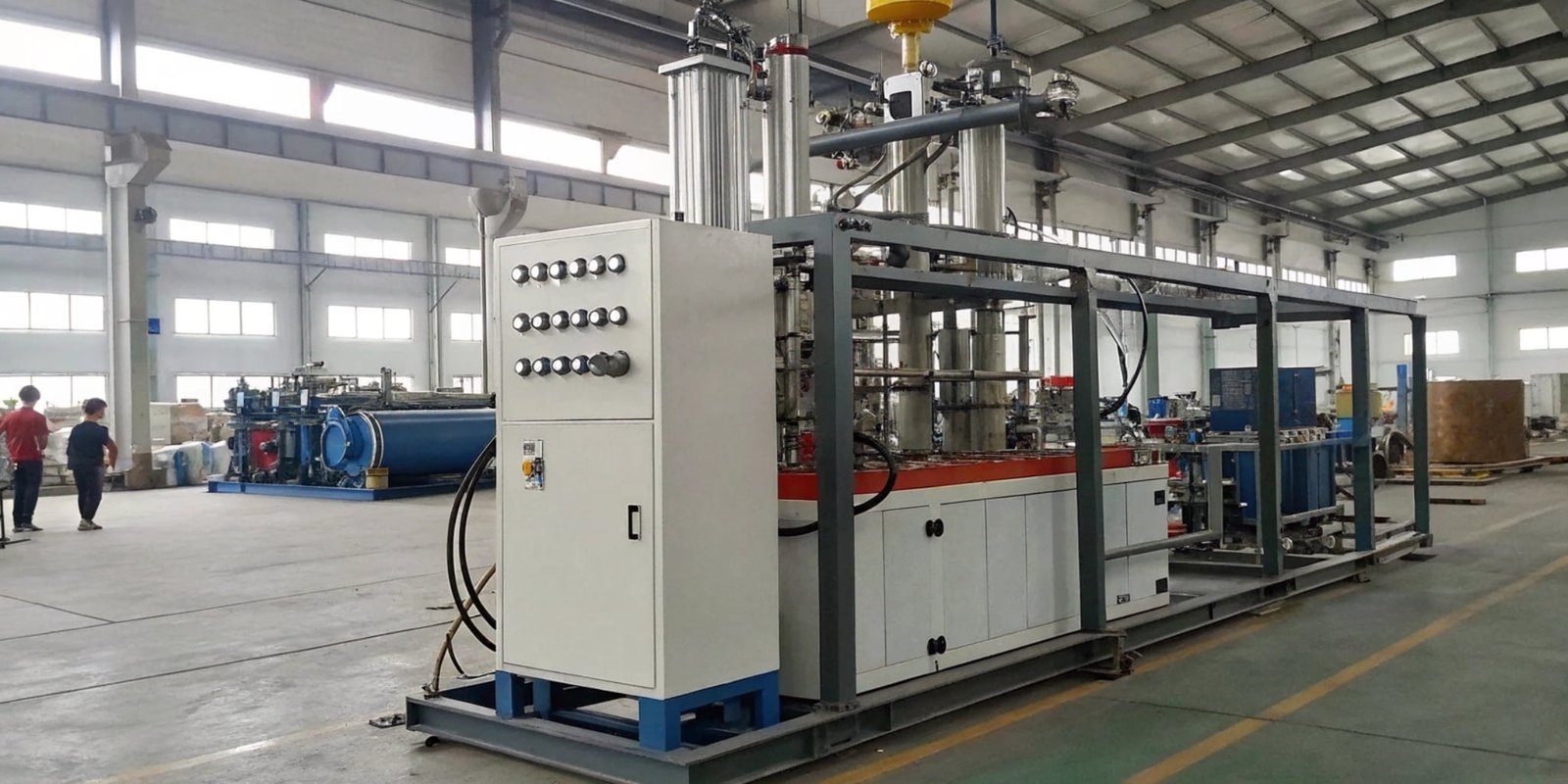
I once had a client who bought a cheap, low-quality machine from an unknown supplier. He called me because his factory was wasting almost 20% of its raw materials. The machine couldn’t meter the chemicals accurately. We replaced it with one of our high-pressure machines. Within three months, his material waste dropped to less than 1%. The investment paid for itself quickly. This story shows why choosing the right technology is not an expense, but an investment in quality and efficiency.
Let’s compare the main technologies.
High-Pressure Foaming Machines
These are the top choice for high-quality, high-volume production.
- How they work: They use powerful pumps to spray the polyol and isocyanate together at very high pressure (100-200 bar) inside a tiny mixing chamber. This is called impingement mixing. The force of the collision is so intense that the chemicals mix perfectly in a fraction of a second.
- Key advantage: The mixing head is self-cleaning. After each shot, a piston clears out any residue, so no flushing solvents are needed. This saves money and is better for the environment.
- Best for: Flexible foam, HR foam for car seats, and memory foam. Our machines offer precision metering of ±0.5%.
Low-Pressure Foaming Machines
These machines are a great, cost-effective option for many applications.
- How they work: The chemicals flow into the mixing head at a lower pressure. A mechanical stirrer, like a fast-spinning propeller, mixes them together.
- Key consideration: After each shot, the mixing head must be cleaned with a solvent to prevent the chemicals from hardening inside. This adds a small operational cost.
- Best for: Rigid foam, packaging foam, and applications where the highest precision is not the top priority.
Molds and Production Lines
The foaming machine is the heart of the operation, but molds give the product its shape. Molds are typically made of aluminum or steel and can be heated to help the foam cure faster. For large-scale production, these molds are often placed on a conveyor system, like an automated turntable or an oval production line, to move them from the injection station to the demolding station efficiently. As a turnkey solution provider, we design and build the entire line, not just the machine.
How do factories produce polyurethane-based items efficiently?
Making one perfect foam part is one thing. But making thousands of them every day, on time and on budget, is the real challenge for a factory manager. Efficiency isn’t an accident; it’s the result of smart planning.
Factories achieve efficiency by using high-precision machines to minimize material waste, automating production lines to reduce labor costs, and optimizing their foam formulation. A well-designed turnkey production line is the key to maximizing both output and profit.
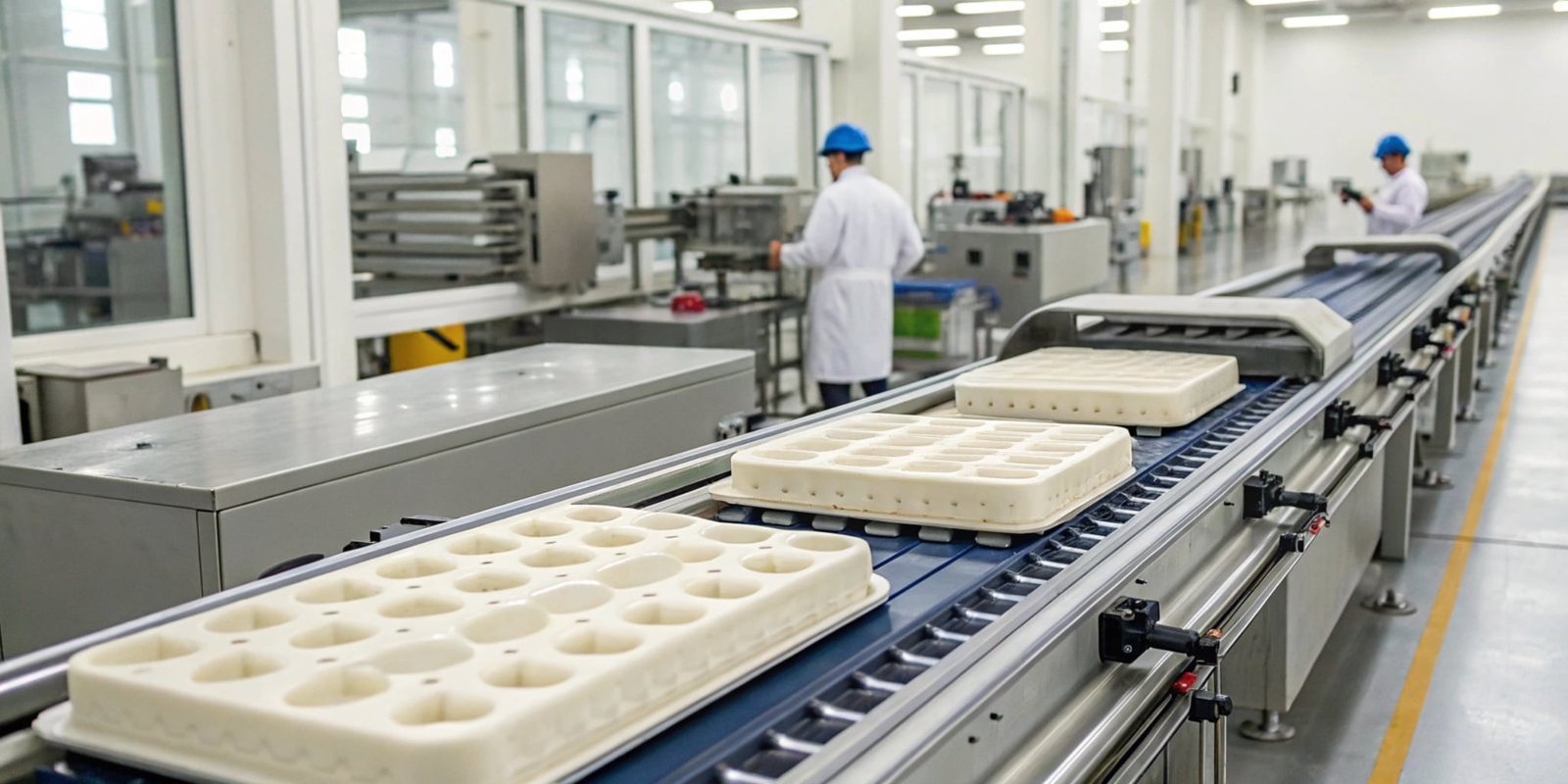
I think back to my client Nguyen in Vietnam. His old, low-pressure machine was constantly breaking down, causing production to stop. On top of that, rising raw material costs were hurting his profits. He needed to become more efficient to keep his big customers, like IKEA, happy. We worked with him to design a new production line around a high-pressure machine. The project was not just about buying new equipment; it was about rethinking his entire workflow for maximum efficiency.
Here are the key areas we focus on to improve factory efficiency:
1. Minimizing Raw Material Waste
This is the number one way to save money. Raw materials are the biggest cost in foam production. A high-pressure machine with precise metering pumps ensures you use the exact amount of chemical needed for each part—no more, no less. For many of our clients, the material savings alone provide a return on their investment in just 6 to 12 months. This is exactly what happened with Nguyen’s factory.
2. Reducing Downtime
If the production line isn’t running, you’re not making money. Old, unreliable equipment is a major source of downtime. Breakdowns stop production and delay customer orders. That’s why we build our machines to be robust and easy to maintain. And when a problem does occur, our after-sales support team responds within 24-48 hours with remote diagnostics to get our clients back up and running as fast as possible.
3. Automating the Workflow[^4]
A fully automated production line improves efficiency and consistency. Instead of workers manually carrying molds, a conveyor system moves them automatically. This reduces labor costs, increases safety, and sets a consistent pace for production. We design turnkey lines that handle everything from material feeding to final part demolding. We take full responsibility for making the entire system work, so our clients can focus on what they do best: making great products.
Conclusion
Making polyurethane products is a precise science. It combines specific raw materials with advanced technology to create everything from soft cushions to strong automotive parts. Your success depends on the right process.
[^1]: “Effects of composition and temperature of initial mixture on the …”, https://www.academia.edu/104359371/Effects_of_composition_and_temperature_of_initial_mixture_on_the_formation_and_properties_of_polyurethane_foam. This source discusses the importance of temperature control in chemical reactions, particularly in polyurethane production, to ensure consistent product quality. Evidence role: mechanism; source type: research. Supports: Temperature control of the tanks is critical for the polyurethane manufacturing process..
[^2]: “9+ How Long to Cure Great Stuff? Tips & Times”, https://bigblue.atlantisuniversity.edu/how-long-does-it-take-for-great-stuff-to-cure/. This source provides data on curing times for polyurethane foam, explaining how formulation and part size affect the duration. Evidence role: statistic; source type: research. Supports: Curing time for polyurethane foam can range from a few minutes to half an hour..
[^3]: “Exposure to Methylene Diphenyl Diisocyante (MDI) among …”, https://oaktrust.library.tamu.edu/items/8513ce0c-4c73-4b02-8a1e-deea3c8a45ce. This source provides an overview of MDI’s versatility in polyurethane applications, including its use in rigid insulation and high-resilience foam. Evidence role: general_support; source type: encyclopedia. Supports: MDI is generally more versatile and used in a wide range of products..
[^4]: “Continuous Polymer Synthesis and Manufacturing of Polyurethane …”, https://cdr.lib.unc.edu/concern/articles/hm50v576z. This source explains the benefits of automation in polyurethane production, including reduced labor costs and improved consistency. Evidence role: mechanism; source type: research. Supports: Automating the workflow improves efficiency in polyurethane production..

Leave a Reply