

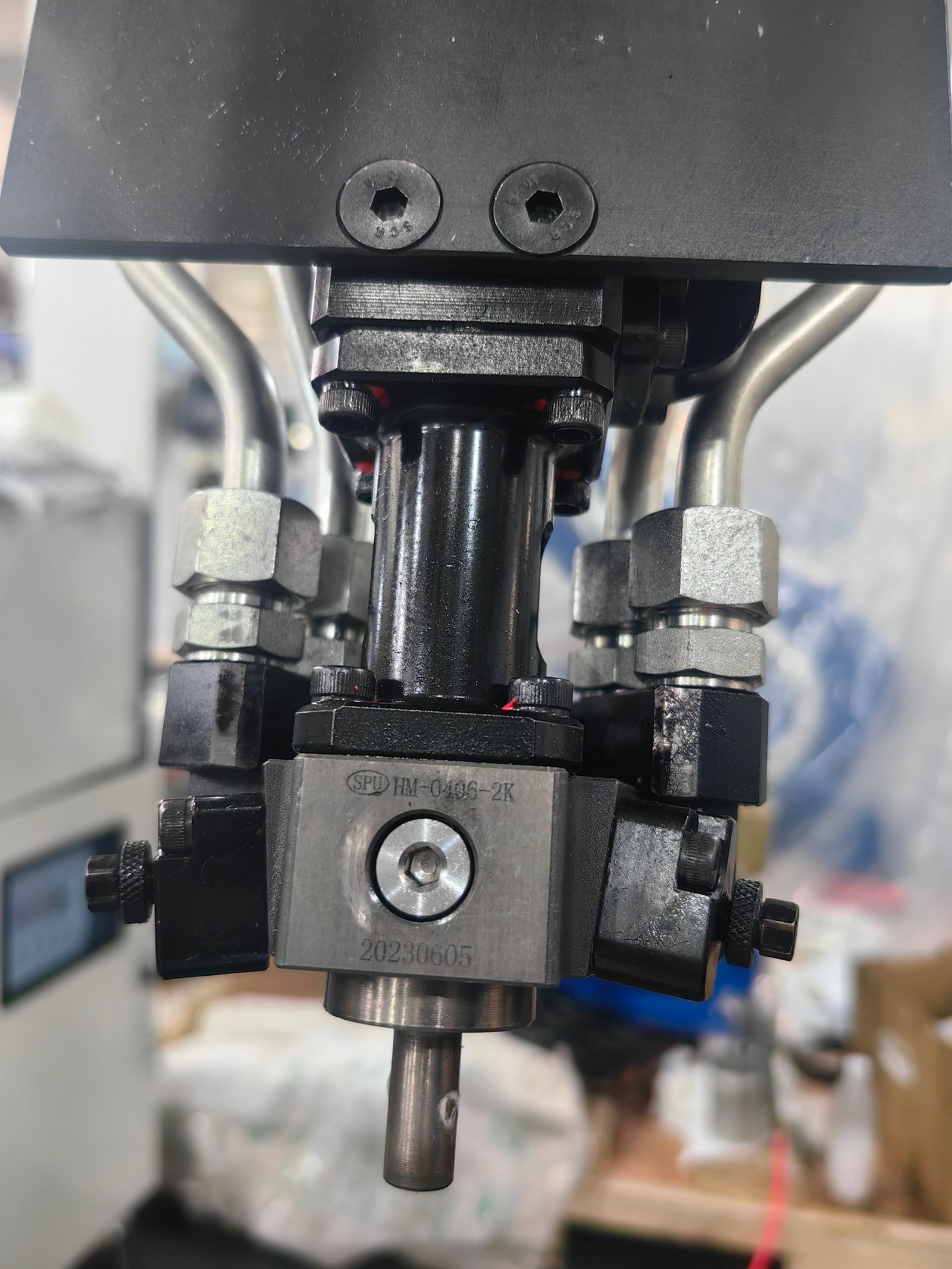
Are you tired of production delays and material waste from constantly cleaning your foam mixing head? This old process costs you time, money, and exposes workers to harmful chemicals. A self-cleaning mixing head changes everything.
A self-cleaning mixing head is a core component in high-pressure PU foaming machines. It uses a hydraulic piston to automatically purge all mixed material after each injection. This completely eliminates the need for solvent flushing, ensuring a clean chamber for every cycle and boosting production efficiency.
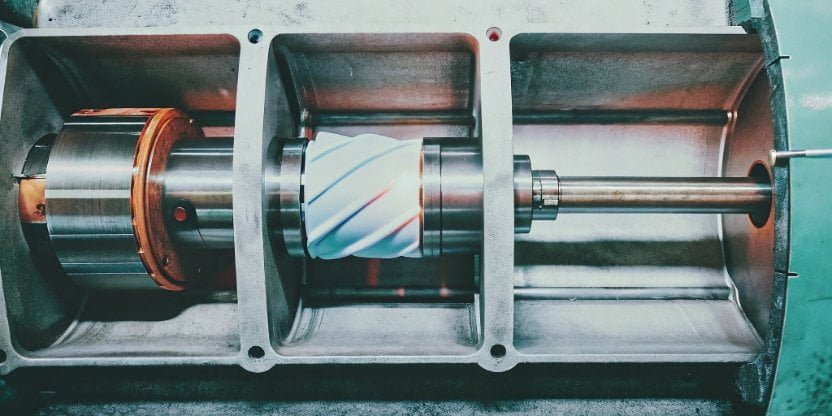
This automatic cleaning function sounds great on paper, but you are probably wondering what makes it work and why it is so different from the traditional low-pressure methods. We see this question a lot from factory managers who are looking to upgrade their production lines. Understanding how this technology operates is the first step to realizing why it is essential for modern, competitive foam manufacturing. Let’s dive deeper into the mechanics and the benefits it can bring to your factory floor.
What is a self-cleaning mixing head and what are its key features?
Are you confused by the technical details of high-pressure machines? The term “self-cleaning head” might seem complex. Not understanding its core features means you could miss out on key production advantages. Let’s simplify it and look at what makes this component a game-changer.
A self-cleaning mixing head is where polyol and isocyanate are mixed under intense pressure. Its main features include a hydraulic control piston, precisely angled injection nozzles, and an L-shaped mixing chamber. These elements work together to create instant, thorough mixing and automatic purging after every shot.
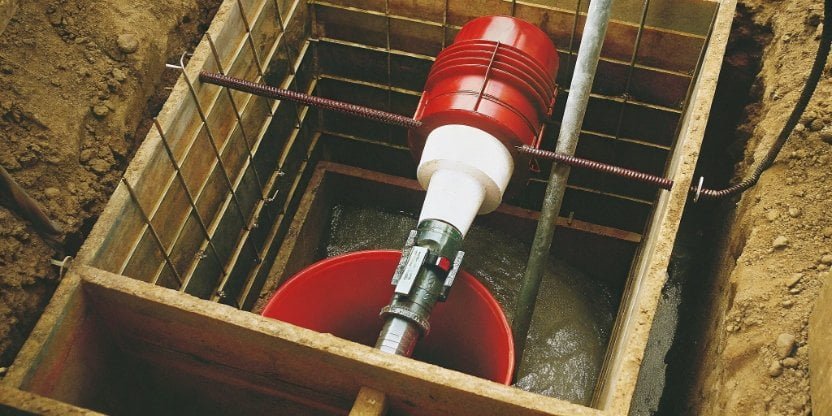
When we design a high-pressure line for our clients, the mixing head is a critical point of discussion. Unlike low-pressure heads that use a mechanical stirrer and need solvent flushing[^1], the high-pressure head works on a completely different principle: high-velocity impingement[^2]. The raw materials are forced through tiny nozzles at over 150 bar[^3], causing them to collide and mix instantly and thoroughly. The most important feature, the “self-cleaning” piston, then takes over. Immediately after the shot, this piston pushes forward, forcing every last drop of the reacting mixture out of the head and into your mold. This mechanical cleaning action is what makes solvents obsolete.
| Feature | Function | Benefit for You |
|---|---|---|
| Hydraulic Piston | Pushes out all residual foam after a shot. | No manual cleaning, no solvents, no downtime. |
| High-Pressure Nozzles | Atomize and collide materials at high velocity. | Superior, more uniform foam cell structure. |
| L-Type Chamber | Optimizes material flow and mixing efficiency. | Reduces turbulence and prevents unmixed material. |
| Hardened Steel Body | Resists abrasion from high-pressure flow. | Long service life and less need for maintenance. |
How does a self-cleaning mixing head operate in high-pressure foaming machines?
Knowing the features is one thing, but how does the head actually work during a production cycle? Without understanding the sequence, it’s hard to appreciate its real impact on your cycle times. Here is a simple, step-by-step breakdown of its operation.
The process is a precise, automated cycle. First, the cleaning piston retracts, opening the mixing chamber. High-pressure polyol and isocyanate then collide and mix. After the pour, the piston moves forward, pushing all remaining material into the mold, leaving the chamber perfectly clean for the next shot.
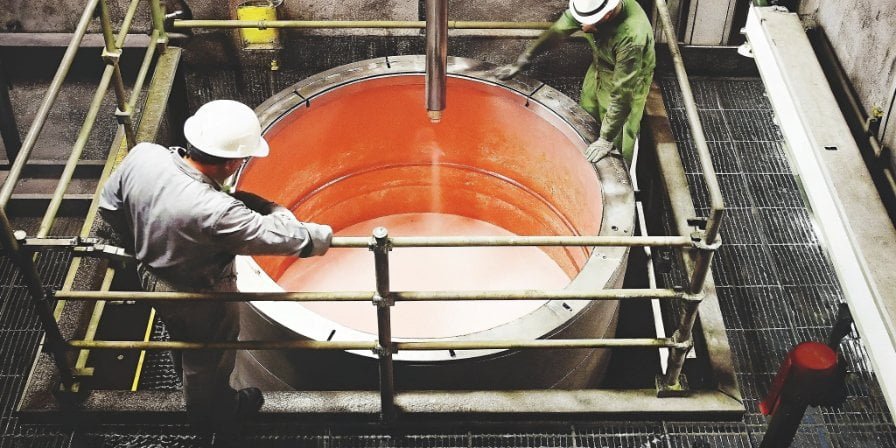
Let’s walk through a single injection, which happens in a fraction of a second.
- Ready Position: The cleaning piston is in its forward position, sealing the mixing chamber. Behind the scenes, the raw materials (Polyol and Isocyanate) are recirculating through the system to maintain temperature and pressure, ready for the shot.
- Injection Phase: When the operator presses the button, the hydraulic system pulls the piston back instantly. This opens the nozzles. The high-pressure pumps force the materials into the chamber at over 150 bar. They collide with such force that they mix perfectly without any mechanical stirrer. The mixed liquid then flows into the mold.
- Cleaning Phase: As soon as the required amount of material is dispensed, the piston pushes forward. This action acts like a squeegee, physically forcing every last drop of reacting chemicals out of the chamber and into the mold. Nothing is left behind.
- Cycle End: The piston is now back in its sealed, forward position. The chamber is clean, and the machine is immediately ready for the next injection. This entire process is seamless and allows for almost continuous production.
Why is a self-cleaning mixing head important in polyurethane foam production?
You might think your old low-pressure machine is “good enough.” Why should you consider upgrading? The reality is that inconsistent quality, material waste, and solvent costs are likely eating into your profits. The self-cleaning head is not just an upgrade; it’s fundamental to modern foam manufacturing.
This head is important because it solves the biggest problems in traditional foam production. It gets rid of hazardous cleaning solvents, drastically reduces raw material waste, and ensures a perfectly consistent mix every single time. This directly improves product quality, lowers operational cost, and enhances workplace safety.
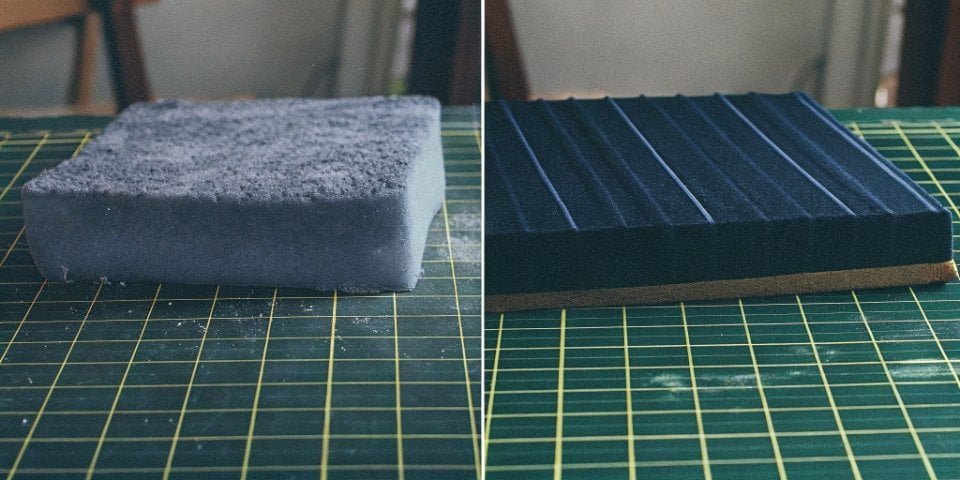
From our experience working with factories across Southeast Asia and the Middle East, we’ve seen three areas where this technology makes a huge difference. First is worker safety and environmental protection. Low-pressure machines require solvents like methylene chloride for cleaning. These chemicals are harmful to workers and the environment. By using a self-cleaning head, you eliminate these chemicals entirely, creating a safer factory. Second is product quality consistency. With low-pressure mixing, the foam quality can vary. A high-pressure head delivers a perfect mix from the first to the last drop, ensuring every product has the same density and structure. This is critical when supplying to demanding customers like major furniture or automotive brands. Finally, there’s operational efficiency. Think about the time your team spends cleaning the old mixing head. With a self-cleaning head, that downtime becomes production time, allowing you to increase your output without adding more shifts.
What are the benefits of using a self-cleaning mixing head in PU foaming systems?
You need to justify the investment in a new high-pressure machine to your boss or the factory owner. Focusing only on the initial price tag misses the huge return on investment (ROI). Here are the clear, measurable benefits that translate directly into cost savings and higher profits.
The main benefits are significant cost savings and superior product quality. You save money by reducing raw material waste, eliminating all solvent costs, and increasing production uptime. Your products become more consistent and higher in quality, leading to fewer rejects and more satisfied customers.

When a production director like Mr. Hieu in Vietnam asks us about ROI, we break it down into tangible numbers. The payback period for a high-pressure machine is often much faster than people think, sometimes as short as 6-12 months. The savings come from several areas. You stop wasting raw materials on flushing the head, which can cut your chemical costs by 5% or more[^4]. You also completely eliminate the cost of buying and disposing of cleaning solvents. But the biggest impact is often on productivity. By eliminating cleaning downtime, you can produce more parts per hour, every hour. This directly increases your factory’s capacity and revenue potential.
| Benefit | How It Delivers Value | Your Financial Gain |
|---|---|---|
| Material Savings | The piston purges 100% of the mix into the mold. | Reduces raw material consumption and cost by 5-10%. |
| Zero Solvent Cost | Mechanical purging replaces chemical flushing completely. | Eliminates solvent purchase and disposal expenses. |
| Increased Uptime | No downtime for cleaning between different production runs. | More products made per shift, leading to faster ROI. |
| Higher Quality | Consistent mixing leads to fewer defects and rejects. | Lowers costs from waste and customer claims. |
Conclusion
In summary, a self-cleaning mixing head is not just another component. It is a core technology that elevates quality, cuts operational costs, and makes your PU foam production safer and more efficient.
[^1]: “High-Pressure vs Low-Pressure PU Foaming Machine”, https://henghui-machinery.com/blog/high-pressure-vs-low-pressure-pu-foaming-machine-choose-the-right-solution-for-your-business/. A polyurethane processing textbook or technical article describes low-pressure polyurethane mixing as mechanical agitation of components and notes that the mixing chamber or stirrer commonly requires cleaning, often with solvents. Evidence role: definition; source type: education. Supports: Low-pressure polyurethane mixing heads use mechanical stirring and commonly require solvent flushing.. Scope note: This would support the conventional contrast between low- and high-pressure mixing, but cleaning practices can vary by formulation and equipment design.
[^2]: “Impinging jet mixers: A review of their mixing …”, https://web.mit.edu/braatzgroup/Devos_AIChE_2024.pdf. Scientific literature on reaction injection molding and polyurethane processing identifies high-pressure impingement mixing as a process in which reactive liquid streams collide at high velocity to achieve rapid mixing. Evidence role: mechanism; source type: paper. Supports: High-pressure polyurethane mixing heads operate by high-velocity impingement rather than mechanical stirring.. Scope note: This supports the general physical mixing mechanism, not any specific manufacturer’s nozzle geometry or machine performance.
[^3]: “Impingement mixing in reaction injection molding”, https://experts.umn.edu/en/publications/impingement-mixing-in-reaction-injection-molding. A technical reference on polyurethane high-pressure metering and mixing reports typical operating pressures for high-pressure impingement mixing in the range of roughly 100 bar or higher, consistent with the article’s stated 150 bar example. Evidence role: statistic; source type: research. Supports: High-pressure PU foaming systems can force raw materials through nozzles at over 150 bar.. Scope note: Pressure ranges vary by equipment, formulation, and application; a source may support 150 bar as typical or plausible rather than universal.
[^4]: “Polyurethane Recycling and Disposal: Methods and Prospects”, https://pmc.ncbi.nlm.nih.gov/articles/PMC7464512/. An industry-independent life-cycle or manufacturing-cost study could support estimates that reduced flushing waste lowers chemical consumption in polyurethane processing, although the exact percentage would be application-specific. Evidence role: statistic; source type: paper. Supports: Reducing flushing waste can reduce chemical costs in polyurethane foam production, potentially by several percent.. Scope note: The 5% figure is likely dependent on shot size, cleaning frequency, formulation cost, and plant scheduling; a general source may only support the cost-saving mechanism, not the exact percentage.
Leave a Reply