

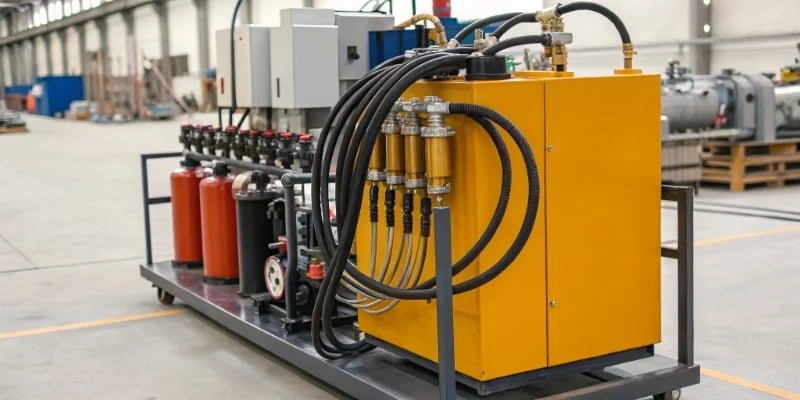
Struggling to choose the right foaming equipment? Making the wrong decision can be costly, leading to wasted materials and poor-quality products. Let’s explore what a low-pressure machine is.
A polyurethane low-pressure foaming machine is a cost-effective system that uses gear pumps to deliver raw materials into a mixing head. Inside the head, a mechanical stirrer blends the chemicals before they are dispensed. It’s ideal for rigid foam, packaging, and elastomer applications.
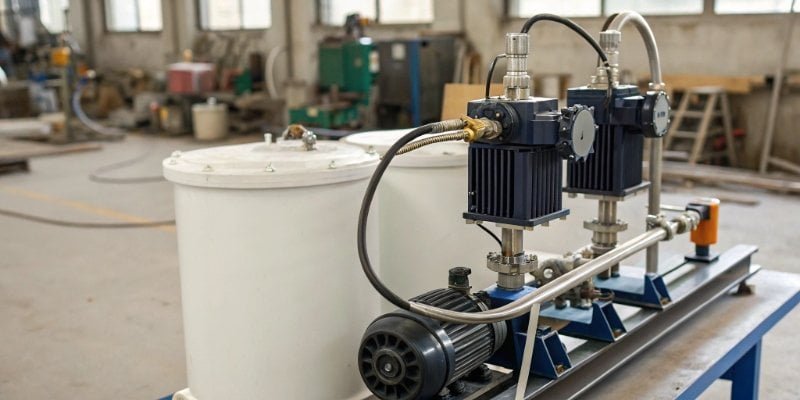
The brief answer gives you a starting point, but choosing the right machine for your factory requires a deeper understanding. To know if a low-pressure machine fits your production needs—for making furniture, insulation, or car parts—you need to look at what PU foam is used for, how the low-pressure process works, and what its real-world limitations are. Let’s break it down together.
What are polyurethane foams used for?
Think polyurethane foam is only for simple cushions? You might be missing out on profitable opportunities in higher-value markets. Let’s see just how versatile this material really is.
Polyurethane (PU) foams are used in countless industries. You find them in furniture as cushions, in cars as seats and headliners, in construction as insulation panels, and in packaging to protect electronics. Their properties can be customized for almost any application.
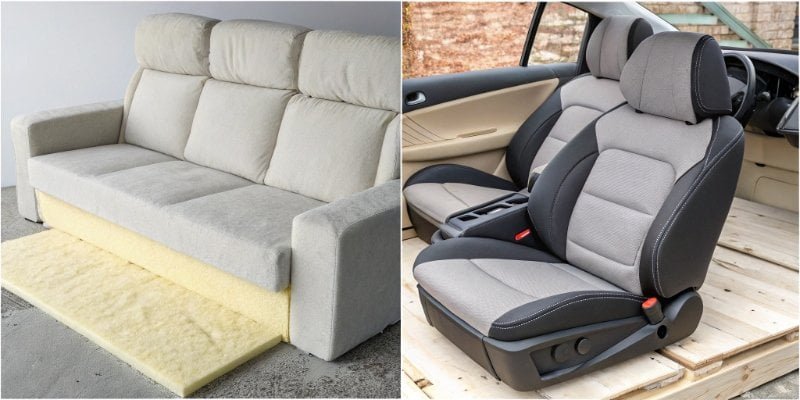
I’ve worked with clients across the globe, and it’s amazing to see the range of products they create with our machines. From a furniture factory in Vietnam making sofa cushions to a building materials producer in the Middle East manufacturing insulation panels, PU foam is the key. The secret is that PU foam is not one single material; it’s a family of materials.[^1] We can group them into two main categories that a low-pressure machine can handle.
Rigid Foam Applications
This is where low-pressure machines really shine. Rigid PU foam is a fantastic insulator.[^2]
- Construction: It’s used to make structural insulated panels (SIPs) for walls and roofs, keeping buildings cool in hot climates and warm in cold ones.
- Appliances: The insulation in your refrigerator and freezer is rigid PU foam.
- Packaging: For high-value, sensitive items like medical equipment or electronics, custom-molded rigid foam provides perfect protection.
Flexible & Other Foam Applications
While high-pressure machines are often preferred for high-volume flexible foam (like mattresses), low-pressure machines are excellent for:
- Integral Skin Foam: Think of office chair armrests or automotive steering wheels. These have a soft, foamy core and a tough, durable outer “skin,” all made in one shot.
- Molded Flexible Foam: For items like bicycle seats or special ergonomic cushions, a low-pressure machine offers a cost-effective way to get started.
| Foam Type | Common Applications | Key Property |
|---|---|---|
| Rigid Foam | Insulation panels, refrigerators, protective packaging | Excellent thermal insulation, high strength |
| Flexible Foam | Furniture cushions, car seats, specialized padding | Comfort, resilience, support |
| Integral Skin | Armrests, steering wheels, headrests | Soft core with a tough, seamless outer layer |
What is low pressure foam?
Hearing the term “low pressure” might make you think the foam itself is weak or low-quality. This is a common misunderstanding that can lead you to buy the wrong machine.
The term “low pressure foam” refers to the process, not the final product. It means the raw materials are injected into the mixing head at a low pressure (typically 3-10 bar), where a mechanical stirrer is required to blend them into a uniform mixture.
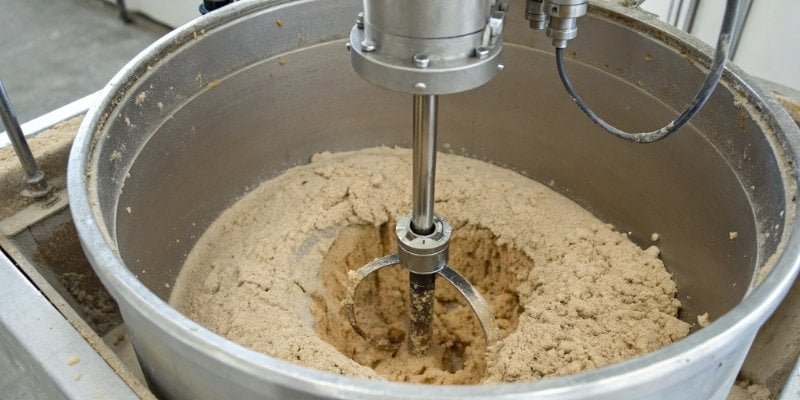
To make it simple, let’s compare it to mixing a cake batter. A high-pressure machine is like using two high-powered jets of water that collide and mix themselves instantly. A low-pressure machine is like pouring ingredients into a bowl and using an electric mixer to blend them. Both can make a good cake, but the process is different.
The Low-Pressure Foaming Process Step-by-Step
- Pumping: Two gear pumps move the raw materials—Component A (polyol blend) and Component B (isocyanate)—from their tanks. These pumps are simple, reliable, and can handle materials with higher viscosity, which gives you more flexibility with chemical suppliers.
- Mixing: The materials enter a “mixing head.” This is the heart of the machine. Inside, a motor spins a stirrer or impeller at high speed (thousands of RPM). This mechanical force is what blends the two components together thoroughly.
- Pouring: The mixed liquid is then dispensed from a nozzle into your mold.
- Cleaning: This is the most critical difference. If you stop pouring for more than about 15-30 seconds, the chemical reaction will start inside the head, and it will get clogged with hard foam. To prevent this, the machine must automatically flush the mixing chamber with a solvent after every pour. This cleaning process creates some waste material and requires you to manage solvents.
This process is perfect for applications where you have longer pour times or are using formulations that are difficult to mix.
What is polyurethane foam?
You know you need foam for your products, but you feel lost when suppliers start talking about polyols and isocyanates. Not knowing the basics can make you dependent on others.
Polyurethane (PU) foam is a versatile plastic material created from a chemical reaction. When two liquid components, a polyol blend (A-side) and an isocyanate (B-side), are mixed, they expand and harden to form a solid or flexible foam structure.
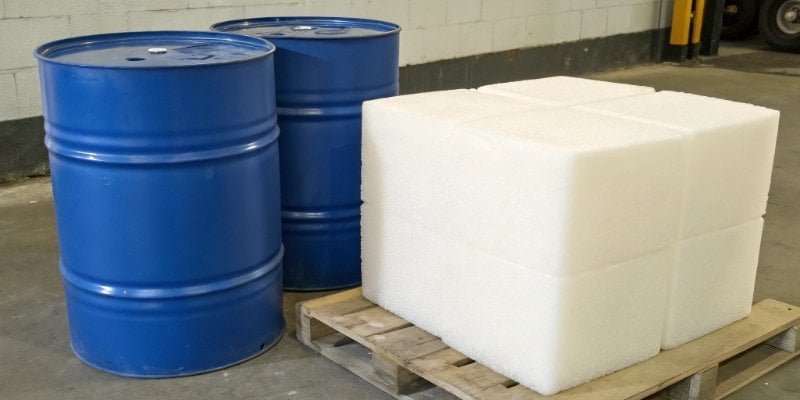
The best way I explain this to new clients is to think of it like a two-part epoxy glue you might buy at a hardware store. Separately, the two parts are liquids and will stay that way. But the moment you mix them, a chemical reaction begins, and they turn into a strong solid. PU foam works on the same principle, but with one major difference: it expands.[^3]
The Foam “Recipe”
The two main liquids are just the start. The final foam’s properties depend on the full “recipe.”
- Component A (The Polyol Blend): We often call this the “white material” or “A-side.” It’s not just one chemical, but a mixture.
- Polyol: This forms the main body of the foam and determines if it will be soft and flexible or hard and rigid.
- Catalysts: These act like a gas pedal, controlling the speed of the reaction.
- Surfactants: These are crucial for controlling the size and structure of the foam bubbles, ensuring a uniform, fine cell structure.
- Blowing Agent: This is what creates the bubbles! It’s a substance (often water) that creates a gas (CO2) when it reacts with the isocyanate, causing the mixture to expand like bread rising.
- Component B (The Isocyanate): This is the “black material” or “B-side.” It’s the reactor. When it meets the polyol blend, it links everything together to create the strong, stable polymer structure of the final foam.
By changing the ingredients in this recipe, we at Foamor can help you create foams with completely different properties—from soft memory foam for a high-end mattress to super-strong rigid foam for protecting heavy equipment during shipping.
What are the disadvantages of polyurethane foam?
Is polyurethane foam a perfect, problem-free material? No. Ignoring the downsides can create safety risks in your factory and hurt your brand’s reputation with environmentally-conscious customers.
The primary disadvantages of polyurethane foam concern worker safety and environmental impact. The raw isocyanate is a hazardous chemical requiring careful handling, and most PU foam is not biodegradable. Also, the low-pressure production process creates solvent and material waste.
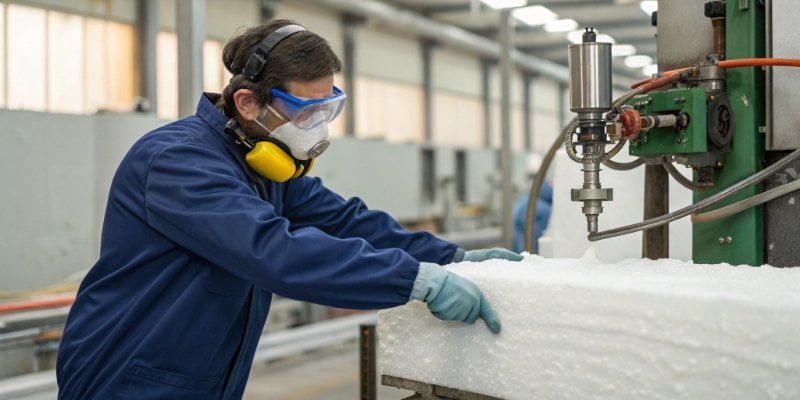
As a responsible equipment supplier, we believe in being transparent about the challenges. It’s our job to help you manage them. The disadvantages fall into two areas: the material itself, and the low-pressure production method.
Disadvantages of the Material
- Health and Safety: The liquid isocyanate (Component B) is an irritant and sensitizer, especially for the respiratory system.[^4] This is not a problem with the finished, cured foam product, but it is a major concern during production. Your workers must be trained and equipped with proper Personal Protective Equipment (PPE), including respirators, gloves, and eye protection. Good factory ventilation is also non-negotiable.
- Environmental Impact: Traditional polyurethane is derived from petroleum and is not biodegradable.[^5] While recycling options are growing, they are still limited. The good news is that the industry is moving towards more sustainable options, like polyols made from soy or other plant-based oils.
Disadvantages of the Low-Pressure Production Process
This is where the choice of machine really matters for your operational costs. For a production director like Mr. Hieu in Vietnam, every bit of wasted material is lost profit. A low-pressure machine has specific drawbacks compared to a high-pressure one.
| Disadvantage | Description | Impact on Your Factory |
|---|---|---|
| Solvent Flushing | The mixing head must be cleaned with a chemical solvent after every pour to prevent clogging.[^6] | This adds the cost of buying and disposing of solvents and introduces more chemicals into your workplace. It’s less eco-friendly. |
| Material Waste | The cleaning process creates a “purge” of mixed material and solvent that is wasted.[^7] | This directly increases your raw material consumption per part. For high-volume production, this waste can add up to significant costs. |
| Mixing Quality | Mechanical stirring is very good, but not as perfectly uniform as the high-pressure impingement mixing.[^8] | For most applications, this is not an issue. But for very high-spec products (like premium automotive foam), you might see minor density variations. |
Conclusion
A low-pressure machine is a reliable and budget-friendly choice for many PU foam products. Understanding its strengths and weaknesses helps you make a smart investment for your factory’s future.
[^1]: “A Review of Polyurethane Foams for Multi-Functional and High … – PMC”, https://pmc.ncbi.nlm.nih.gov/articles/PMC11597963/. This source explains the diversity of polyurethane foam types and their varying properties. Evidence role: definition; source type: encyclopedia. Supports: Polyurethane foam encompasses a variety of materials with different properties..
[^2]: “Polyurethane Foams for Thermal Insulation Uses Produced … – PMC”, https://pmc.ncbi.nlm.nih.gov/articles/PMC6152006/. This source explains the thermal insulation properties of rigid polyurethane foam and its common applications in construction and appliances. Evidence role: mechanism; source type: education. Supports: Rigid polyurethane foam is highly effective as an insulator in construction and appliances..
[^3]: “[PDF] THE KINETICS OF POLYURETHANE STRUCTURAL FOAM – OSTI.GOV”, https://www.osti.gov/servlets/purl/1369443. This source explains the expansion process of polyurethane foam during its chemical reaction. Evidence role: mechanism; source type: education. Supports: Polyurethane foam expands during its chemical reaction, unlike epoxy glue..
[^4]: “Isocyanates – Overview | Occupational Safety and Health Administration”, https://www.osha.gov/isocyanates. This source discusses the health risks associated with isocyanates, particularly their impact on respiratory health. Evidence role: expert_consensus; source type: research. Supports: Isocyanates are hazardous chemicals that can irritate and sensitize the respiratory system..
[^5]: “Utilization of Plant Oils for Sustainable Polyurethane Adhesives: A Review”, https://pmc.ncbi.nlm.nih.gov/articles/PMC11050924/. This source explains the petroleum-based origins of traditional polyurethane and its lack of biodegradability. Evidence role: mechanism; source type: education. Supports: Traditional polyurethane is petroleum-based and non-biodegradable..
[^6]: “The ultimate low-pressure cleaning kit: Foam Cleaner + best accessories”, https://www.youtube.com/watch?v=07iSQgtjJUg&vl=en. This source details the cleaning requirements for low-pressure foam machines, including the use of chemical solvents. Evidence role: mechanism; source type: education. Supports: Low-pressure foam machines require solvent cleaning to prevent clogging of the mixing head..
[^7]: “Low-Pressure Technology – Foamico”, https://foamico.com/stories/low-pressure-technology/. This source describes the waste generated during the cleaning process of low-pressure foam machines. Evidence role: mechanism; source type: education. Supports: The cleaning process in low-pressure foam machines generates waste material and solvent purge..
[^8]: “Impingement mixing – a fluid mechanical approach.”, https://experts.illinois.edu/en/publications/impingement-mixing-a-fluid-mechanical-approach. This source compares mechanical stirring in low-pressure machines to impingement mixing in high-pressure machines, highlighting differences in uniformity. Evidence role: mechanism; source type: education. Supports: Mechanical stirring in low-pressure machines is less uniform than high-pressure impingement mixing..
Leave a Reply