

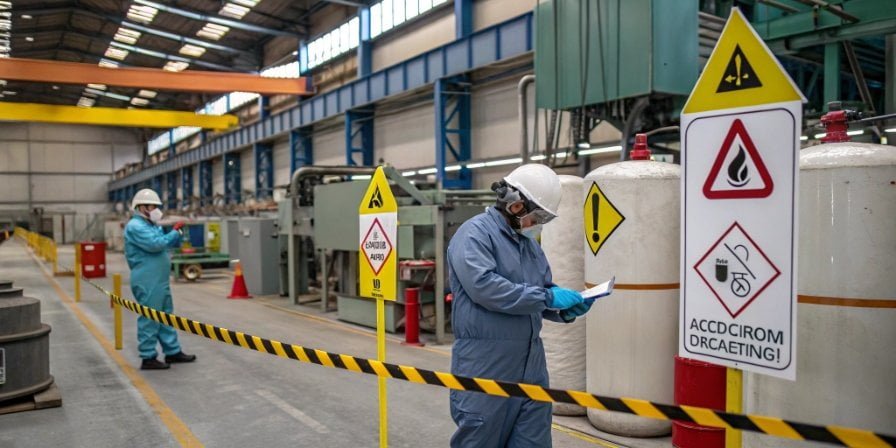
Running a factory means constantly thinking about safety. You hear stories about dangerous chemicals and wonder if your team is at risk. It’s a heavy weight on any production director’s shoulders.
The main hazard in PU foam production is direct exposure to raw liquid chemicals, specifically isocyanates, during the manufacturing process. With modern, sealed equipment and proper safety protocols, these risks are managed effectively, and the final, cured foam product is safe for consumers.
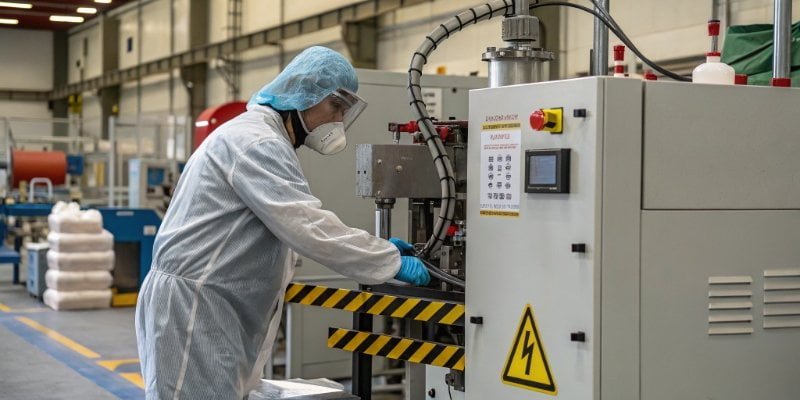
Understanding the risks in the factory is the first step. But many of our clients, like you, also have questions about the safety of the final product that goes to their customers. They want to be sure they are making something good and safe. We get these questions all the time, and it’s important to have clear answers. Let’s break down the most common concerns one by one.
Is PU foam hazardous?
Your customers see "polyurethane" on a label and get worried about chemicals. You need to give them confidence that your products are safe. But first, you have to be confident yourself.
No, fully cured polyurethane foam is not hazardous. The chemical reaction that creates the foam is stable and complete. Once it’s cured, the foam becomes an inert solid, which is safe for everyday use in furniture, mattresses, automotive seats, and insulation.
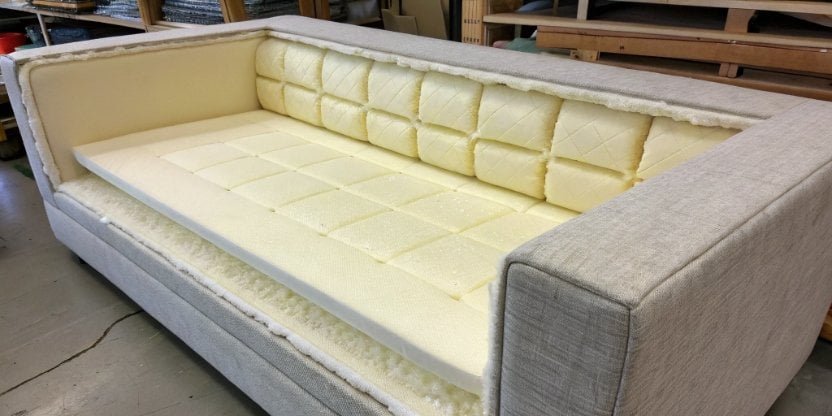
To understand this better, you have to look at the process. We start with two separate liquids: the isocyanate (often called the A-side or "black material") and the polyol blend (the B-side or "white material"). The hazard exists only when these materials are in their liquid, reactive state.[^1] When we mix them inside a machine, a chemical reaction starts. This reaction creates the foam structure. Once that reaction is finished and the foam has cooled and set, or "cured," it is no longer chemically reactive. It becomes a stable, solid material. The dangerous part is gone. Think of it like baking a cake. You start with raw eggs and flour, which you shouldn’t eat. But after baking, you have a safe and delicious cake. The same principle applies here. The key is a complete reaction, which our high-pressure machines are designed to ensure.
What are the disadvantages of polyurethane foam?
PU foam is an amazing and versatile material, but nothing is perfect. You might face questions about its impact on the environment or its durability. You need to be ready to answer them honestly.
The main disadvantages of polyurethane foam are related to its production and end-of-life. Its raw materials come from petroleum, and it is not easily biodegradable. Also, foam made with poor quality control can degrade, yellow with sun exposure, or lose its shape.
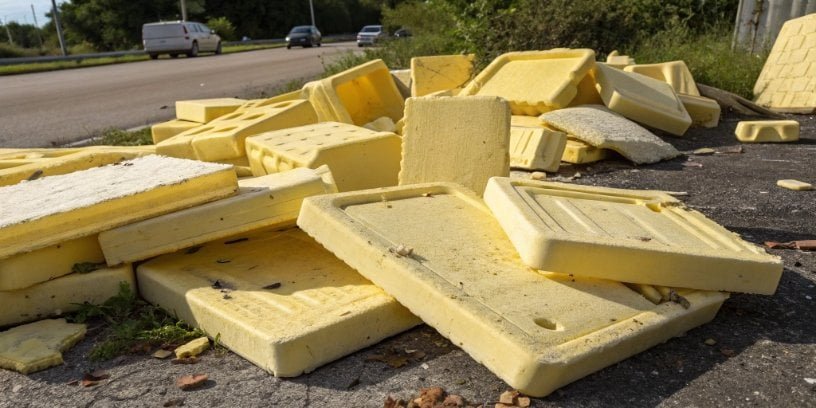
Let’s dive deeper into these points.
Environmental and Performance Issues
The disadvantages of PU foam mostly come from two areas: its environmental footprint and potential quality issues if not made correctly.
- Environmental Concerns: The raw materials, isocyanates and polyols, are derived from crude oil.[^2] This means it’s not a renewable resource. At the end of its life, PU foam is also difficult to recycle and usually ends up in a landfill, where it doesn’t break down. The industry is working on solutions like bio-based polyols and chemical recycling, but these are not widespread yet.
- Performance Issues: These problems are almost always because of poor production methods or the wrong formulation.
| Disadvantage | Cause | Foamor’s Solution |
|---|---|---|
| Yellowing | UV light (sunlight) breaks down the foam’s surface. | We provide formulations with UV stabilizers for products exposed to light. |
| Poor Durability | Incorrect foam density or incomplete chemical reaction. | Our high-pressure machines ensure precise mixing (±0.5%) for consistent density and a complete reaction. |
| Losing Shape | Low-quality raw materials or poor curing process. | We help you source quality materials and design a proper curing line to ensure foam resilience. |
These disadvantages are not in the material itself, but in how it’s made and handled. With the right equipment and process support, you can produce high-quality, durable foam that minimizes waste and performs beautifully for your customers.
Is polyurethane foam a carcinogen?
The word "carcinogen" is scary. Hearing it connected to your product can cause panic for your team and your customers. You need a clear and truthful answer to this very serious question.
No, solid, cured polyurethane foam is not considered a carcinogen. The health concern comes from one of its raw ingredients, isocyanate, which can be harmful if inhaled as a vapor or mist in its raw, liquid state during production.
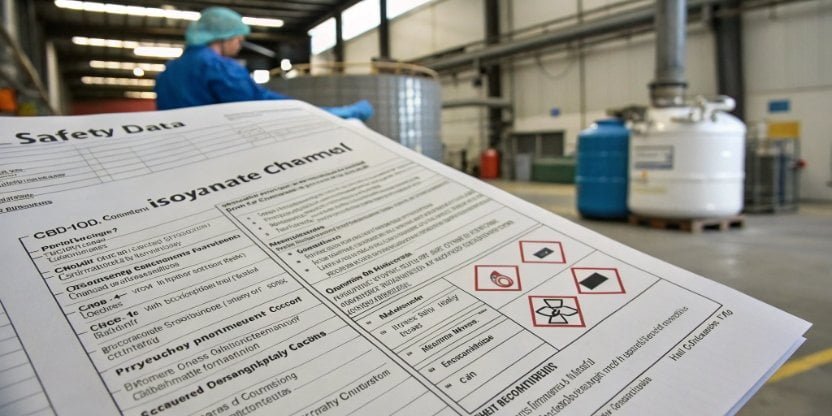
This is the most important distinction to make: the risk is with the raw material, not the finished product. Health and safety organizations like OSHA in the USA have set strict exposure limits for workers who handle liquid isocyanates in factories.[^3] These rules are for the production environment. There are no such warnings for people using a finished mattress or sofa. The two main types of isocyanates used are MDI and TDI. MDI is much more common today for furniture and mattresses[^4] and is considered safer because it has a very low vapor pressure, meaning it doesn’t easily become a gas at room temperature. The risk of inhaling it is very low.[^5] Our modern high-pressure machines are completely sealed systems. The chemicals are pumped from sealed drums directly into the mixing head, so workers have almost zero exposure.[^6] This technology makes today’s foam factories much safer than the old factories that used open mixing methods.
Is 100% polyurethane foam safe?
You see "100% Polyurethane Foam" on a product label. Is this a promise of safety or something to be cautious about? As a manufacturer, you must know what this really means for your customers.
Yes, 100% polyurethane foam that is fully cured is safe for its intended use in consumer products. The most important words here are "fully cured." This means the chemical reaction is totally complete, and no reactive components are left.
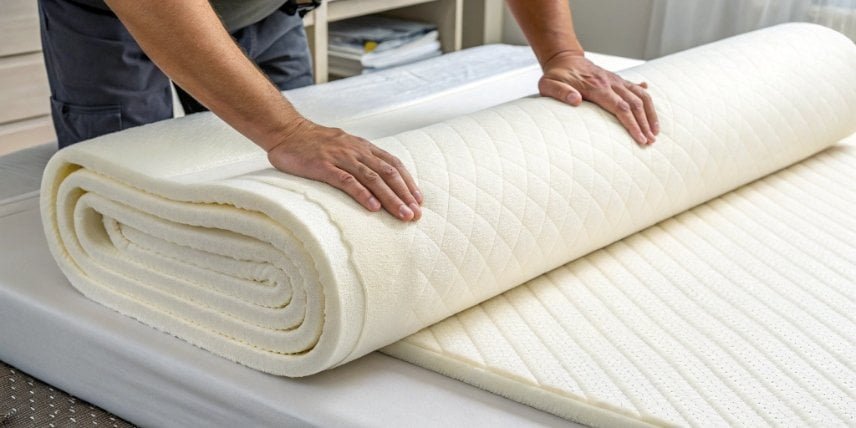
"Curing" is the process where the foam sets and all the chemical reactions finish. This can take 24 to 48 hours after the foam is produced.[^7] During this time, the foam might release some Volatile Organic Compounds (VOCs), which create that "new foam smell." This is normal. The amount and type of VOCs depend on the foam formulation. For example, older foam systems based on TDI tend to release more VOCs than modern MDI-based systems.[^8] This is a technical detail, but it matters for quality. At Foamor, we help our clients select the right chemical systems for their products to ensure safety and performance.
VOCs in Different Foam Systems
| Foam System | Typical VOC Level | Common Application | Why it Matters for You |
|---|---|---|---|
| MDI-Based Foam | Low | Furniture, Mattresses, Car Seats | This is the standard for high-quality consumer goods. It has a low smell and is very safe. We recommend this for most clients. |
| TDI-Based Foam | Can be higher | Some types of flexible foam | Requires good factory ventilation and a longer curing time before packaging. We only suggest this for specific industrial uses. |
Once the foam is fully cured and ventilated, the VOC levels drop to almost nothing.[^9] The foam becomes a simple, stable polymer plastic. So when your customer buys a sofa or mattress, the 100% polyurethane foam inside is completely safe for them and their family.
Conclusion
The real hazards in the PU industry are limited to the production process, not the final product. With modern equipment and safe handling, you can run a safe factory and make a completely harmless product.
[^1]: "Isocyanates | NIOSH", https://archive.cdc.gov/www_cdc_gov/niosh/topics/isocyanates/default.html. Occupational-health guidance identifies inhalation of isocyanate vapors or aerosols and skin contact as exposure routes; polyurethane thermal degradation can also create hazardous emissions, so hazards are not confined to raw liquids. Evidence role: mechanism; source type: government. Supports: Polyurethane-production chemicals pose hazards only in their liquid, reactive state.. Scope note: Such guidance supports the importance of raw-material exposure but contradicts the claim that hazards occur only in the liquid state.
[^2]: "Department of Energy", https://www.energy.gov/. Reviews of polyurethane synthesis describe conventional isocyanates and polyols as predominantly petrochemical feedstocks while documenting renewable and recycled alternatives. Evidence role: general_support; source type: paper. Supports: Isocyanates and polyols used to manufacture polyurethane are derived from crude oil.. Scope note: Petrochemical origin is typical of conventional systems, not universal across all polyurethane formulations.
[^3]: "Permissible Exposure Limits – OSHA Annotated Table Z-1", http://www.osha.gov/annotated-pels/table-z-1. OSHA’s air-contaminant tables specify occupational exposure limits for named isocyanates, including MDI and 2,4-TDI; these limits concern workplace airborne concentrations. Evidence role: statistic; source type: government. Supports: OSHA establishes occupational exposure limits for isocyanates handled in factories.. Scope note: Limits are compound- and jurisdiction-specific and do not establish consumer-product safety or eliminate dermal exposure risks.
[^4]: "Flame Retardants Used in Flexible Polyurethane Foam", https://www.epa.gov/saferchoice/flame-retardants-used-flexible-polyurethane-foam. Technical accounts distinguish the use of TDI and MDI across slabstock, molded, and viscoelastic flexible foams, demonstrating that isocyanate selection varies by production process and application. Evidence role: general_support; source type: government. Supports: MDI is currently more commonly used than TDI in furniture and mattress foam.. Scope note: Application descriptions alone do not establish present-day market dominance; comparative volumes must specify date, region, and foam category.
[^5]: "NIOSH Pocket Guide to Chemical Hazards – Benzene", https://www.cdc.gov/niosh/npg/npgd0049.html. Occupational-health guidance distinguishes MDI’s low volatility at room temperature from inhalation exposure generated by aerosols or heating, which can still present respiratory hazards. Evidence role: mechanism; source type: government. Supports: MDI’s low vapor pressure makes its inhalation risk very low.. Scope note: Vapor pressure alone cannot establish a low inhalation risk for a particular workplace.
[^6]: "Isocyanates | NIOSH", https://archive.cdc.gov/www_cdc_gov/niosh/topics/isocyanates/default.html. Industrial-hygiene guidance identifies enclosed transfer and processing as engineering controls for reducing isocyanate exposure, with effectiveness assessed through task-specific exposure monitoring. Evidence role: mechanism; source type: government. Supports: Sealed chemical transfer to a mixing head results in almost zero worker exposure.. Scope note: General evidence for enclosure does not verify this manufacturer’s equipment or establish near-zero exposure during all tasks.
[^7]: "Curing kinetics of a rigid polyurethane foam formulation …", https://www.sciencedirect.com/science/article/pii/0032386182902506. Cure-kinetics studies relate polyurethane reaction progress and property development to formulation and processing conditions, distinguishing usable cure from complete chemical conversion. Evidence role: mechanism; source type: paper. Supports: Polyurethane foam curing, described as completion of all chemical reactions, can take 24 to 48 hours.. Scope note: A 24–48-hour interval requires validation for the specific foam system and does not guarantee that every reactive component has been consumed.
[^8]: "Occupational Exposure to Volatile Organic Compounds … – PMC", https://pmc.ncbi.nlm.nih.gov/articles/PMC12786908/. Emission-chamber research characterizes finished-foam VOC releases as dependent on formulation, processing, and aging; a TDI–MDI comparison requires measurements under comparable test conditions. Evidence role: general_support; source type: paper. Supports: TDI-based foams generally emit more VOCs than MDI-based foams.. Scope note: Differences in precursor vapor pressure or formulation age do not by themselves demonstrate lower total VOC emissions from MDI-based foam.
[^9]: "Long Term Emissions from Spray Polyurethane Foam …", https://www.nist.gov/publications/long-term-emissions-spray-polyurethane-foam-insulation. Chamber studies track compound-specific foam emissions over time and under controlled environmental conditions, allowing post-production declines to be distinguished from persistent releases. Evidence role: general_support; source type: paper. Supports: Fully curing and ventilating polyurethane foam reduces VOC emissions to nearly zero.. Scope note: A decline in emissions does not establish near-zero levels for every formulation, and safety requires compound-specific exposure assessment.

Leave a Reply