

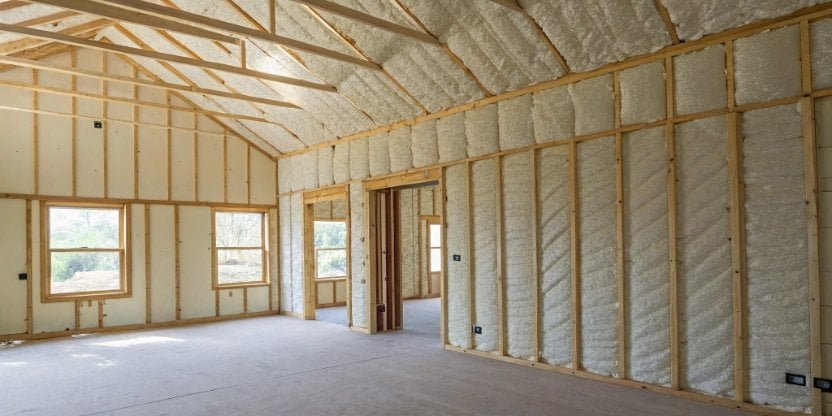
Are you worried that adding spray foam insulation will damage your house? You hear stories about moisture and strange smells. The problem is usually bad installation, not the foam itself.
Spray foam insulation is not bad on its own, but problems arise from incorrect application. When the chemical components are not mixed properly or applied in the wrong conditions, the foam can trap moisture, fail to cure, or release harmful off-gassing into your home.
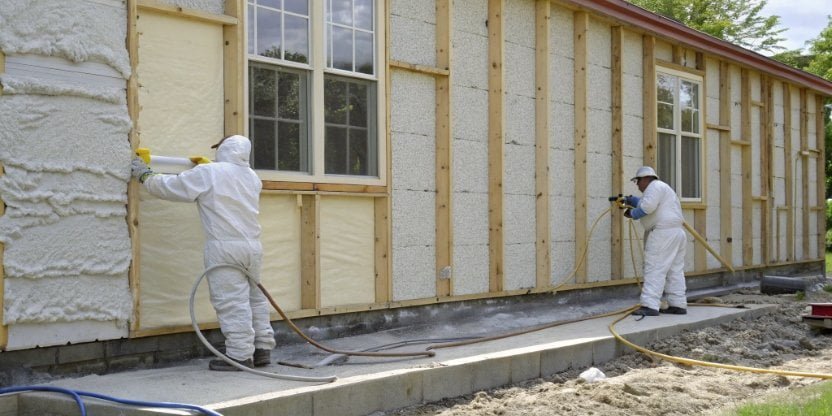
The truth is, spray foam is an excellent insulation material when it’s done right. But many homeowners have fair questions about how long it lasts, how much it costs, and what other options exist. We work with this technology every day, so let’s walk through these concerns and give you the clear answers you need.
What is the average lifespan of spray foam insulation?
You want insulation that you install once and forget about. But will spray foam really last? You need to know if this investment will stand the test of time.
Professionally installed closed-cell spray foam insulation will last for the lifetime of your building, often 80 years or more. It is a very stable material that does not sag, settle, or break down over time, keeping its insulation value for decades.
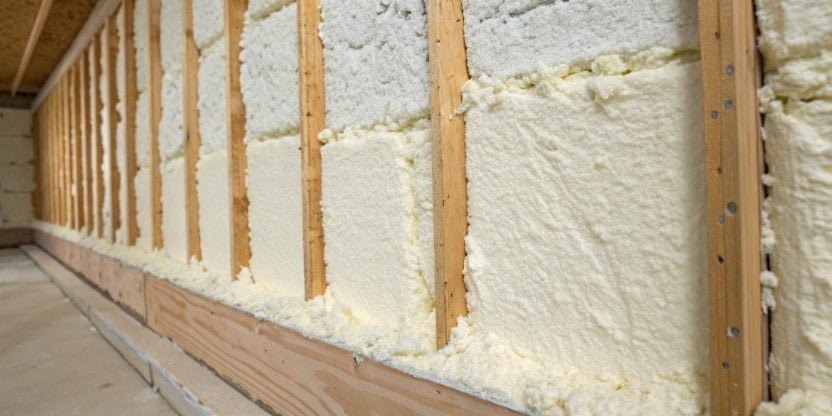
Spray foam creates a powerful, permanent bond with the surfaces it’s applied to, like wood studs and sheathing. Unlike other insulation types, it becomes a solid, rigid part of your wall structure. However, a few things can affect its incredible lifespan. The biggest factor is the quality of the initial installation. If the foam is applied correctly, it is very durable. The main things that can damage it are long-term exposure to direct sunlight (UV rays) or physical damage, like someone cutting into the wall. For exterior applications, the foam must be covered with a protective coating to shield it from the sun.[^1]
How Its Lifespan Compares
| Insulation Type | Typical Lifespan | Common Issues | ||
|---|---|---|---|---|
| Spray Foam | 80+ years | Requires professional install; can be damaged by UV light if not coated. | ||
| [ | Fiberglass Batts | 15-30 years | Can sag, settle, and lose effectiveness if it gets wet or compressed. | ](https://energy.gov/sites/prod/files/2013/11/f5/insulation_guide.pdf)[^2] |
| Cellulose | 20-30 years | Can settle over time, creating gaps; susceptible to moisture if no vapor barrier. |
How much does it cost to spray foam insulate a 2000 sq ft house?
The cost of spray foam can seem high and confusing. You get different quotes and wonder what a fair price is. You need to understand the factors that determine the final cost.
To insulate a 2000 sq ft house, the cost can range from $4,000 for attics only, up to $12,000 or more for the entire house. The price depends on the foam type (open-cell vs. closed-cell), the required thickness, and local labor rates.
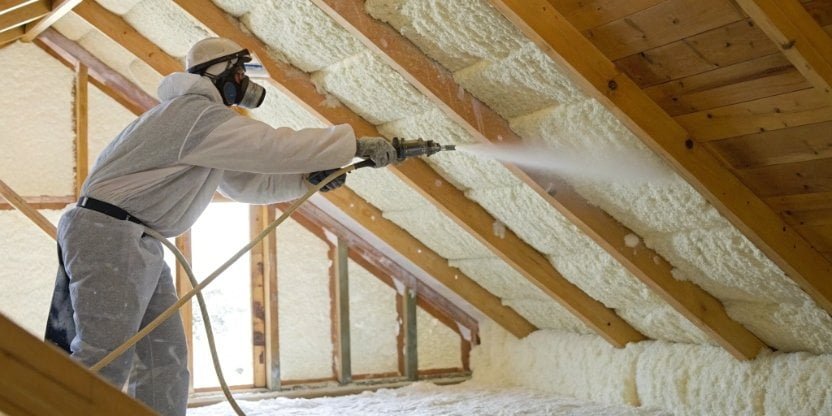
The upfront cost of spray foam is higher than traditional insulation like fiberglass. But it’s important to look at the total cost over time. Because spray foam is also an air barrier, it can significantly lower your monthly heating and cooling bills. Many homeowners find that the energy savings pay for the initial investment in 5-7 years.[^3] To get an accurate price, you must consider several key details. The biggest choice is between open-cell and closed-cell foam. Closed-cell is more expensive but provides a higher insulation value (R-value) per inch and also acts as a vapor barrier.[^4]
Key Factors Driving the Cost
| Factor | Description | Impact on Price |
|---|---|---|
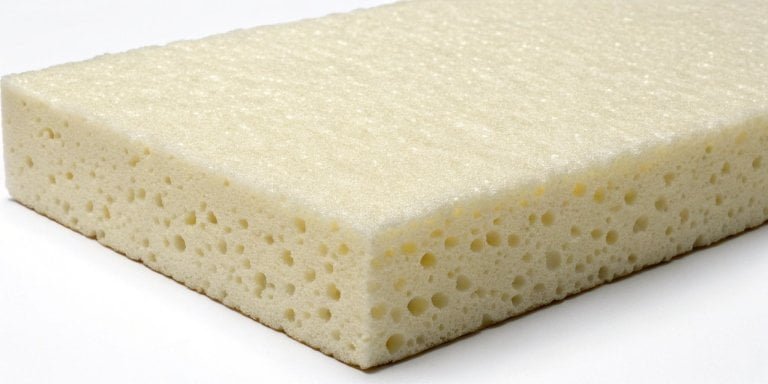
| Foam Type | Open-cell foam is like a sponge; closed-cell is rigid and dense. | Closed-cell costs more but offers better performance and moisture resistance. |
| Thickness (R-Value) | Colder climates require a thicker layer of foam for more insulation. | The thicker the foam, the more material and labor are needed. |
| Project Area | Are you insulating just the attic, the walls, or the entire house? | More square footage directly increases the total cost. |
| Labor | The experience of the installation crew affects the quality and cost. | Experienced professionals charge more but prevent costly mistakes. |
What is better than spray foam insulation?
Spray foam is a great product, but you wonder if there is a better choice. You want to be sure you are picking the best material for your specific needs and budget.
"Better" depends entirely on your project’s goals. For achieving the highest insulation value and creating a perfect air seal, spray foam is one of the best options available. However, for other priorities, materials like mineral wool or cellulose might be a better fit.
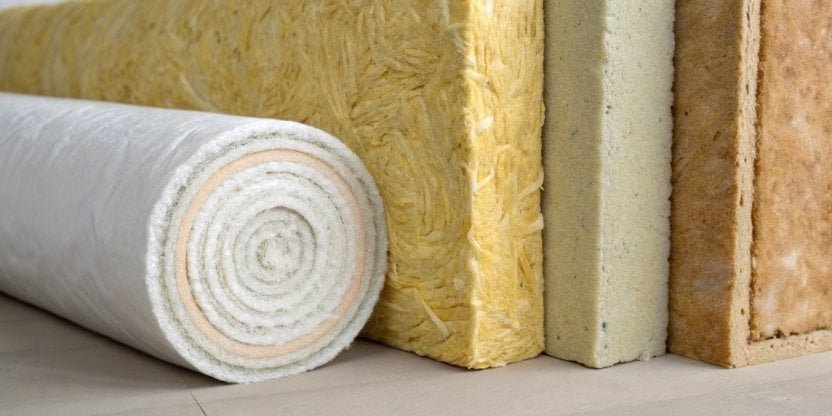
No single insulation material is perfect for every situation. You have to weigh the pros and cons based on what is most important to you. Do you need the absolute best thermal performance? Or is your priority fire safety, soundproofing, or using eco-friendly materials? For example, if you live near a noisy road, mineral wool is an excellent choice for sound deadening. If you want a "green" product made from recycled materials, cellulose is a great option. Spray foam’s biggest advantage is its ability to expand and fill every single crack and gap, which stops air leaks better than any other material.[^5]
Comparing Your Insulation Choices
| Insulation Type | Top Advantage | Top Disadvantage | Best For… |
|---|---|---|---|
| Spray Foam | Best air sealing and R-value. | Higher cost; needs professional installation. | Attics, rim joists, and creating a very energy-efficient home. |
| Mineral Wool | Excellent fire and moisture resistance. | Heavier and more expensive than fiberglass. | Interior walls for soundproofing and areas needing fire protection. |
| Fiberglass | Low cost and easy for DIY. | Poor air seal; can sag over time. | Standard wall cavities in new construction on a tight budget. |
| Cellulose | Eco-friendly (recycled content). | Can settle over time; can be dusty. | Topping up attic insulation or filling existing closed walls. |
What kind of machine should I choose to spray-apply exterior insulation to my own house?
If you are thinking about spraying your own house, the machine is your most important decision. Choosing the wrong equipment will waste expensive materials and give you a poor-quality result.
For a large project like a house, you need a professional high-pressure polyurethane spray machine. DIY kits are not suitable. A professional machine ensures the two chemicals are heated and mixed at the perfect 1:1 ratio, which is essential for safe and effective foam.
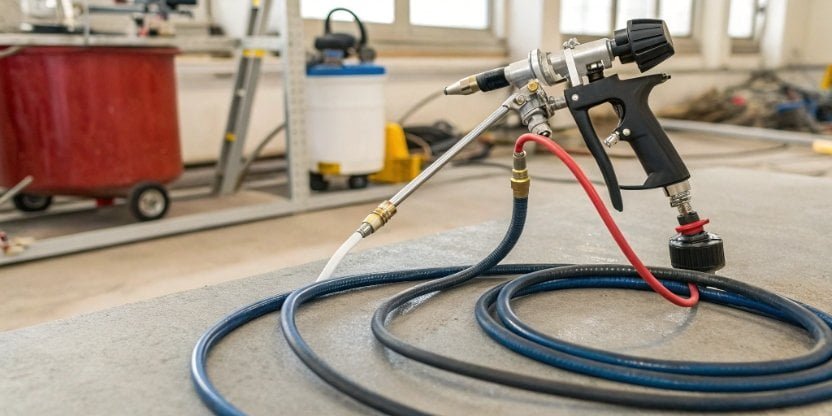
Spray foam is created by mixing two separate liquid components, known as the "A-side" (isocyanate) and "B-side" (polyol). For the chemical reaction to be complete and stable, they must be mixed perfectly. This is not something you can do by hand. A professional high-pressure machine heats both components to a specific temperature (usually 120-140°F or 50-60°C) and pushes them through hoses at high pressure (1,000-1,500 psi). At the tip of the spray gun, they are mixed together and atomized, ensuring a complete reaction the moment they hit the wall.[^6] This process is the key to good foam.
Why Professional Machines are Necessary
A cheap or improper machine leads to "off-ratio" foam. This is the source of almost all spray foam problems.
- Incomplete Curing: The foam will be soft or sticky and will never harden properly.
- Harmful Fumes: Unreacted chemicals can be released, causing bad odors and potential health risks.
- Poor Insulation: The foam will have a weak structure and a much lower R-value.
- Moisture Trapping: Bad foam can create pathways for water to get trapped against your wall sheathing, leading to dampness and rot.[^7]
At Foamor, our machines are built with precision metering pumps that guarantee the A-side and B-side are always delivered in a perfect 1:1 ratio. This is the only way to ensure the foam you produce is safe, stable, and provides the high performance you expect.
Conclusion
Spray foam’s reputation depends entirely on proper installation. Using the right materials with a professional machine is not just a suggestion—it’s essential for a safe and effective insulation system.
[^1]: "Insulation", https://energy.gov/sites/prod/files/2013/11/f5/insulation_guide.pdf. Technical guidance identifies ultraviolet exposure as a cause of exposed polyurethane foam degradation and describes protective coverings or coatings as means of limiting that exposure. Evidence role: mechanism; source type: government. Supports: Exterior spray foam requires protection from ultraviolet exposure to prevent degradation.. Scope note: The appropriate protection depends on the assembly; evidence for UV protection does not establish that every exterior application requires a coating specifically.
[^2]: "Insulation", https://energy.gov/sites/prod/files/2013/11/f5/insulation_guide.pdf. Insulation performance guidance describes the effects of moisture, compression, and installation defects on fiberglass batts; these mechanisms do not by themselves establish a typical service life of 15–30 years. Evidence role: general_support; source type: government. Supports: Fiberglass batt insulation has a typical service life of 15–30 years.. Scope note: Evidence of performance loss under adverse conditions cannot substantiate a universal replacement interval.
[^3]: "Simplifying Energy Efficiency for Homeowners", https://docs.nlr.gov/docs/fy19osti/72176.pdf. Retrofit economic analyses estimate insulation payback from installation costs and energy savings under specified building and energy-price assumptions; individual case results do not establish a common 5–7-year payback. Evidence role: statistic; source type: research. Supports: Spray foam insulation commonly recoups its initial investment through energy savings within 5–7 years.. Scope note: Total-cost payback differs from payback on the incremental cost over another insulation option.
[^4]: "Which Spray Foam Is Right For You?", https://www1.eere.energy.gov/buildings/publications/pdfs/building_america/spray_foam_guide.pdf. Building-science guidance distinguishes the higher typical R-value per inch and lower vapor permeance of closed-cell foam from open-cell foam; vapor-retarder classification depends on the product and installed thickness. Evidence role: general_support; source type: government. Supports: Closed-cell spray foam provides greater R-value per inch than open-cell foam and functions as a vapor barrier.. Scope note: Closed-cell foam is not automatically a Class I vapor barrier at every thickness; this evidence does not establish its installed-cost premium.
[^5]: "BASC Search", https://basc.pnnl.gov/search?keywords=air%20sealing&f%5B0%5D=basc_keywords%3A157&f%5B1%5D=type%3Aimage&f%5B2%5D=type%3Aresource_guide. Air-barrier guidance describes spray foam as a means of limiting leakage when installed at sufficient thickness with continuous connections; it does not establish complete gap filling or superiority over all other air-sealing systems. Evidence role: mechanism; source type: government. Supports: Spray foam fills every crack and gap and provides better air sealing than any alternative material.. Scope note: Material air-permeance tests do not by themselves demonstrate whole-building airtightness.
[^6]: "Vacate and Safe Re-Entry Time for Spray Polyurethane …", https://archive.epa.gov/epa/saferchoice/vacate-and-safe-re-entry-time-spray-polyurethane-foam-application.html. Curing guidance distinguishes rapid foam formation from subsequent curing and notes that cure and re-entry conditions vary with formulation and application conditions; immediate expansion is not evidence of a complete reaction. Evidence role: mechanism; source type: government. Supports: Spray-gun mixing and atomization ensure that the foam’s chemical reaction is complete immediately upon contact with the wall.. Scope note: A curing interval or re-entry time for one product cannot be generalized to all spray foam systems.
[^7]: "Incorporating Thick Layers of Exterior Rigid Insulation on …", https://docs.nrel.gov/docs/fy15osti/63337.pdf. Hygrothermal research links sheathing moisture accumulation to wetting, air leakage, vapor transport, and limited drying in insulated assemblies; this supports an assembly-level moisture risk rather than a unique causal role for off-ratio foam. Evidence role: mechanism; source type: research. Supports: Defective spray foam can allow water to accumulate against wall sheathing and cause dampness and rot.. Scope note: Results depend on climate, foam type, assembly design, and water-entry conditions; they do not show that defective mixing is necessary for moisture damage.

Leave a Reply